Bellona Nuclear Digest. August 2026
A monthly analytical review offering expert insight into key developments in nuclear policy, economics, safety, and technology related to the activities of Rosatom in Russia, Ukraine, and other countries.
News
Publish date: 27/10/2026
News
After Russia’s full-scale invasion of Ukraine in February 2022, Bellona ceased its activities in the aggressor country. On 18 April 2023, Russia’s Prosecutor General’s Office declared Bellona an undesirable organization in the Russian Federation.
Nevertheless, we continue to systematically monitor and analyze developments related to Rosatom’s activities that we believe are of interest to an international audience. The aim of this review is to assess the scale of Russia’s international influence in the nuclear sector, as well as the associated political, economic, and environmental risks.
This digest covers events from September 2026.
You can follow the links to read the three most recent digests covering August, July and June 2026.
Subscribe to our mailing list to stay informed about future issues.
NUCLEAR EVENTS IN UKRAINE AND THE WAR
1. The Zaporizhzhia NPP and other nuclear facilities in Ukraine. Events of September 2026
1.1. Nuclear diplomacy events
1.2. Military threats at the ZNPP
1.3. Technical condition of the ZNPP
1.4. External power supply to the ZNPP
1.5. Military threats at other nuclear facilities of Ukraine
INTERNATIONAL NUCLEAR EVENTS AND THEIR CONNECTION WITH RUSSIA
2. ČEZ receives approval to load Westinghouse fuel at Temelín NPP
3. German environmental groups challenge approval for VVER fuel production in cooperation with Rosatom
4. US passes law providing for sanctions against Rosatom leadership starting in 2028
5. US to fund assessment of American SMR designs for Türkiye
6. Armenia and Rosatom discuss Russian proposal for new NPP project and extension of existing unit’s operating life
EVENTS IN THE RUSSIAN NUCLEAR SECTOR AND IN ROSATOM PROJECTS ABROAD
7. Rooppur NPP: First criticality following commissioning delays and nuclear fuel delivery problems
8. Sanctioned Rosatom subsidiary receives raw materials from China and expands carbon fiber production
9. Rosatom launches second depleted uranium hexafluoride deconversion facility, while future plans remain uncertain
10. Second RITM-200S reactor unit for Chukotka floating NPP completed, while project profitability remains uncertain
11. Rosatom’s projects abroad in brief
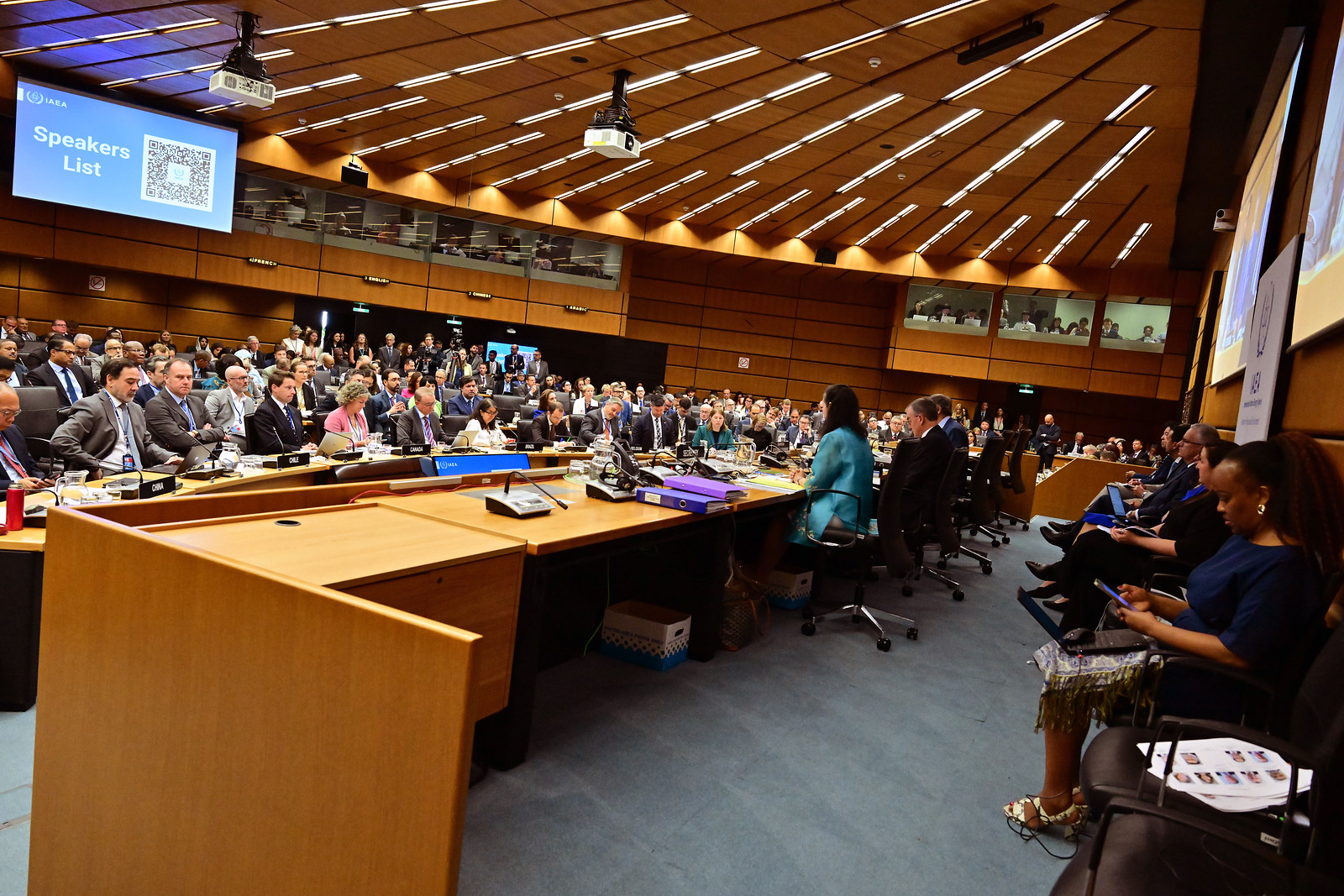
At the IAEA Board of Governors meeting held in Vienna on September 7–11, IAEA Director General Rafael Mariano Grossi presented a report (GOV/2026/49) on nuclear safety, security, and safeguards in Ukraine, covering the period from June 2 to August 29, 2026.
The report is based on information made available to the Agency and verified by the Agency, including through the work of its permanent missions at five Ukrainian nuclear sites — the Zaporizhzhia, Khmelnytskyi, South Ukraine, and Rivne NPPs, as well as the Chernobyl NPP site.
As in the report for the previous period, the main focus is on the impact of ongoing military activity on the operation of Ukrainian NPPs and other nuclear facilities. Military activity continues to be observed near all Ukrainian NPPs, while damage to energy infrastructure continues to disrupt the stability of their off-site power supply.
The report separately addresses the situation at the occupied Zaporizhzhia NPP. The IAEA still does not have full access to the plant’s facilities and information, limiting the Agency’s ability to conduct an impartial and objective assessment of the situation.
In particular, the IAEA team continued to be denied access to the western parts of the turbine halls of all six reactor units, and the areas inaccessible for inspection had expanded. Restrictions also remained in place for the central warehouse, waterworks facilities in the area of the ZNPP cooling pond and adjacent water channels, the off-site emergency center, and the off-site diesel fuel storage facility. At the same time, during repair work, the team was granted unrestricted access to the 330 kV open switchyard of the Zaporizhzhia thermal power plant, which had been inaccessible for inspection for several months.
Armed personnel and military equipment, including armored personnel carriers, remain present at the plant. No heavy weapons were observed in areas accessible to the IAEA team during its walkdowns. However, due to access restrictions, the IAEA cannot confirm their absence throughout the plant site or verify whether other factors that could affect nuclear safety and security are present.
During the reporting period, the ZNPP experienced ten complete losses of off-site power, bringing the total number of such incidents since the start of the full-scale war to 26.
The IAEA also documented a deterioration in off-site radiation monitoring around the ZNPP: several monitoring stations ceased transmitting data, and the Agency was unable to determine the reasons due to the security situation and restricted access to the facilities. According to the IAEA, this could hamper the timely detection and assessment of any radiological release, potentially delaying the implementation of appropriate protective measures in the event of a nuclear or radiological emergency.
In addition, the report examines damage to Ukraine’s energy infrastructure affecting the safe operation of the country’s other NPPs and presents the findings of assessments of electrical substations critical to their off-site power supply.
The Russian Ministry of Foreign Affairs, as usual, described the IAEA report as politically biased and failing to reflect the actual situation at the ZNPP. In particular, the Russian side expressed dissatisfaction with the Agency’s refusal to recognize the plant as belonging to Russia and its failure to hold Ukraine responsible for attacks on ZNPP infrastructure and the deaths of plant personnel.
The European Union, for its part, issued a statement at the Board of Governors meeting, which Ukraine joined, expressing deep concern over the report’s findings, particularly the increasing frequency of complete losses of off-site power at the ZNPP, restrictions on IAEA experts’ access, and deteriorating nuclear safety conditions at the plant. The EU once again called on Russia to withdraw its military personnel from the ZNPP and return the facility to Ukrainian control.
Later that month, from September 14 to 18, the 70th IAEA General Conference was held. On September 17, it adopted a resolution on nuclear safety, security, and safeguards in Ukraine. The resolution received 63 votes in favor, 6 against, and 46 abstentions. It once again called on Russia to withdraw its military and other unauthorized personnel from the Zaporizhzhia NPP and return the plant to full Ukrainian control. Russia described the resolution as politicized and stated that it had no intention of complying with its provisions.
In addition, 48 countries and the European Union endorsed a joint statement calling for the release of Ukrainian ZNPP personnel detained by Russia.
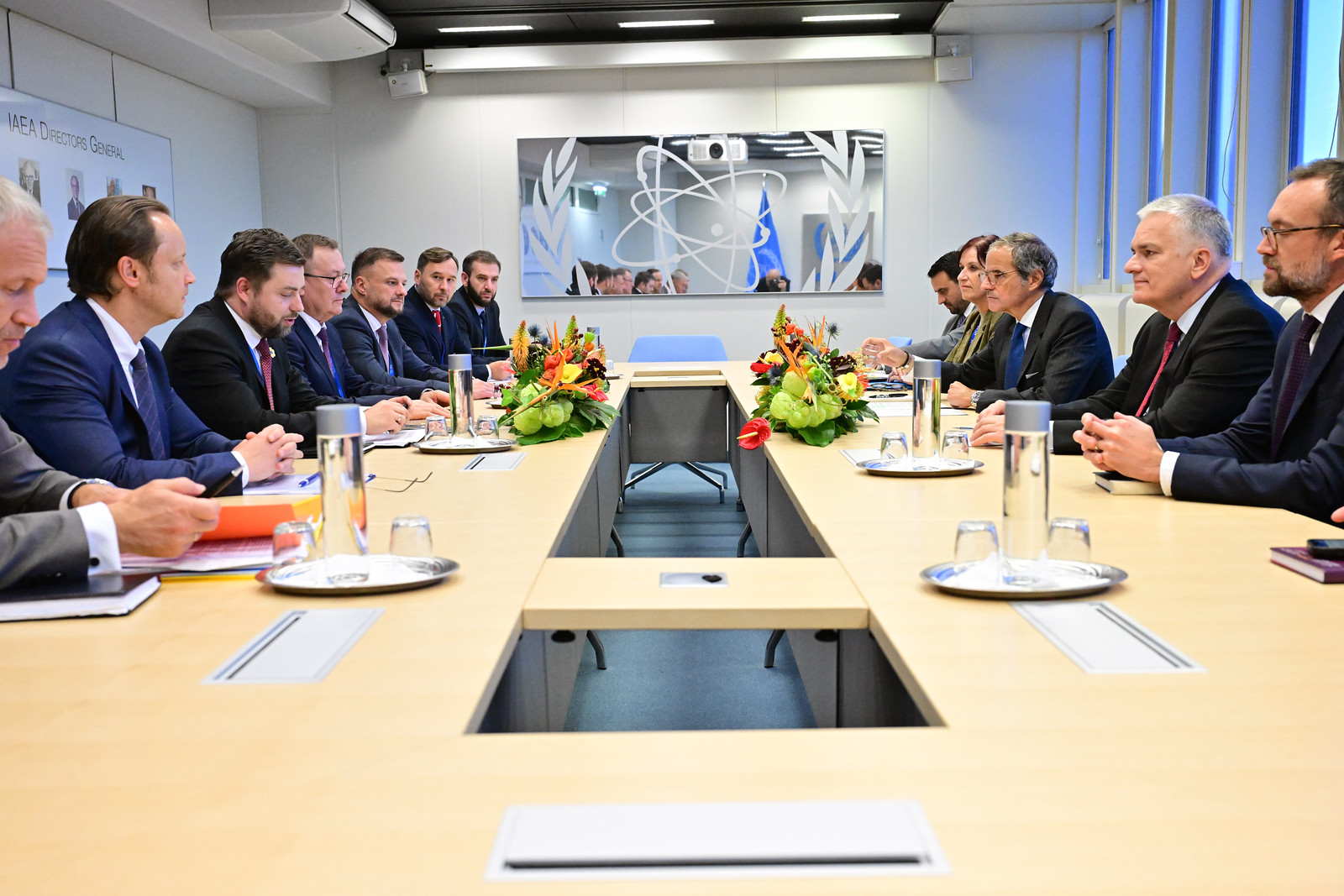
On September 14, during the IAEA General Conference, Grossi met with Rosatom Director General Alexey Likhachev. According to Rosatom, the parties discussed, among other issues, how military activity in the region had complicated deliveries of diesel fuel needed to operate the emergency diesel generators. Grossi expressed his readiness to consider ways in which the IAEA could assist in arranging such deliveries. (On September 20, Rosatom Director General Alexey Likhachev reported that a rotation of IAEA experts had taken place at the ZNPP and that diesel fuel had been delivered to the plant.)
On September 15, Grossi met with a Ukrainian delegation, which included Energoatom head Pavlo Kovtoniuk, on the sidelines of the conference. The discussions covered ensuring an uninterrupted power supply to the ZNPP, the IAEA’s role in facilitating the restoration of the plant’s power supply from the Ukrainian electrical grid, and further cooperation on nuclear safety and physical protection of Ukraine’s nuclear facilities.
Another noteworthy development occurred in September. The IAEA suspended its Deputy Director General and Head of the Department of Nuclear Energy, Mikhail Chudakov, from his duties. An internal investigation was prompted by a book he published under a pseudonym, the content of which allegedly violated the Agency’s ethical standards.
At the same time, Chudakov’s ties to the Russian nuclear industry had raised questions since the beginning of Russia’s full-scale invasion of Ukraine. In 2022, Greenpeace called for his removal from office over a potential conflict of interest. However, he continued to perform his duties and cooperate with Russian nuclear organizations.
For more details on the circumstances of Chudakov’s suspension and the broader issue of the IAEA’s engagement with Rosatom, see a separate Bellona article.
The IAEA team at the ZNPP continues to report regular military activity near the plant site and the nearby city of Enerhodar, where ZNPP personnel live.
On September 6, Russia reported that Ukraine had carried out a strike on a market in Enerhodar, causing six casualties, including one fatality. A number of photographs were attached to the communication as evidence of the incident.
In response, on September 9, Ukraine submitted a note to the IAEA accusing Russia of disseminating false information through the Agency’s official channels. According to the Ukrainian side, some of the photographs presented by Russia as evidence had previously been published in other contexts: one in September 2021 in connection with the Second Karabakh War, and the other in August 2016 in materials concerning the shelling of Krasnohorivka in Ukraine’s Donetsk region.
Ukraine notes that Russia controls the ZNPP and the surrounding territory, limiting opportunities for independent verification of information coming from the area. According to the Ukrainian side, the use of archival photographs raises doubts about the reliability of Russian reports on the situation at the plant.
In this regard, the Ukrainian side called on the IAEA and its Member States not to treat Russian claims about incidents at and around the ZNPP as established facts without independent confirmation. The note also emphasized that the presence of the IAEA mission at the plant should not be used to lend credibility to unverified Russian reports, and that the circulation of documents through the INFCIRC system does not in itself mean that the Agency has verified or confirmed the information they contain.
Against this backdrop, the Russian side continued to report new attacks on ZNPP-related facilities throughout September. According to information provided by Russia, drones attacked the ZNPP training center on September 8 and 12. On September 11, tanker trucks transporting diesel fuel to the ZNPP were reportedly attacked, killing two people and injuring several others. The Russian side also reported that the Zaporizhzhia thermal power plant was attacked on September 19, 20, and 27, resulting in damage to transformers at its open switchyard. This switchyard is the only connection point between the ZNPP and the 330 kV Ferrosplavna-1 power line. On September 22, a radiation monitoring post was reportedly struck and rendered inoperable.
Separately, on September 24, Ukraine’s Permanent Mission to the international organizations in Vienna reported new evidence of UAV activity in the area of the Zaporizhzhia NPP.
The communication includes screenshots from video footage obtained from a Russian online source and recorded by the onboard camera of a fixed-wing UAV identified in the source as a Molniya-2. The video itself is available on the Telegram channel @actual_energodar.
The communication notes that geographical landmarks visible in the footage make it possible to determine that the UAV approached the Zaporizhzhia NPP from the south, flew along the cooling pond, and then directly over the plant site. At one point in the recording, one of the ZNPP reactor units is clearly visible near the UAV’s flight path.
According to onboard telemetry data shown in the screenshots, the UAV lost its connection to the control system while flying over the ZNPP site at an altitude of approximately 530 meters, but continued its flight.
The Ukrainian side notes that loss of control, including as a result of electronic warfare measures, creates a risk of uncontrolled flight and UAV crashes on the plant site. Ukraine therefore calls on the IAEA to take such scenarios into account when investigating UAV incidents at the ZNPP and to refrain from drawing conclusions about the drones’ origin and affiliation without independent verification.
In late July, the Russian management of the ZNPP decided to raise the level of borated water in the spent fuel pools of all six reactor units. This measure was intended to increase the time available before the spent fuel pool water inventory would be significantly reduced by boil-off in the event of a prolonged loss of cooling capability following a loss of power supply.
According to Grossi’s report (GOV/2026/49), the water level was to be raised from 28.8 to 36.2 meters. In August, the water level was raised to 30.5 meters, corresponding to the leak-test level of the spent fuel pool isolation gates installed to enable the water level increase. However, leaks were detected through the isolation gates of the spent fuel pools of Units 1, 2, and 4, and further water level increases were suspended. At these three units, the water level was subsequently lowered back to its original level of 28.8 meters.
On August 20, the ZNPP once again lost its connection to its last remaining off-site power line — the 330 kV Ferrosplavna-1 line — due to military activity. For more than two weeks, the plant relied on emergency diesel generators.
On September 5, after a temporary ceasefire had been arranged, Ukrainian specialists began repair work. Demining and repairs were carried out in the presence of IAEA teams. On September 7, off-site power to the ZNPP was restored.
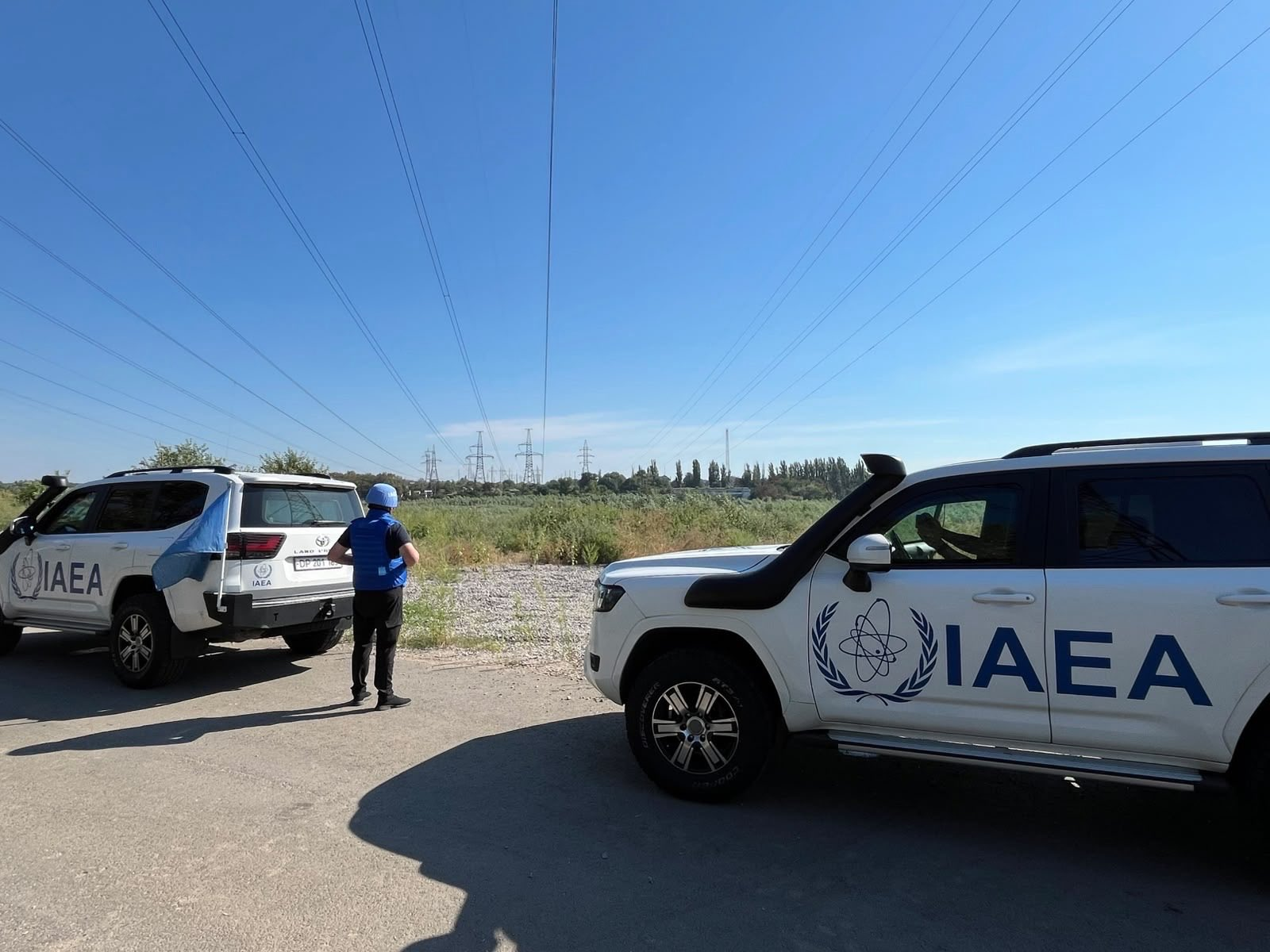
It should be recalled that Ferrosplavna-1 became the only available power line for the ZNPP after the 750 kV Dniprovska line was damaged on March 24. It later emerged that the 750 kV Dniprovska electrical substation, located more than 100 km northwest of the ZNPP, had also been damaged by Russian military activity on May 22.
Grossi’s September report on the situation in Ukraine notes that on June 24, the IAEA team visited this substation to assess the damage caused by drone attacks and its implications for the reliability and resilience of off-site power supply to the South Ukraine and Zaporizhzhia NPPs. The team confirmed extensive damage to critical substation equipment, including the complete destruction of a 750/330 kV autotransformer, a station auxiliary transformer, and a building housing DC power supply equipment and batteries, as well as major damage to 750 kV shunt reactors. By the end of August, the substation was still operating with limited functionality, serving only as a transit node at the 330 kV voltage level, while the 750 kV section remained unavailable.
Following the restoration of off-site power to the ZNPP on September 7, the IAEA noted that the situation regarding diesel fuel reserves at the plant remained difficult. The latest loss of power had significantly depleted the reserves, while replenishing them was complicated by the military situation. At the same time, according to information available at that point, the off-site fuel storage was empty.
On September 25, the IAEA reported that the Russian management of the ZNPP had decided to adjust the operating strategy for its emergency diesel generators (EDGs) to reduce fuel consumption in the event of another complete loss of off-site power.
Under the revised strategy, only four of the plant’s 20 EDGs would start automatically in the event of a loss of off-site power, while the remaining avilable units would require manual connection by plant staff.
The IAEA also noted that the plant’s diesel fuel needs would increase during the winter. The ZNPP plans to rely on separate diesel-fired boilers for much of the heating at the plant and to use diesel steam generators for radioactive waste processing. This makes securing sufficient diesel fuel supplies for the plant an even more pressing issue.
On September 29, the IAEA team at the ZNPP was informed that scheduled maintenance of electrical equipment at the 750 kV switchyard had been postponed due to the security situation. Maintenance on one of the emergency diesel generators had also been delayed because of the late arrival of contractors.
On September 30, the IAEA team was informed that repairs were needed at the Zaporizhzhia thermal power plant to improve the reliability of off-site power supply to the ZNPP.
The causes of damage to the ZNPP’s power supply infrastructure are examined separately in an investigation published by Greenpeace on September 17, conducted jointly with the London-based company McKenzie Intelligence Services (MIS). According to the report, MIS’s analysis of satellite imagery found no evidence to support certain Russian claims of Ukrainian strikes on critical infrastructure supplying electricity to the ZNPP, as no visible signs of attacks could be identified in the images. The analysis focused primarily on the 330 kV Ferrosplavna open switchyard, located northeast of the Zaporizhzhia thermal power plant.
Throughout September, the IAEA’s updates on the situation in Ukraine reported that air raid alerts and drone activity continued to be recorded at other Ukrainian nuclear facilities.
On September 23, drone strikes damaged the premises of Ukraine’s state nuclear power operator Energoatom in Kyiv. According to reports, company employees were injured and fires broke out in the buildings. Although the strikes did not directly target a nuclear facility, IAEA Director General Grossi once again emphasized that attacks affecting nuclear industry personnel are unacceptable and called for maximum military restraint.
Ukraine also informed the IAEA that on September 30, a Russian UAV struck the site of the Institute for Nuclear Research of the National Academy of Sciences of Ukraine in Kyiv. According to the Institute, the impact point was approximately 100 meters from the Kyiv VVR-M research reactor.
«Absolutely everything happening around Ukraine’s nuclear facilities today is a consequence of the war Russia started in February 2014, when, during the annexation of Crimea, it took control of a Ukrainian nuclear facility — the IR-100 research reactor at Sevastopol National University of Nuclear Energy and Industry.
There was virtually no international response to this event. In fairness, however, it should be noted that the IAEA expressed “concern” and refused to recognize Russian jurisdiction over the reactor. This “shook” Russia so profoundly that it refused to approve and sign the IAEA’s annual report.
But what is most striking is that the international nuclear agency’s concern was supported by no fewer than eight (out of 35) members of the IAEA Board of Governors, while the rest remained silent or opposed it. Apparently, no one at the time even imagined that a few years later Russia would seize Europe’s largest nuclear power plant, the Zaporizhzhia NPP, by force and begin posing serious daily threats to the nuclear and radiation safety of Ukraine’s other nuclear power plants.
Today, when one observes the “fuss” surrounding nuclear diplomacy, reads IAEA Director General Rafael Grossi’s reports to the Board of Governors, and hears his endless complaints about restrictions on his representatives’ access to information and freedom of movement at the ZNPP, the Agency’s powerlessness in the face of such developments becomes clear.
It is difficult to say whether the IAEA will undergo any changes in response to the events in Ukraine, but one can expect that neither the IAEA nor other UN bodies will take any fundamental, effective measures.
Until the war ends, we will continue to see Russia and Ukraine accusing each other of shelling, with no way to establish the truth while the war continues. The only reason to place greater trust in Ukraine is that Russia is unquestionably responsible for starting the war, and that both its president and the head of Rosatom constantly, openly, and publicly lie.
There is little point in analyzing the technical condition of the ZNPP or the situation surrounding its power supply. By and large, these factors have virtually no impact on the safety of reactors that have long been in cold shutdown or, at the very least, the reactors’ condition provides a substantial margin of time in which measures can be taken to prevent a nuclear or radiological threat in extreme circumstances. Here, I would like to emphasize once again a point we have made repeatedly: nuclear power facilities have become a factor in warfare. They have begun to influence military planning, political decision-making, the way military force is used, and assessments of the limits of acceptable risk.
After the Chief of the General Staff of the Russian Armed Forces briefed Putin on the launch of large-scale strikes against Ukraine’s energy infrastructure, it became definitively clear that, in wartime, energy infrastructure, including nuclear facilities, occupies an intermediate position between civilian infrastructure and an instrument of military strategy. Its significance is no longer limited to providing electricity. It is becoming part of military and political calculations, while targeting it has become a means of achieving military and political objectives.»

Aleksander Nikitin
Special Nuclear Advisor
On September 9, ČEZ, the operator of the Czech Temelín and Dukovany NPPs, announced that the Czech State Office for Nuclear Safety (SÚJB) had approved the use of Westinghouse Electric Sweden AB’s RWFA-T nuclear fuel at Temelín NPP.
ČEZ and Westinghouse signed a fuel supply contract for Temelín NPP in June 2022. In May 2025, the first 30 Westinghouse fuel assemblies were delivered to the plant.
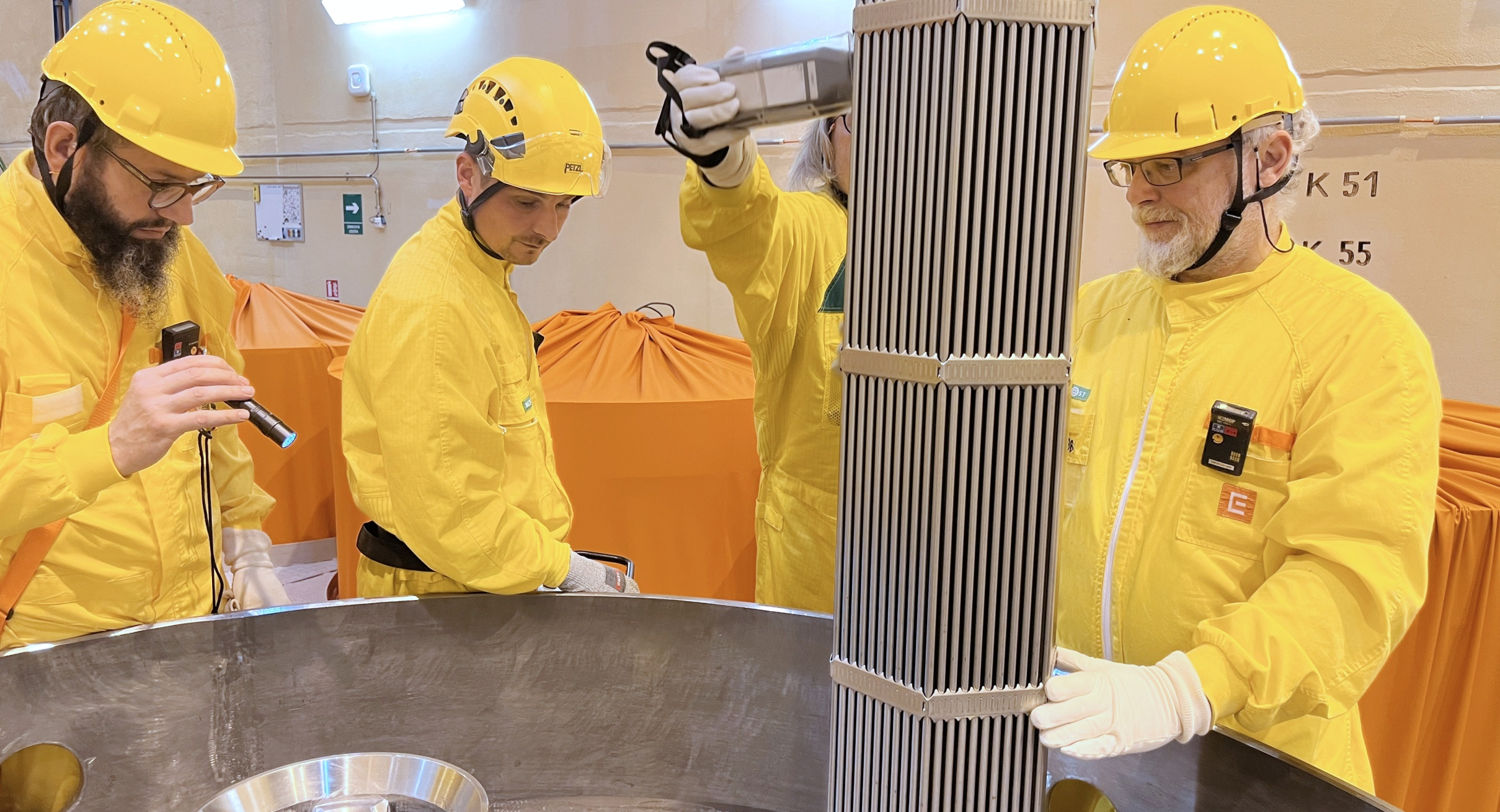
Now that regulatory approval has been obtained, the new fuel assemblies are scheduled to be loaded into the Unit 1 reactor during a planned maintenance outage at the end of the year.
ČEZ noted that the approval followed several years of preparation, testing, and safety analyses. In previous years, the plant successfully tested six Westinghouse lead test fuel assemblies, which were operated in the reactor from 2019 to 2022.
According to Bohdan Zronek, Chief of ČEZ’s Nuclear Energy Division, the company will continue preparations for licensing fuel assemblies for Dukovany NPP.
«The Czech Republic continues to diversify its nuclear fuel supplies and transition to alternative suppliers in place of Russian ones, remaining one of the leaders in this process among EU countries operating Soviet- and Russian-designed VVER reactors.
As we noted in our annual report, Rosatom 2025: The war, Energy and Global Activity, the Czech Republic, Finland, and Bulgaria have already begun receiving alternative fuel from Westinghouse in recent years. At the same time, the Czech Republic and Finland have sharply reduced their purchases of Russian nuclear fuel. In 2025, the Czech Republic purchased almost three times less Russian fuel than in 2024 – 53 tonnes worth €105 million, compared with 183 tonnes worth €303 million in 2024.
Meanwhile, Hungary and Slovakia, which are relying on cooperation with the French alternative fuel supplier Framatome, actually increased their purchases from Russia in 2025. Last year, these two countries accounted for more than 80% of all Russian nuclear fuel deliveries to EU countries by volume and more than 70% by value. These figures cover four EU countries — Slovakia, Hungary, Finland, and the Czech Republic — and exclude Bulgaria, for which Eurostat has no import data.
This situation is not surprising, given that Framatome still lacks its own independent technology for manufacturing fuel for VVER reactors. Instead, its plans for future supplies are largely based on licensed production of such fuel using Rosatom technology at facilities in the German city of Lingen and in France.»

Dmitry Gorchakov
Nuclear advisor
On July 22, 2026, the Lower Saxony Ministry of the Environment granted Advanced Nuclear Fuels (ANF) approval to expand production at its nuclear fuel fabrication facility in Lingen to manufacture fuel assemblies for VVER reactors as part of its cooperation with Rosatom.
On September 5, Julia Verlinden, deputy chair of the Greens’ parliamentary group in the Bundestag, called on the federal government to reassess the security risks associated with the Lingen plant’s cooperation with Rosatom after Germany held Russia responsible for an attempted act of sabotage involving a drone at Leipzig/Halle Airport.
On September 10, the Lower Saxony branch of the German Federation for the Environment and Nature Conservation (BUND), supported by the nationwide anti-nuclear organization .ausgestrahlt, filed a lawsuit against the state of Lower Saxony in the Higher Administrative Court in Lüneburg, challenging the approval to expand production at the Lingen nuclear fuel facility.
The organizations strongly criticize the planned cooperation with the Russian state nuclear corporation Rosatom, warning of increased Russian influence and security risks, including the possibility of espionage and sabotage at critical infrastructure facilities. They also question the legality of the approval, citing serious procedural violations. In particular, BUND argues that the preliminary environmental impact assessment was incomplete and relied on outdated documents.
As .ausgestrahlt representative Armin Simon told The Parliament Magazine, the deadline for submitting detailed grounds for the lawsuit is November 19.
More details on BUND’s lawsuit, the environmental groups’ arguments, and the circumstances surrounding Framatome’s cooperation with Rosatom are available in a separate Bellona article.
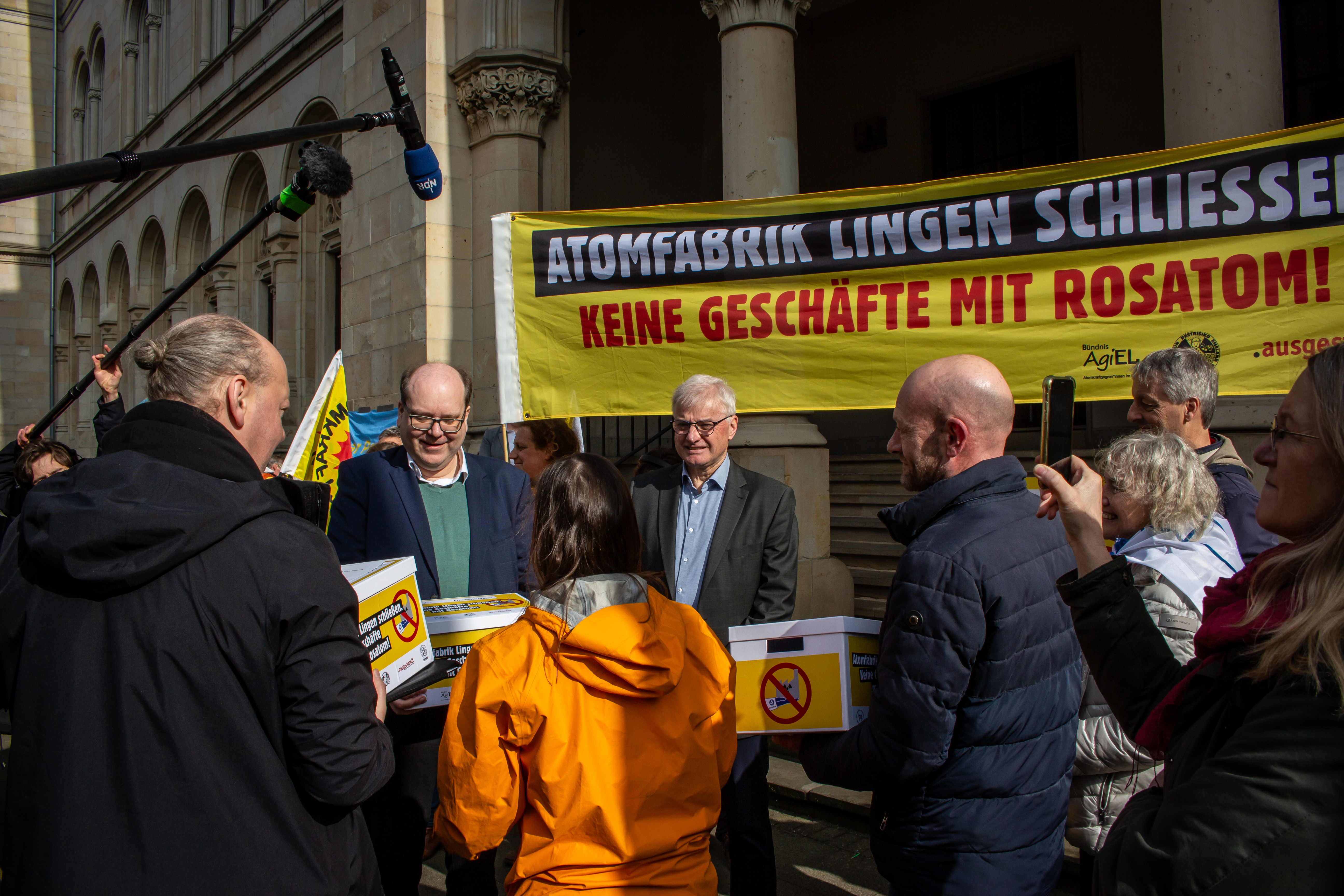
On September 11, Lower Saxony Environment Minister Christian Meyer also contacted the federal authorities to ask whether their assessment of the security risks associated with ANF’s cooperation with Rosatom had changed following the drone incident at Leipzig/Halle Airport.
ANF, in turn, submitted a request to the Lower Saxony Ministry of the Environment after the lawsuit was filed, seeking permission to proceed with the project before the court proceedings were concluded.
On October 5, Meyer criticized the response he had received from the federal authorities, which stated that the security assessment conducted in February 2026 remained unchanged.
That same day, the Lower Saxony Ministry of the Environment granted ANF’s request, authorizing the immediate implementation of the previously issued permit despite the ongoing legal challenge.
On October 6, BUND announced its intention to file an urgent application with the court to overturn the decision authorizing immediate implementation of the permit and restore the suspensive effect of the legal challenge. The organization argues that the project should not proceed until the court has completed its review of the permit’s legality.
On September 29, the German think tank Zentrum Liberale Moderne published an article by Diana Sushkova, an expert at the Ukrainian think tank DiXi Group, challenging the need for Framatome to cooperate with Rosatom to produce VVER fuel in Europe. As an alternative, the author points to Ukraine, which, with Westinghouse’s involvement, has managed to phase out Russian fuel for its VVER-1000 and VVER-440 reactors. Sushkova also notes that Framatome is already developing its own European VVER fuel, while cooperation with Rosatom helps perpetuate technological dependence on Russia.
«The situation surrounding the nuclear fuel fabrication facility in Lingen illustrates the gap between political statements about the risks of cooperation with Russian companies and decisions that allow such cooperation to develop in practice.
Lower Saxony Environment Minister Christian Meyer is calling for a reassessment of the security risks, yet his ministry has authorized the immediate implementation of the project without waiting for the court proceedings to conclude. At the same time, the regional authorities acted under federal oversight, indicating that the problem lies not only in the position of an individual regional ministry but also in Germany’s broader policy.
Moreover, the inconsistency of European sanctions policy is evident at the EU level as well. Recent prominent examples include the lifting of restrictions on certain major Russian businessmen with close ties to the Kremlin, such as Alisher Usmanov and Mikhail Fridman, as well as the removal of the Solikamsk Magnesium Plant, which is part of Rosatom’s corporate structure, from a draft sanctions list. In the latter case, the reason was the dependence of European rare earth materials production, specifically in Estonia, on Russian raw materials.
Such decisions demonstrate how economic interests, existing technological dependencies, bureaucratic and legal delays, and the lack of unified political will undermine the EU’s ability to effectively counter Russia’s aggressive actions at every level – regional, national, and international.»
Dmitry Gorchakov
Nuclear advisor
On September 18, 2026, US President Donald Trump signed the Lindsey O. Graham Sanctioning Russia and Iran Act of 2026, which expands sanctions against Russia, including restrictions in the financial and energy sectors. Specific provisions of the law concern Russia’s nuclear industry and Rosatom.
The law reaffirms the ban on imports of Russian-origin low-enriched uranium into the US that has been in effect since 2024. However, temporary exemptions from the ban may remain in place until January 1, 2028 (Sections 111 and 114).
Beginning January 1, 2028, the law provides for sanctions against leaders, officials, senior executives, board members, and controlling shareholders of Rosatom, its subsidiaries, and successor entities (Section 111). The sanctions include the blocking assets under US jurisdiction and visa restrictions.
The President may grant waivers from sanctions in the US national interests, provided that written justification is submitted to Congress in advance (Section 115). The law also allows sanctions against Russian persons to be terminated if Russia signs a peace agreement accepted by Ukraine’s independent government, ceases military hostilities against Ukraine, and abandons efforts to undermine its government (Section 117).
The law also provides for restrictions on foreign vessels transporting Russian uranium and certain owners, operators, insurers, and other parties involved in such shipments (Section 102). Foreign persons who knowingly supply goods, services, or technology that facilitate the maintenance or expansion of uranium production for use by sanctioned persons may also face sanctions (Section 108).

The law is named after Republican Senator Lindsey Graham, who, together with Democratic Senator Richard Blumenthal, introduced the Sanctioning Russia Act of 2025 (S.1241) on April 1, 2025. The bill proposed sweeping sanctions if the Russian authorities refused to negotiate a peace agreement with Ukraine, violated any negotiated peace agreement, initiated another military invasion of Ukraine, or overthrew, dismantled, or sought to subvert the Government of Ukraine. The proposal subsequently underwent substantial revisions. Shortly before his death in July 2026, Graham participated in negotiations with the White House on the revised legislation.
The original bill proposed significantly tougher restrictions on Russia’s nuclear industry. If any of the conditions listed above were met, the US President would have been required to prohibit imports of all Russian uranium, including supplies routed through third countries, and impose sanctions on Rosatom’s leadership and shareholders, as well as foreign sellers and purchasers of Russian uranium (Section 14). The bill also provided for sanctions against foreign companies facilitating uranium production for certain sanctioned entities (Section 11).
In addition, the bill proposed tariffs of at least 500% on imports into the US of goods and services from countries that purchased, sold, or merely transported Russian oil, gas, or uranium (Section 17). These measures could also have affected countries purchasing Russian uranium for their own nuclear power plants.
The enacted law contains no specific sanctions against foreign purchasers of Russian uranium or tariffs linked to such purchases. Tariffs of up to 100% are provided for major purchasers of Russian oil and gas and countries facilitating the circumvention of oil sanctions. Sanctions against Rosatom’s leadership were retained, but the range of individuals subject to them was narrowed, and their introduction was delayed until 2028.
As analyst Agathe Demarais notes in an article for Foreign Policy, the provisions of the new law indicate that Washington recognizes the difficulties of phasing out Russian uranium by 2028.
«The current US administration’s policy is not generally aimed at effectively and consistently restraining Vladimir Putin’s actions or reducing the threats Russia poses to Ukraine and Europe. The weakening of the original proposals during the legislative process, together with the Donald Trump administration’s unwillingness to use the leverage available to it to pressure the Kremlin into achieving a lasting peace — as confirmed on October 17 by an executive order waiving the application of the new sanctions — call into question the effectiveness of the new sanctions against Rosatom and the prospects for reducing Russian uranium supplies to the US and global markets.
Under these circumstances, one can only hope that, even in the absence of the political will to take a firm stance against Russia, concerns about its own energy security and the development of the US nuclear industry will encourage Washington to maintain the ban on Russian uranium imports beyond 2027 and help create the technical and economic conditions for domestic production in the US and alternative supplies.»
Dmitry Gorchakov
Nuclear advisor
On September 22, the US Trade and Development Agency (USTDA) and the Turkish company Türkiye Nükleer Enerji Anonim Şirketi (TÜNAŞ), responsible for developing new nuclear power plant projects, signed a grant agreement to fund technical assistance aimed at developing the regulatory, institutional, and financial roadmap needed for Turkish private sector companies to deploy small modular reactor (SMR) technology.
“Our goal is to advance TÜNAŞ’s efforts to create the conditions for deploying SMRs, which can increase energy security for Türkiye while providing opportunities for US companies,” said Thomas R. Hardy, USTDA’s Deputy Director.
According to Türkiye’s Ministry of Energy and Natural Resources, the agreement provides for an assessment of SMR designs from four US companies, as well as five different Generation IV reactor designs developed by US companies. The names of the companies and reactor designs have not been disclosed. The assessment will cover technical, economic, regulatory, and licensing aspects.
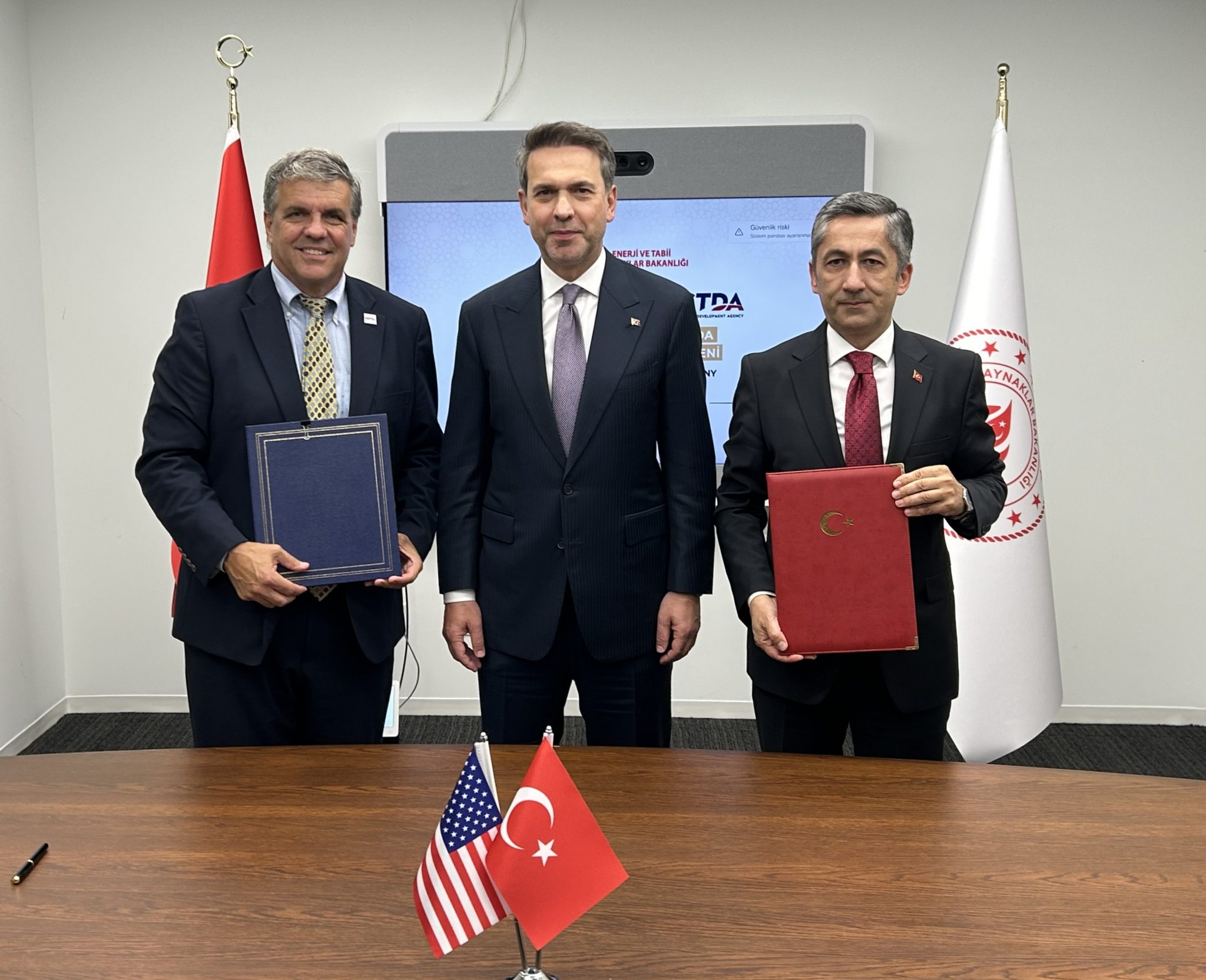
The study is expected to last at least one year, with USTDA providing approximately $2 million in funding.
The agreement follows the signing of a memorandum of understanding on strategic cooperation in civil nuclear energy in September 2025.
According to Nuclear Engineering International, the agreement is part of a broader US policy to promote American nuclear technologies in international markets and counter Russian and Chinese influence.
«The agreement described above, as well as the broader prospects for diversifying Türkiye’s international nuclear cooperation, were discussed during the Istanbul presentation of the World Nuclear Industry Status Report 2026 in late September, in which I participated. A recording of the event and all related materials are available here.
Judging by the questions from the Turkish audience, there is considerable interest in alternatives to the Russian Akkuyu NPP, the only nuclear power project currently under construction in Türkiye.
However, it is still too early to say that this interest is translating into concrete projects. The US is actively promoting its nuclear technologies in international markets and developing bilateral cooperation in this field, but the number of ongoing and prospective projects abroad involving US companies remains significantly smaller than Rosatom’s portfolio.
At the same time, Rosatom’s problems with its international projects, examined in detail in our report Rosatom 2025: The War, Energy, and Global Activity, point to a gradual decline in its competitiveness, including in Türkiye. Delays and difficulties in implementing the Akkuyu project could significantly reduce the Russian state corporation’s chances of securing contracts to build new nuclear power units in the country.
However, Rosatom’s weakening position does not automatically mean that its American competitors will gain ground. China and South Korea may be the main beneficiaries in the competition for new projects in Türkiye, with Canada also a potential beneficiary. Thus, any potential decline in Russia’s dominant role in the international nuclear market will depend not only on political decisions and countries’ efforts to diversify their nuclear partnerships, but also on the ability of alternative suppliers to offer competitive technologies, acceptable financing terms, and credible guarantees that projects will be delivered.»
Dmitry Gorchakov
Nuclear advisor
On September 29, Armenian Prime Minister Nikol Pashinyan met with Rosatom Director General Alexey Likhachev. The meeting focused on extending the operating life of Unit 2 at the Armenian NPP and proposals from the Russian side for the construction of a new nuclear power unit.
Earlier, on September 3, Pashinyan said that Likhachev would present Russia’s proposals for building a new nuclear power plant in Armenia.
The Armenian government continues to consider proposals received from international partners and intends to make a decision in the foreseeable future. According to Pashinyan, the choice is not a geopolitical matter and will be based solely on economic considerations, taking into account price, quality, safety, timelines, and guarantees.
Following the meeting, Likhachev said that Russia had presented Armenia with a proposal to build a new nuclear power unit with a VVER-1000 reactor and a capacity of approximately 1 GW. At the same time, Rosatom is also offering options for small- and medium-capacity nuclear power units.
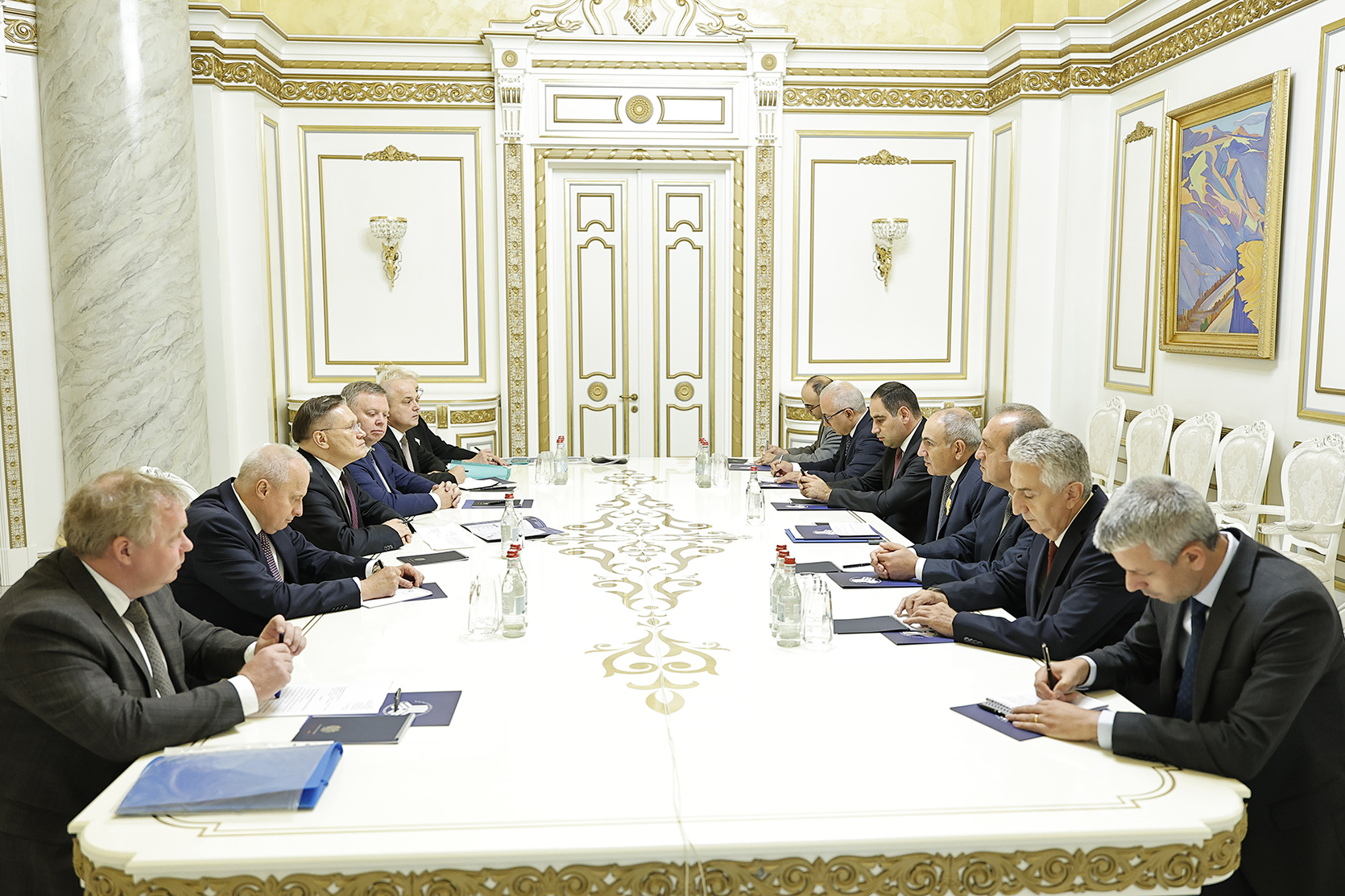
Earlier, Pashinyan had said that Armenia did not need a large-capacity nuclear power plant. Given the pace of solar energy development, a modular nuclear power plant would be sufficient. However, when asked by journalists in early October, he explained that circumstances had changed: Armenia had become a country facing an electricity deficit, and a modular nuclear power plant would therefore most likely no longer be sufficient to meet its needs.
During the meeting, the two sides also discussed a further extension of the operating life of Unit 2 at the Armenian NPP. According to Likhachev, the life extension work can be divided into two stages: the first extending operation until 2031, and the second until 2036. Most of the work under the first stage has been completed.
In February 2026, Pashinyan stated that the government was considering extending the operating life of the Armenian NPP reactor by another 10 years – until 2046.
Following the meeting, Likhachev commented that such an extension was possible but would require investment totaling hundreds of millions of dollars to modernize safety and automation systems, re-anneal the reactor pressure vessel to restore the necessary material properties, and expand and repair spent nuclear fuel storage facilities. In his view, it would be more effective to begin construction of a new nuclear power plant in the near future and limit operation of the existing unit to 2036.
On September 3, Bangladesh’s Minister of Science and Technology, Faqir Mahbub Anam, reported that plans to begin supplying electricity from Unit 1 of Rooppur NPP to the grid had been delayed by a technical malfunction that disrupted commissioning work.
According to Anam, electricity generation at Unit 1 had previously been expected to begin in September, but the government could no longer provide a specific timeline.
Anam said that in early July, during commissioning tests conducted before the reactor reached criticality, a problem arose with the pressure-operated relief and safety valves (PORV/POSV) in the primary circuit pressure control system: only one of the three valves was functioning properly. Over the following five weeks, repeated testing failed to resolve the problem. Rosatom sent five specialists to Bangladesh.
One report indicated that two possible solutions were being considered: installing valves intended for Unit 2 on Unit 1, or ordering the manufacture and delivery of new valves from the Russian supplier.
On September 14, Anam discussed the status of the project with Rosatom Director General Alexey Likhachev on the sidelines of the IAEA General Conference in Vienna. According to Bangladesh’s Ministry of Science and Technology, the two sides discussed the progress of the project and the possibility of beginning electricity supply to the grid as soon as possible while complying with international nuclear safety standards. Likhachev assured Anam that Rosatom would continue providing technical and strategic support for the project.
Later in September, further confirmation emerged that the malfunction had affected the unit’s commissioning schedule. On September 27, The Daily Observer reported on the findings of the Implementation Monitoring and Evaluation Division (IMED) of Bangladesh’s Ministry of Planning. An IMED team inspected the NPP construction site on August 13–14, and its report was distributed to government agencies on September 21.
According to the publication, during hot functional testing of the unit, one of the pressurizer pilot-operated relief valves failed to open when the specified pressure was reached and did not relieve the excess pressure. The unit was subsequently returned to a cold condition to identify the cause and rectify the malfunction.
The report states that a root cause analysis was conducted and corrective measures were taken. However, the problem disrupted the work schedule at the stage between fuel loading and synchronization of the unit with the grid.
Technical problems at Unit 1 also affected Unit 2. The IMED report notes that several components originally intended for the second reactor were transferred to Unit 1 following equipment failures during testing and commissioning, delaying work on Unit 2.
IMED also identified broader problems with project implementation, including the absence of a realistic schedule for the start of commercial operation, delays in equipment deliveries and staffing, and delays in the development of supporting infrastructure. The division recommended that the project director obtain time-bound plans from Atomstroyexport for manpower deployment, materials procurement, and ancillary works, and prepare an integrated implementation schedule.
After the malfunction was resolved and some equipment was replaced, the system passed testing at a pressure of 16 MPa on September 30, allowing commissioning work to proceed to the next stages. Available media reports do not clarify whether the previously considered option of transferring a valve from Unit 2 to Unit 1 was implemented.
On October 11, three days after receiving the necessary authorization from the Bangladesh Atomic Energy Regulatory Authority, Unit 1 of Rooppur NPP achieved first criticality.

A separate problem arose with the delivery of nuclear fuel. On September 24, another shipment of fuel for Rooppur NPP was scheduled to arrive at Dhaka airport, but the delivery did not take place.
According to Rooppur NPP Project Director Md. Kabir Hossain, Rosatom notified the Bangladeshi side that the flight had been postponed because it had not obtained overflight clearance from all the countries along the route. The usual route passes through the airspace of Kazakhstan, Turkmenistan, Afghanistan, Pakistan, and India.
Bangladesh’s Minister of Science and Technology, Faqir Mahbub Anam, later said that Pakistan had not granted overflight clearance. According to media reports, the Pakistani Embassy in Dhaka stated that the problem appeared to be related to technical and procedural issues concerning the flight route and airspace permissions, rather than a political decision.
Following the delay in the September shipment, transportation was arranged via an alternative route. On October 2, the first cargo aircraft carrying another shipment of nuclear fuel arrived in Dhaka.
«The situation at Rooppur NPP shows that Rosatom’s international projects continue to move forward and are brought to completion, but face technical, organizational, and logistical difficulties. An equipment malfunction at Unit 1 delayed commissioning and affected the schedule for Unit 2, while nuclear fuel deliveries encountered obstacles due to airspace restrictions. The project had also previously faced financial difficulties.
Such situations highlight the vulnerabilities of a model in which Rosatom assumes responsibility for the vast majority of work and supplies involved in building a nuclear power plant, particularly in a country with no previous experience in nuclear power plant construction. Sanctions, disruptions to established supply chains, and geopolitical restrictions can extend project timelines and increase costs even when the project itself is not at risk of cancellation.
At the same time, the situation with Rosatom’s international projects varies considerably from country to country. China provides a telling example: on October 8, 2026, Unit 7 of Tianwan NPP, equipped with a Russian VVER-1200 reactor, was connected to the grid (see below).
Approximately five and a half years passed between the start of construction in May 2021 and the unit’s first supply of electricity to the grid. This makes it the fastest-built nuclear power unit equipped with a Russian VVER-1200 reactor, even when projects in Russia itself are taken into account. The key distinguishing feature of Rosatom’s projects in China is the high degree of localization. The Chinese side is responsible for most of the construction work and equipment supplies, as well as project management and financing, while Rosatom supplies the main nuclear island equipment and provides technical support.
This contrast demonstrates that Rosatom’s competitiveness in third countries depends not only on its experience, technologies, and willingness to cover a substantial share of project financing, but also on the availability of reliable partners and suppliers and the host country’s ability to implement major infrastructure projects independently. In countries that are only beginning to develop nuclear power, complete dependence on a Russian contractor, its equipment, financing, and logistics when building a large nuclear power plant can leave the project seriously vulnerable. Against this background, international consortia may become an increasingly attractive model (as illustrated by Kazakhstan, which is pursuing precisely this approach to building its nuclear power plants).
Rosatom is accustomed to working on international projects in cooperation with leading global partners and suppliers, particularly Western companies. However, such cooperation has become increasingly difficult since 2022. It is therefore likely that the future success of Rosatom’s international expansion will depend on its ability to establish mutually beneficial cooperation with China in areas where the two are not in direct competition.»
Dmitry Gorchakov
Nuclear advisor
On September 4, Politico reported on supplies of Chinese raw materials to the Russian company Alabuga-Volokno, based on the company’s internal shipping and customs documents. The company is part of Rosatom’s UMATEX composites division and is located in Tatarstan.
Alabuga-Volokno is subject to sanctions and export restrictions imposed by the US, the European Union, New Zealand, Japan, and Switzerland. JSC UMATEX, the management company of Rosatom’s composites division, is also under sanctions, including those imposed by the US and the UK.
The documents were gathered from Russian sources by the Ukrainian Security and Cooperation Center (USCC), which shared them with the US and UK governments. According to Politico, US and Ukrainian government officials confirmed their authenticity.
According to the publication, the documents show that in 2026, the Chinese state-owned company Jilin Chemical Fiber Group arranged for the delivery of two containers of polyacrylonitrile (PAN) precursor tow, with a combined weight of up to 46 tonnes, to Alabuga-Volokno. This raw material is used to produce carbon fiber, which is also used in the manufacture of Russian attack drones. The shipment was declared under a customs code for synthetic fibers intended for civilian use, including materials such as nylon and polyester.
According to experts interviewed by Politico, the shipment should have been classified as dual-use goods, and the identified deliveries could provide grounds for US sanctions against the Chinese company, which is not currently subject to Western restrictions.
Rosatom rejected allegations of legal violations, stating that its enterprises comply with all applicable requirements. Jilin Chemical Fiber Group did not respond to Politico’s requests for comment.
On September 20, Politico published another report concerning Alabuga-Volokno. The USCC obtained project documentation and other internal records from Russian sources indicating that the facility was being expanded.
According to Politico, Russian authorities approved the project to build a new production line in May 2026. Satellite imagery also shows site preparation work. The new line will increase annual carbon fiber production capacity by up to 500 tonnes by 2029. Politico reports that, according to Rosatom documents, two of the three main reasons cited for expanding production were “import substitution of dual-use products” and “meeting the demand of Russian strategic sectors (aviation, defense industry) for carbon fiber.”
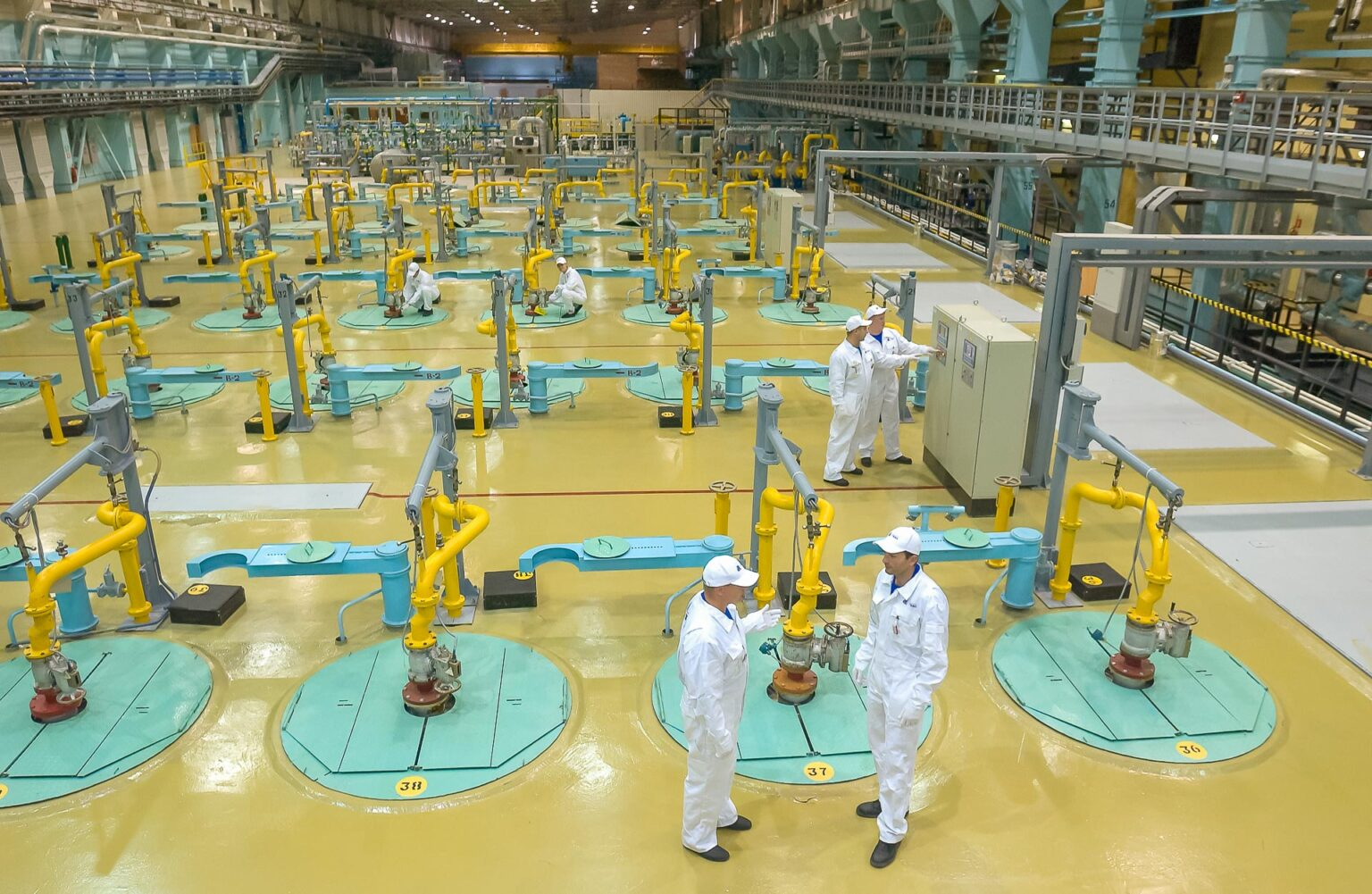
On September 14, Rosatom’s fuel company TVEL announced that the W2-ECP facility for the defluorination of depleted uranium hexafluoride (DUHF) had entered pilot operation at the Electrochemical Plant (ECP) in Zelenogorsk, Krasnoyarsk Region.
This is the second facility of its kind in Russia for processing DUHF, with an annual capacity of 10,000 tonnes. Installation of the facility began in August 2023. The equipment was supplied by the engineering division of the French company Orano.
Uranium hexafluoride defluorination facilities convert chemically aggressive DUHF into a more chemically stable form — uranium oxide (U₃O₈) powder. In this form, depleted uranium can be stored for long periods in containers at outdoor storage sites.
TVEL President Natalia Nikipelova said that Rosatom may commission three more depleted uranium processing facilities in the medium term, with a planning horizon of more than five years. These facilities are expected to use Russian technology developed in parallel with the construction of the French-supplied facility.
According to Nikipelova, the locations of the new facilities have not yet been finalized. Three sites are under consideration: the Electrochemical Plant, the Ural Electrochemical Integrated Plant (UEIP) in Novouralsk, Sverdlovsk Region, and the Siberian Chemical Plant in Seversk, Tomsk Region.
It should be noted that, according to Rosatom’s 2020 program for the safe management of DUHF, the DUHF processing capacity at ECP was expected to reach 20,000 tonnes per year by 2024 (the W2-ECP project). The program also envisaged constructing a facility with a capacity of 20,000 tonnes per year at UEIP in 2024–2026 (the W-UEIP project) and increasing ECP’s processing capacity to 30,000 tonnes per year in 2027–2028 (the W3-ECP project). These measures were expected to enable a gradual reduction in accumulated DUHF stockpiles.
In TVEL’s 2022 annual report, the plans remained unchanged. The company’s 2023 annual report still described the program for the safe management of DUHF, but no longer provided specific timelines for the construction of new facilities. The program’s stated goal of eliminating accumulated DUHF stockpiles by 2057 remained in place. In 2024, TVEL simply reported that implementation of the W2-ECP project was continuing. In its 2025 annual report, the program for the safe management of DUHF was no longer mentioned at all, although the report still contained a general reference to the defluorination of depleted uranium tails from enrichment operations.
Thus, the commissioning of the second facility in Zelenogorsk increased Russia’s total DUHF deconversion capacity to 20,000 tonnes per year. This capacity had originally been expected to be reached by 2024, with a further increase to 50,000 tonnes per year planned by 2028. Natalia Nikipelova’s statement about the construction of three additional facilities did not specify either their individual commissioning dates or their production capacities.
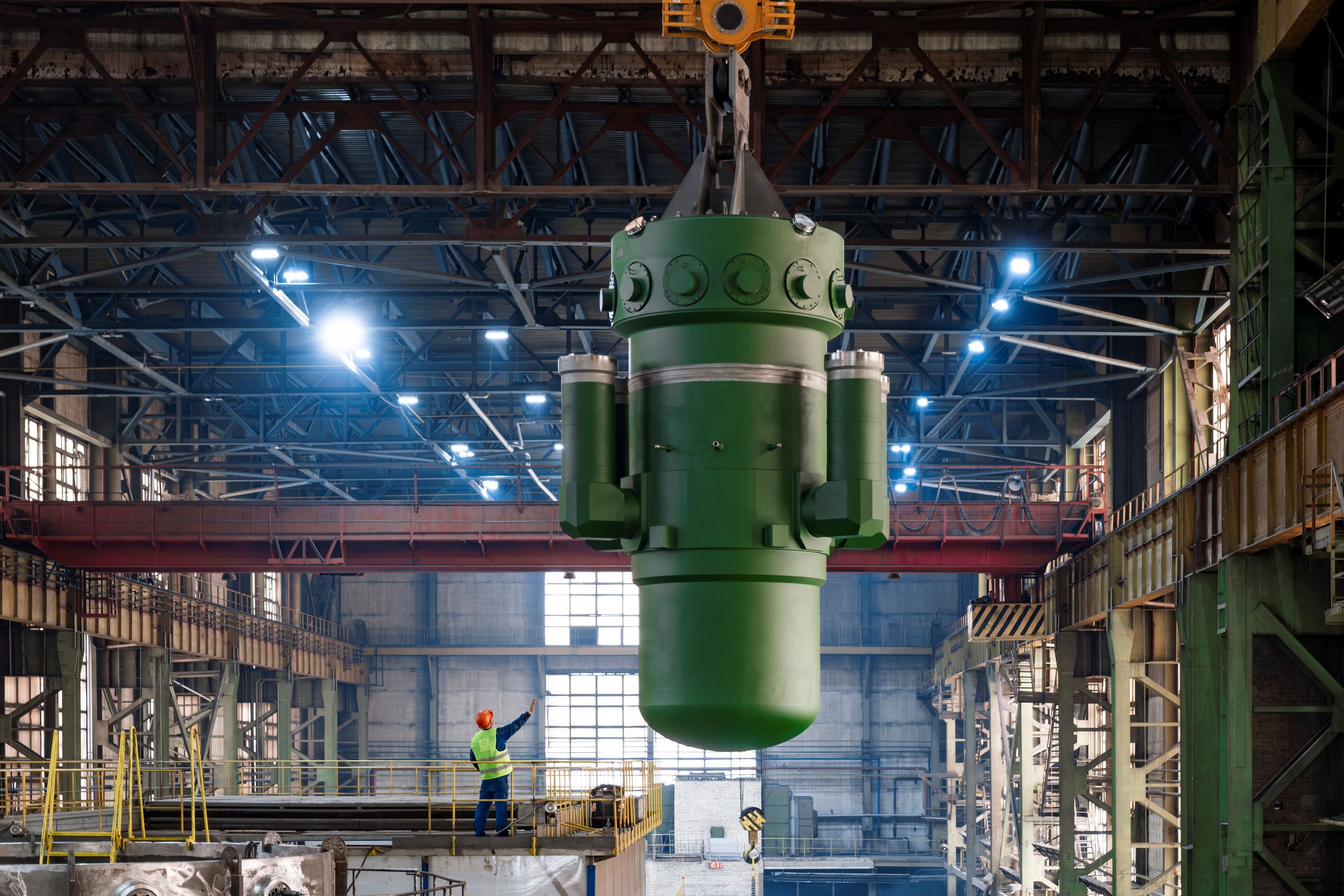
On September 23, Rosatom announced that ZiO-Podolsk, a plant belonging to Rosatom’s Mechanical Engineering Division, had manufactured the second RITM-200S reactor unit for the PEB-106 floating nuclear power unit (FPU), designed to supply electricity to a copper mining cluster in Chukotka that includes the Baimsky Mining and Processing Plant, currently under construction.
The first reactor unit was manufactured in May 2026 and is already at the shipyard, where it will later be installed in the hull of the first floating power unit. The hull itself was delivered from China in April. A total of four FPUs are planned for the project.
On April 2, 2026, Vladimir Panov, Rosatom’s Special Representative for Arctic Development, stated that the first FPU would be completed in 2028 and the last in 2031. He also said that the construction schedule for the power units was aligned with the development of the Baimsky Mining and Processing Plant and that the floating power units were expected to be in Chukotka and ready to supply electricity to the customer by 2028–2029.
On September 28, Maxim Bystrov, Chairman of the Board of the Market Council Association, said that Rosatom had not yet concluded a contract intended to ensure a return on investment in the construction of four floating power units in Chukotka. According to Bystrov, implementation of the Baimsky Mining and Processing Plant project is being delayed due to low investment activity: investors are unwilling to commit funds even at the proposed electricity price.
Balkhash NPP, Kazakhstan. On September 3, Rosatom and Kazakhstan Nuclear Power Plants LLP signed an EPC contract for the construction of the Balkhash NPP.
The plant will consist of two units equipped with VVER-1200 reactors, similar to those used in projects in Belarus, China, Türkiye, Bangladesh, Egypt, and Hungary. As the leader of an international consortium, Rosatom will be responsible for the entire project implementation cycle, from design and procurement to construction, commissioning, and handover of the completed facility to the customer.
In May 2026, when an intergovernmental agreement on the construction of the NPP was signed, it was reported that preliminary estimates put the cost of constructing the two units at approximately $14.4 billion, with another $2 billion planned for physical security systems and social infrastructure. Most of the project costs will be financed through a Russian state export credit.
Kazakhstan also plans to allocate its own funds. The draft state budget for 2027–2029 provides for 818.3 billion tenge (approximately $1.7 billion) in contributions to the authorized capital of Kazakhstan Nuclear Power Plants LLP: 247.9 billion tenge in 2027, 303.1 billion in 2028, and 267.3 billion in 2029.
Engineering surveys at the site, which began in August 2025, are still underway. This stage is expected to be completed in 2027, after which documentation will be prepared to secure the necessary construction permits. Major construction work is also scheduled to begin that year, with the first unit expected to enter operation seven years after the first concrete pour, around 2034.
Tianwan NPP, China. On September 28, Rosatom announced that the reactor of Unit 7 at the Tianwan NPP had reached minimum controllable power (MCP). On October 8, CNNC announced that the unit had been connected to the grid.
Just over five years have passed since the first concrete was poured in May 2021.
The British nonprofit organization Centre for Strategic Advantage published a study examining Russia’s leverage over global uranium production. The authors note that in 2024, Russia’s domestic uranium mining accounted for just 4.5% of global production, but when its overseas assets are included, that share was approximately five times higher. According to the study’s projections, Russia’s share of global uranium output from existing and committed mines could reach one-third by 2040. Under the worst-case scenario, Russia could control as much as 45% of the nominal production capacity of major uranium sources by the end of the 2030s. The authors warn that despite Western countries’ efforts to reduce their dependence on Russian uranium conversion, enrichment, and nuclear fuel fabrication services, Russia’s control over uranium supplies could allow it to reassert its leverage over the global civil nuclear industry.
On September 2, the Ukrainian nuclear industry publication InfoAtom published an article examining the Kozloduy NPP’s continued dependence on Russian spare parts and equipment, for which Bulgaria regularly obtains exemptions from EU sanctions. Drawing on the experiences of Ukraine and the Czech Republic, the author argues that the Russian origin of VVER reactors does not preclude replacing Russian suppliers, but doing so requires systematic efforts to develop, qualify, and introduce alternatives.
A monthly analytical review offering expert insight into key developments in nuclear policy, economics, safety, and technology related to the activities of Rosatom in Russia, Ukraine, and other countries.
A monthly analytical review offering expert insight into key developments in nuclear policy, economics, safety, and technology related to the activities of Rosatom in Russia, Ukraine, and other countries
A monthly analytical review offering expert insight into key developments in nuclear policy, economics, safety, and technology related to the activities of Rosatom in Russia, Ukraine, and other countries
A monthly analytical review offering expert insight into key developments in nuclear policy, economics, safety, and technology related to the activities of Rosatom in Russia, Ukraine, and other countries