Monthly Highlights from the Russian Arctic. September 2026
Publish date: 04/11/2026
Shortcuts on this page
News
Monthly Highlights from the Russian Arctic. September 2026
In this news digest, we monitor events that impact the environment in the Russian Arctic
Our focus lies in identifying the factors that contribute to pollution and climate change.
Ensuring complete and reliable access to environmental information in Russia has never been fully guaranteed. Following the Russian invasion of Ukraine on February 24, 2022, it became even more difficult. Some information ceased to be published altogether, such as daily oil production data and annual reports from certain industrial companies. Independent environmental organizations have been banned or closed.
The Arctic region plays a crucial role in comprehending the process of global climate change. Russia owns approximately one-third of its territory, including the exclusive economic zone of the Arctic Ocean. To understand and examine trends, we monitor new legislation, the plans of industry, the Northern Sea Route, international economic sanctions, accidents, and emergencies in the Russian Arctic, as well as provide commentary on the news. Subscribe to our mailing list to make sure you don’t miss the next digest.
Our previous monthly highlights for August can be found here.
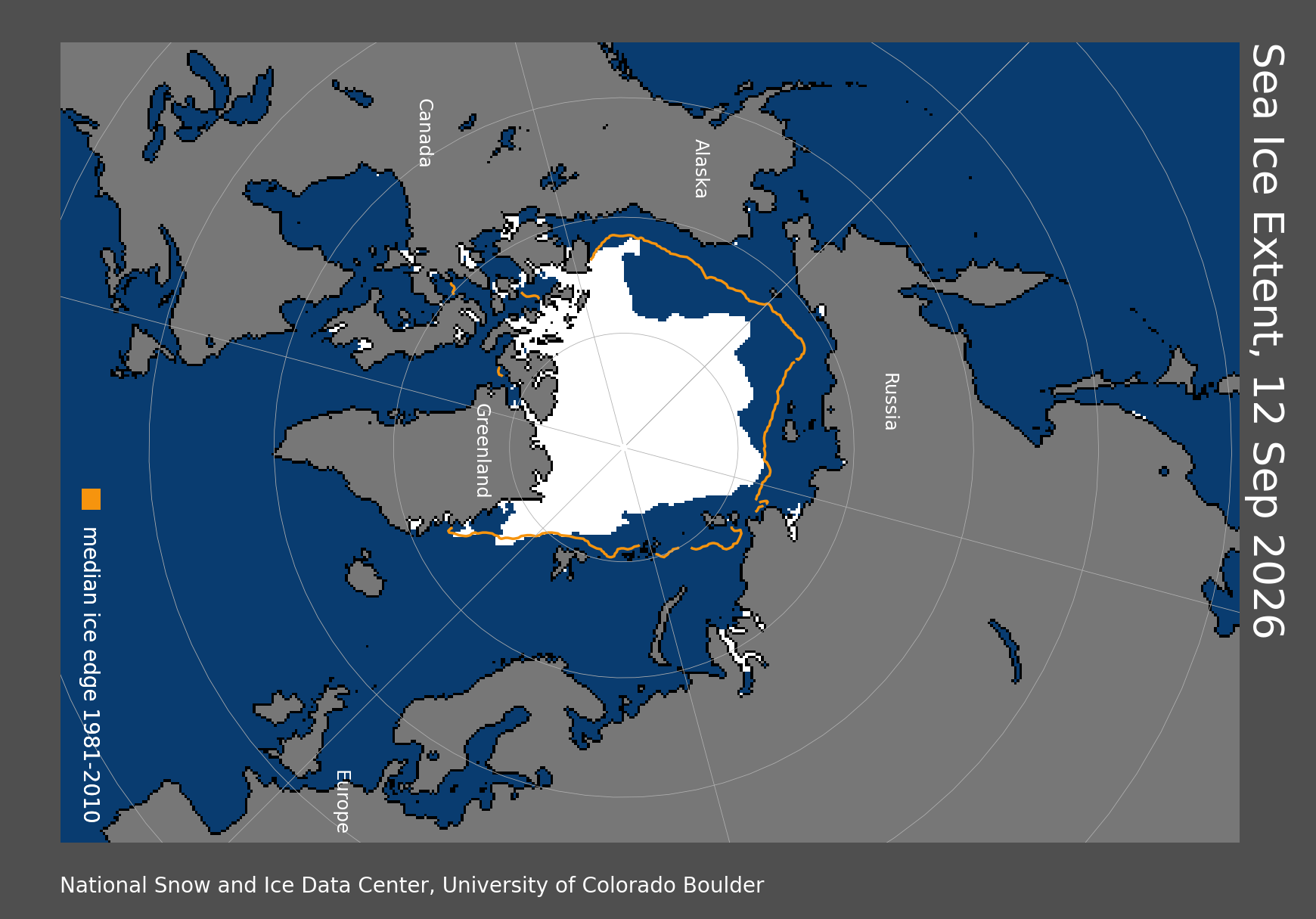
September is typically the month when Arctic sea ice reaches its minimum extent, creating the most favorable conditions for navigation along the Northern Sea Route. According to the National Snow and Ice Data Center (NSIDC), Arctic sea ice extent reached its annual minimum on September 12, 2026, at 4.6 million km².
By the beginning of the month, an open-water corridor was observed along most of the NSR and remained in place until the end of September. However, despite favorable conditions, navigation through certain straits remained challenging, requiring ice reconnaissance and careful maneuvering.
As noted in a September 23 article by High North News on research into ice dynamics near Wrangel Island, declining sea ice extent does not necessarily make shipping easier. Drifting ice can accumulate in certain areas, creating hazardous conditions for vessels.
On September 10, the press service of Russia’s Northern Fleet reported difficult ice conditions in the Vilkitsky Strait, which connects the Kara Sea and the Laptev Sea. Ice, including icebergs and ice fields, was present in the strait, while fog reduced visibility to no more than 200 meters. Before a group of vessels passed through the strait, aerial ice reconnaissance was conducted using a Ka-29 helicopter operating from the ice-class patrol ship Ivan Papanin.
On September 29, the same group of vessels passed through the Shokalsky Strait. The Russian military also reported difficult ice conditions and the need to adjust course and speed promptly to ensure safe passage.
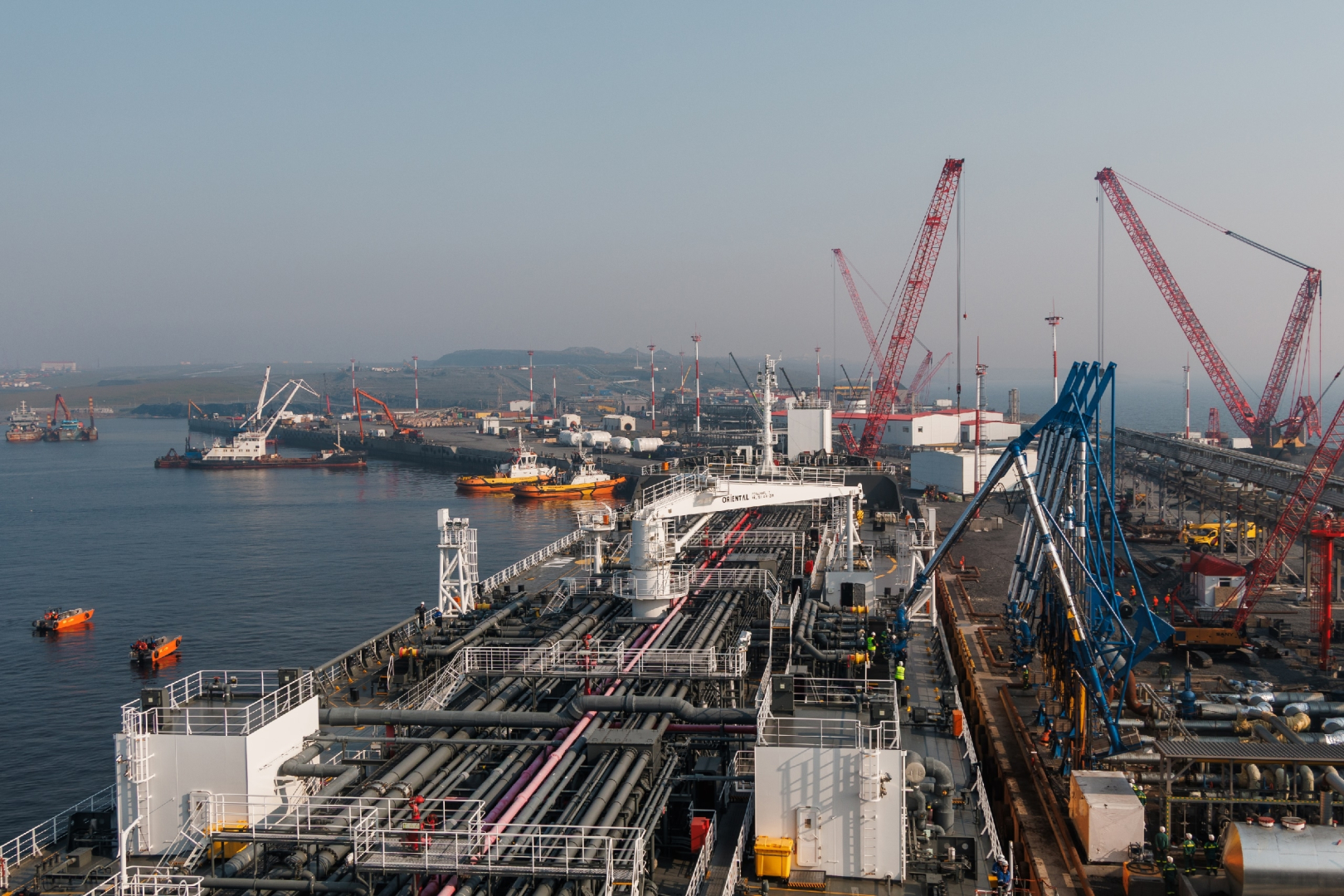
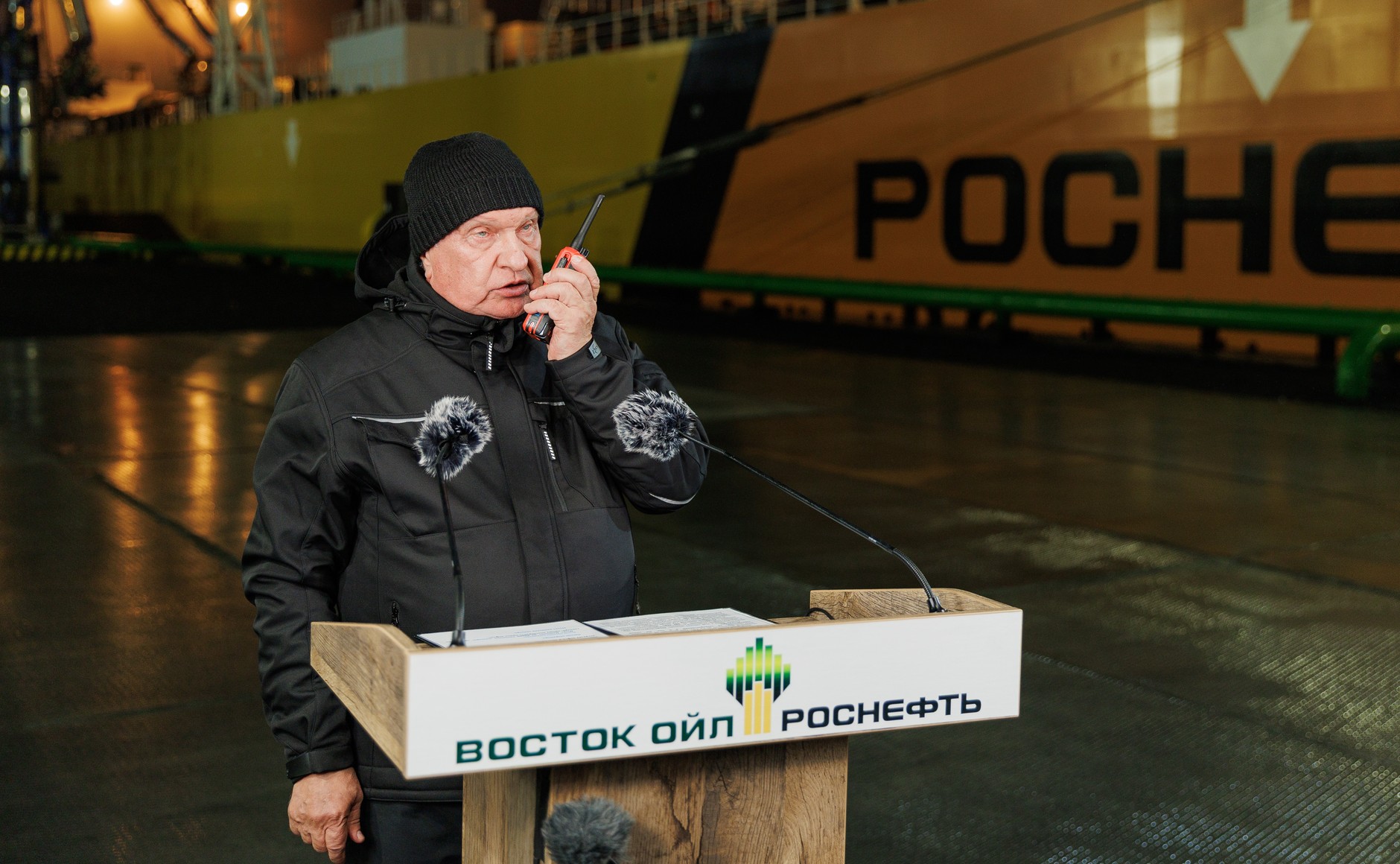
In September, oil shipments began from the new Bukhta Sever terminal on the Taymyr Peninsula, built as part of the Vostok Oil project. Rosneft announced the start of shipments on September 6. Four voyages from the terminal were recorded during the month. The tankers Valentin Pikul and Akademik Gubkin delivered oil to Murmansk, while Vladimir Monomakh and Vladimir Vinogradov headed east along the Northern Sea Route.
Bukhta Sever terminal, at Vostok Oil. Photo: Rosneft
The main cargo flows along the Northern Sea Route in September consisted of shipments from the Yamal LNG and Arctic LNG 2 plants, oil shipments from the Varandey terminal and from the Prirazlomnoye and Novoportovskoye fields, and maritime shipments by Nornickel.
Yamal LNG
In September, 21 LNG carrier voyages were recorded from the Sabetta terminal (six more than in August). Eleven voyages were made by Arc7 ice-class LNG carriers, three by Arc4 vessels, and another seven by non-ice-class tankers. Ten voyages were made along the Northern Sea Route to Asia, while eleven were destined for European ports.
The Arc7 LNG carriers Eduard Toll, Rudolf Samoylovich, Vladimir Voronin, Georgiy Ushakov, Boris Vilkitsky, Georgiy Brusilov, Nikolay Zubov, Vladimir Rusanov and Nikolay Urvantsev, as well as the LNG carrier Lena River, sailed east along the Northern Sea Route. The main destinations were China and South Korea.
Eight voyages were made to France, two to the Netherlands, and one to Spain. Two voyages were made by the Arc7 ice-class LNG carriers Nikolay Yevgenov and Nikolay Urvantsev. Another two were made by the Arc4 ice-class LNG carriers Clean Ocean and Clean Horizon. Seven voyages to European ports were made by LNG carriers with no ice class: Seapeak Yamal, LNG Phecda, LNG Dubhe, LNG Megrez and LNG Merak.
Maintenance of LNG carriers serving the Yamal LNG project continued at the Danish Fayard shipyard in September. The shipyard has serviced four such vessels since the beginning of the summer. The Arc7 ice-class LNG carrier Nikolay Yevgenov arrived at the shipyard on September 23. Boris Davydov was at the shipyard from August until September 17. Rudolf Samoylovich and Georgiy Brusilov also underwent maintenance at the same shipyard in June and July.
Also in September, the LNG carriers Boris Sokolov and Yuriy Kuchievmade three shipments of stable gas condensate (SGC) from the Yamal LNG plant, with export volumes reaching 120,000 metric tons, compared with 80,000 metric tons in August. Stable gas condensate from Yamal LNG is currently not subject to EU sanctions prohibiting imports of Russian-origin oil and petroleum products, but this is set to change. From January 1, 2027, the EU will ban imports of SGC produced at Russian LNG plants and apply a price cap similar to that imposed on oil, as part of the 20th sanctions package adopted on April 23, 2026.
Arctic LNG 2
In September, eight LNG carrier voyages from the Arctic LNG 2 plant along the Northern Sea Route were recorded. Six of these delivered LNG to China, while the other two delivered it to the Koryak floating storage unit off Kamchatka. Another four LNG cargoes were shipped from Koryak FSU and also delivered to China.
LNG shipments from Arctic LNG 2 to China were carried by the LNG carriers Arctic Mulan, Buran, Luch, Voskhod, Arctic Express and Iris, while Konstantin Posyet and Zarya transported LNG to Koryak FSU.
Shipments from Koryak FSU to China were carried out by the LNG carriers Arctic Vostok, La Perouse, Chaivo and Merkuriy.
The Arc7 ice-class LNG carrier Alexey Kosygin, which arrived at the Chinese Jinhai shipyard in August, remained there throughout September.
Arctic oil projects
In September, seven voyages were made from the Varandey terminal (Lukoil). Oil was transported by two Arc6 ice-class shuttle tankers: Vasily Dinkov made four voyages, while Timofey Guzhenko made three. The third tanker involved in transporting oil from the Varandey field, Kapitan Gotsky, was not involved in oil transportation at all during September. The vessel spent most of the month in St. Petersburg, where it had arrived on August 11, presumably for repairs.
Shipments from the Prirazlomnaya platform (Gazprom Neft) returned to their usual level in September following a sharp decline in August, when only one shipment was made. In September, two Arc6 ice-class shuttle tankers, Mikhail Ulyanov and Kirill Lavrov, made six voyages, each making three.
In September, 13 tanker voyages were recorded from the Novoportovskoye field (Gazprom Neft). The voyages were made by the tankers Shturman Albanov, Shturman Malygin, Shturman Shcherbinin, Shturman Koshelev and Mikhail Lazarev. (Two voyages by Mikhail Lazarev were recorded during the month, but the vessel’s AIS signal was temporarily lost in mid-September, so the actual number may have been higher.)
Two other tankers serving the field were in China in September. Shturman Ovtsyn spent the entire month there, while Shturman Skuratov arrived in China on September 19. Both vessels headed to the Chinese port of Zhoushan, one of the country’s largest ship repair hubs.
Nornickel
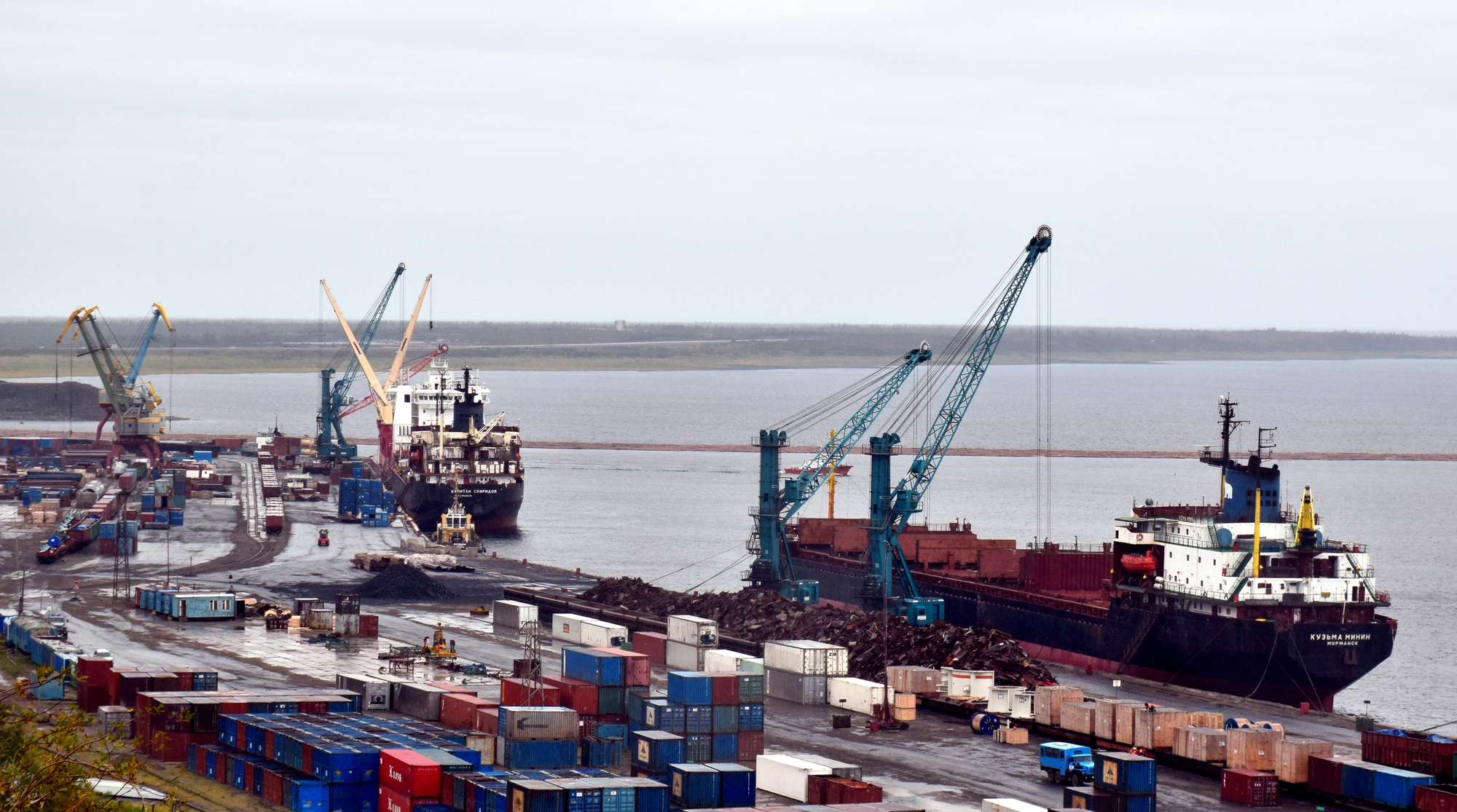
In September, eight port calls by vessels serving the metals and mining company Nornickel were recorded in Dudinka. Six of these were made by vessels from Nornickel’s own fleet: the cargo ships Talnakh and Zapolyarny each called at the port twice, while Norilsk Nickel and Monchegorsk made one call each. Tambey, owned by the shipping company Severny Proekt, and Danila Bagrov each made one port call.
In addition to its regular voyages between Dudinka and Murmansk, Nornickel made several voyages to China via the Northern Sea Route in September.
Port of Dudinka. Photo: novikovnn
The diesel-electric cargo ship Nadezhda, which departed Dudinka on August 15, delivered 13,000 metric tons of copper to Shanghai on September 9. In mid-September, another diesel-electric cargo ship, Norilsk Nickel, also headed to China. According to AIS data, after completing its cargo voyage, Nadezhda remained in China near the port of Dalian, where the major Chinese ship repair facility DSIC Changxing Shipyard is located.
The Arctic tanker Yenisey, which specializes in transporting petroleum products to meet the needs of the Norilsk industrial region, made one voyage between Dudinka and Arkhangelsk.
In September, Chinese, South Korean and Russian operators continued container shipping along the Northern Sea Route.
Sea Legend
The Chinese company Sea Legend continued operating its seasonal China-Europe Arctic Express (CAX) container shipping service, connecting ports in China and Europe via the Northern Sea Route.
On September 9, the container ship Dubai Tower arrived at the UK port of Teesport, completing its first voyage. It then returned via the Suez Canal. The second vessel, Riyadh Mukaab, arrived at the UK port of Felixstowe on September 16 and returned via the Northern Sea Route.
By the end of September, all eight planned voyages had been completed. Departures were scheduled for September 5, 12, 19 and 26. However, according to AIS data, vessels actually departed on September 8, 15 and 23, while another three container ships set sail on September 27.
The last vessels departed China on September 27, although the final departure had originally been scheduled for October 3. The schedule was revised due to forecasts of deteriorating ice conditions in the Arctic.
Changes were made not only to departure dates but also to the vessels assigned to the voyages. Dubai Tower was originally scheduled to make two voyages, but delays on its previous route prevented it from returning in time for the final departure. Judging by changes to the schedule, it was replaced by the container ship Aden Fort, which had not been included in the original plan. According to a Sea Legend representative, schedule changes were also attributed to congestion at overseas ports and longer-than-expected repairs to some vessels.
NewNew Shipping
NewNew Shipping operated shipping services between China and Russian Arctic ports.
On September 7, the container ship Xin Xin Hai 1, which had arrived in Murmansk from China in August carrying automotive components, completed loading 26,400 metric tons of potash fertilizers and departed for Indonesia.
On September 22, the container ship Xin Xin Hai 2, which had departed China on August 24, arrived in Arkhangelsk. It was the first vessel to arrive in Arkhangelsk under the Arctic Express No. 1 project this year. The ship delivered 880 containers of automotive components. It departed on its return voyage on September 25, carrying wood products and nickel concentrate.
The container ship NewNew Panda 1 also sailed from China to St. Petersburg via the Northern Sea Route. It departed Shanghai on September 10 and arrived in St. Petersburg on October 8.
PanStar Line
The South Korean company PanStar Line completed its first trial container voyage from South Korea to Europe via the Northern Sea Route. The container ship PanStar Acro, which departed Busan on August 22, sailed along the NSR without icebreaker escort and arrived at the UK port of Felixstowe on September 12, completing the voyage in 21 days.
According to Aju Press, PanStar Acro encountered dense drifting ice shortly after entering Arctic waters on August 31. Near Wrangel Island in the Chukchi Sea, drifting ice blocked the vessel’s path, forcing the crew to halt navigation for the night and wait for conditions to improve.
On September 19, the vessel departed on its return voyage to South Korea via the NSR. The return passage was also completed without icebreaker escort. On October 11, the container ship returned to Busan.
Ruscon
On September 16, Russian company Ruscon, part of the Delo Group, announced that it had organized its first container voyage from China to St. Petersburg via the Northern Sea Route. The container ship Honfu, with a capacity of approximately 3,700 TEU, arrived at the Delo Group terminal in St. Petersburg after calling at the Chinese ports of Nansha, Taicang and Rizhao. The voyage was carried out as part of Ruscon’s existing regular container service between China and St. Petersburg, which had previously operated via the Suez Canal. Once the summer-autumn navigation season ends, ships will continue to sail via the Suez Canal.
On October 7, news emerged of a deal under which Rosatom, which previously held a 49% stake in the Delo Group, acquired the remaining 51% and gained full control of the group.
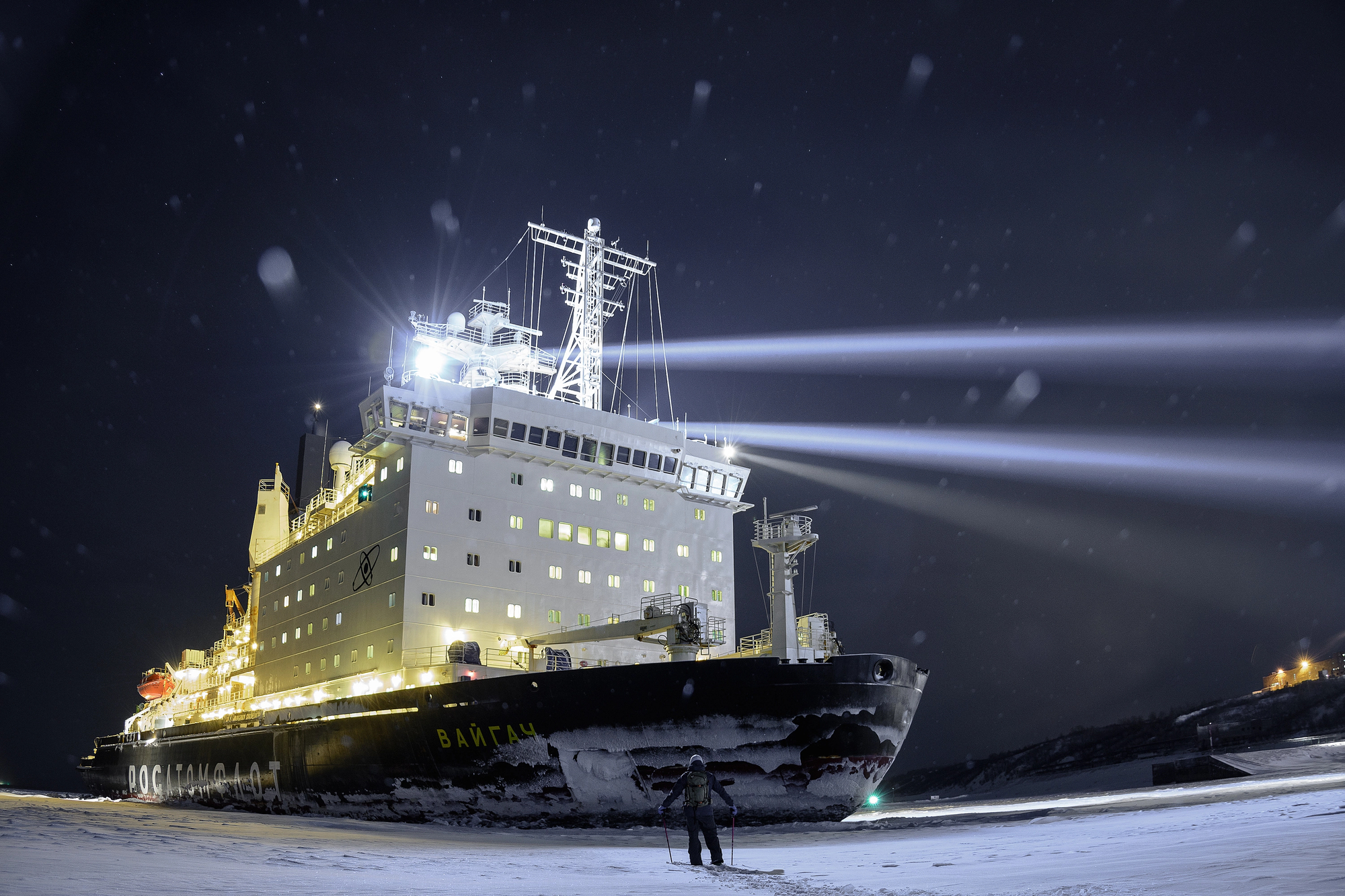
At the beginning of September, six of Russia’s eight nuclear-powered icebreakers were at a technical lay-up in Murmansk: 50 Let Pobedy, Vaygach, Sibir, Yamal, Taymyr and Yakutiya. On September 12, Ural also arrived in Murmansk after completing operations in the Laptev Sea earlier that month.
Vaigach nuclear icebreaker. Photo: senya_seregin
At the time, Arktika was operating in the eastern sector of the Northern Sea Route, in the Chukchi Sea and around the port of Pevek. Taymyr returned to the NSR from Murmansk and had also reached the Pevek area by September 22.
On September 13, the nuclear-powered icebreaker Yamal departed Murmansk and operated in the Kara Sea along the coast of Novaya Zemlya for the remainder of the month.
On September 29, Rosatom Director General Alexey Likhachev said that ice conditions along the Northern Sea Route in 2026 were far more challenging than a year earlier. Despite extensive areas of open water in September, three nuclear-powered icebreakers remained on duty at the end of the month. According to Likhachev, no “ice pause” is expected for the time being.
«September is usually the peak navigation period along the Northern Sea Route, as Arctic sea ice reaches its minimum extent. However, this year, difficult ice conditions meant that three nuclear-powered icebreakers continued operating in different sections of the NSR even in September. In addition to regular shipments from Arctic fields and the expected increase in transit shipments of oil to China, international container shipping from China to Europe was also of interest.
The Chinese company Sea Legend, which operated a single container voyage to Europe last year, scheduled eight such voyages between mid-August and early October this year, one per week, to be carried out by seven vessels. However, changes to the plans began during the very first voyage, including a minor delay en route, a change of destination port and the cancellation of the return voyage via the NSR. The second vessel, which departed in late August four days behind schedule, also arrived at a UK port four days late. After calling at other European ports and St. Petersburg, it returned to China via the NSR.
The remaining voyages experienced longer delays, with vessels taking significantly more time to transit the NSR (around 30 days instead of 20). Two of them changed their final destinations, arriving in Kaliningrad and St. Petersburg instead of European ports. This may have been due to the difficult ice conditions during this year’s navigation season, but limited interest from shippers may also have played a role. Three vessels that reached European ports used LNG as fuel.
Meanwhile, only one of the 12 widely publicized voyages from China to Arkhangelsk has taken place so far. The plan is unlikely to be fulfilled before the end of the summer-autumn navigation season, which may also indicate the limited commercial potential of the NSR for non-energy cargo. At the same time, shipments of Russian oil and LNG to China via the NSR have increased this year compared with last year and are likely to grow further next year, barring significant geopolitical changes.»
The International Situation in the Arctic and Sanctions on Russia’s Activities in the Arctic Region
As noted in the Shipping section, on September 13, the South Korean container ship PanStar Acrocompleted a trial voyage from Busan to Europe via the Northern Sea Route.
On September 19, the vessel departed Gdansk on its return voyage and arrived back in Busan via the NSR on October 11. The operator was unable to secure commercial cargo for the return voyage from Europe to South Korea. The container ship carried only empty containers totaling 1,743 TEU on its return journey. The operator had originally planned to transport around 1,300 TEU of empty containers and secure additional import cargo.
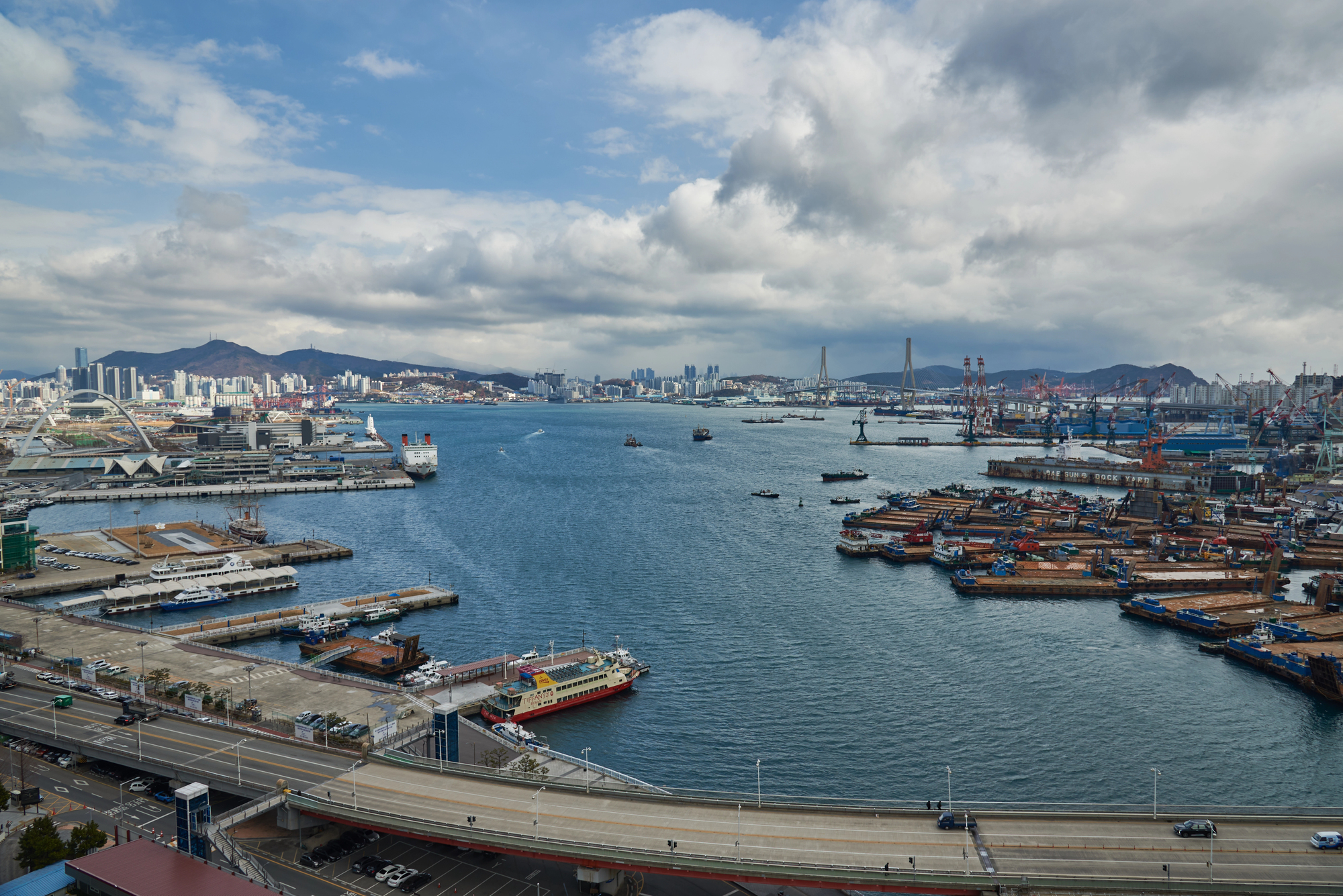
Port of Busan. Photo: kuzmire
In December 2025, the Korea Maritime Institute published a study comparing the cost of container shipping between Busan and Rotterdam via the Northern Sea Route and the Suez Canal. According to the calculations, the cost of transporting one TEU via the NSR on a 4,300-TEU ice-class container ship is $1,128, compared with $726 on a 20,000-TEU container ship via the Suez Canal. Thus, despite the shorter distance, the cost of transporting a container via the NSR is approximately 55% higher. The authors attribute this to vessel capacity limitations, icebreaker escort costs, insurance and other additional expenses associated with Arctic shipping.
Another study by the Korea Maritime Institute, however, indicates that the cost of a single summer voyage between Busan and Rotterdam via the NSR could be around $3 million, compared with $3.83 million via the Suez Canal, or approximately 22% less. Unlike the 2025 study, this comparison focuses on the total cost of a voyage rather than the cost of transporting an individual container.
South Korea’s Ministry of Oceans and Fisheries received no applications from shipping companies for its subsidy program to support the construction of icebreakers and ice-class vessels, despite an allocated budget of approximately 11 billion won ($8 million). The application period was originally scheduled to run from March 5 to June 26, 2026, but was extended to September 30 due to the lack of applicants. A representative of the Korea Ocean Business Corporation (KOBC) said that if no applications were submitted by the deadline, the project’s budget for this year could remain unused.
The Korea Ocean Business Corporation (KOBC) also introduced a financial support program for shipping companies planning to acquire vessels for operations along the Northern Sea Route. Approximately 120 billion won ($87 million) is expected to be allocated annually for this purpose. Financing will be available for the purchase of both new and second-hand ice-class vessels, including container ships, bulk carriers, tankers and car carriers.
KOBC plans to provide subordinated financing covering up to 30% of a vessel’s cost. Combined with bank loans, debt financing could potentially cover up to 90% of the vessel’s cost. As a result, shipping companies’ equity contributions could be as low as 10% of the vessel’s cost. However, this is not a non-repayable subsidy.
«Developments surrounding South Korea’s plans for Arctic shipping suggest that this is a political rather than an economic project. Neither Korean and European shippers nor shipping companies have shown interest in transporting cargo in transit via the Northern Sea Route. Researchers’ calculations also indicate no significant economic benefits. Bellona hopes that the South Korean authorities will assess the results of the trial voyage and abandon their plans for transit shipping through the Arctic.»
On September 8, shipping company Dynagas LNG Partners LP released its results for the three and six months ended June 30, 2026.
In the report’s section titled “Russian Sanctions Developments,” the company examines the impact of EU and UK sanctions on the operations of its LNG carriers Yenisei River and Lena River, which serve the Yamal LNG project under long-term contracts with Yamal Trade extending to 2033 and 2034, respectively.
Dynagas believes it will be able to continue transporting Russian LNG to countries outside the EU under an exemption provided by the EU’s 21st sanctions package for contracts concluded before February 24, 2022. The exemption remains in effect until July 25, 2027, with the possibility of annual extensions. Dynagas acknowledges that its interpretation of the sanctions exemptions may differ from that of regulatory authorities and that the exemptions themselves could be restricted or revoked.
In addition, due to UK sanctions, Dynagas expects to replace certain key UK-based service providers with providers established outside the UK.
Also in September, theFinancial Timesreported that UK-based insurer NorthStandard, the world’s second-largest protection and indemnity (P&I) insurer, continues to provide insurance coverage for three Dynagas LNG carriers — Clean Planet, Clean Ocean and Clean Vision — despite the vessels having been on the UK’s sanctions list since October 2025.
According to the newspaper, UK sanctions prohibit these vessels from entering British ports but do not automatically ban the provision of insurance services. In May 2026, the UK expanded its sanctions restrictions on maritime services, including insurance and crew provision. However, the new measures did not apply retroactively to the three Dynagas LNG carriers. The existing exemptions are set to expire in January 2027.
«The Greek Dynagas group, which specializes in maritime transportation of oil and gas, relies on shipments of Russian hydrocarbons for more than 30% of its business and likely has strong connections within the Greek government. These ties allow the company to maintain its operations despite sanctions. This situation undermines the effectiveness of sanctions and leaves Russia considerable opportunities to lobby for its interests in Europe.»
According to gCaptain, two cargo ships, Glory (IMO 9934498) and Bright (IMO 9830769), loaded power generation modules for the second production train of the Arctic LNG 2 project at the Chinese port of Zhangjiagang.
The vessels are carrying the last two of the four power generation modules (2-PGM-002 and 2-PGM-004) manufactured for Arctic LNG 2’s second train.
The first two modules (2-PGM-001 and 2-PGM-003) were delivered to the Gydan Peninsula in the fall of 2024. In January 2025, the US imposed sanctions on Zhoushan Wison Offshore and Marine, which manufactured the modules, for supporting the Arctic LNG 2 project.
According to gCaptain, Arctic LNG 2’s second train is operating with an incomplete power supply system, limiting its output to approximately half of its design capacity of 6.6 million metric tons of LNG per year. The missing modules could help bring the train closer to its design capacity.
Glory departed China on September 6, listing Murmansk as its destination with an estimated arrival date of October 1. Bright departed on September 10, listing Gydan as its destination with an estimated arrival date of November 10. According to AIS data, both vessels stopped transmitting their AIS data in the Bering Sea on September 22. At the time of writing, there was no confirmed information about the unloading of the power generation modules.
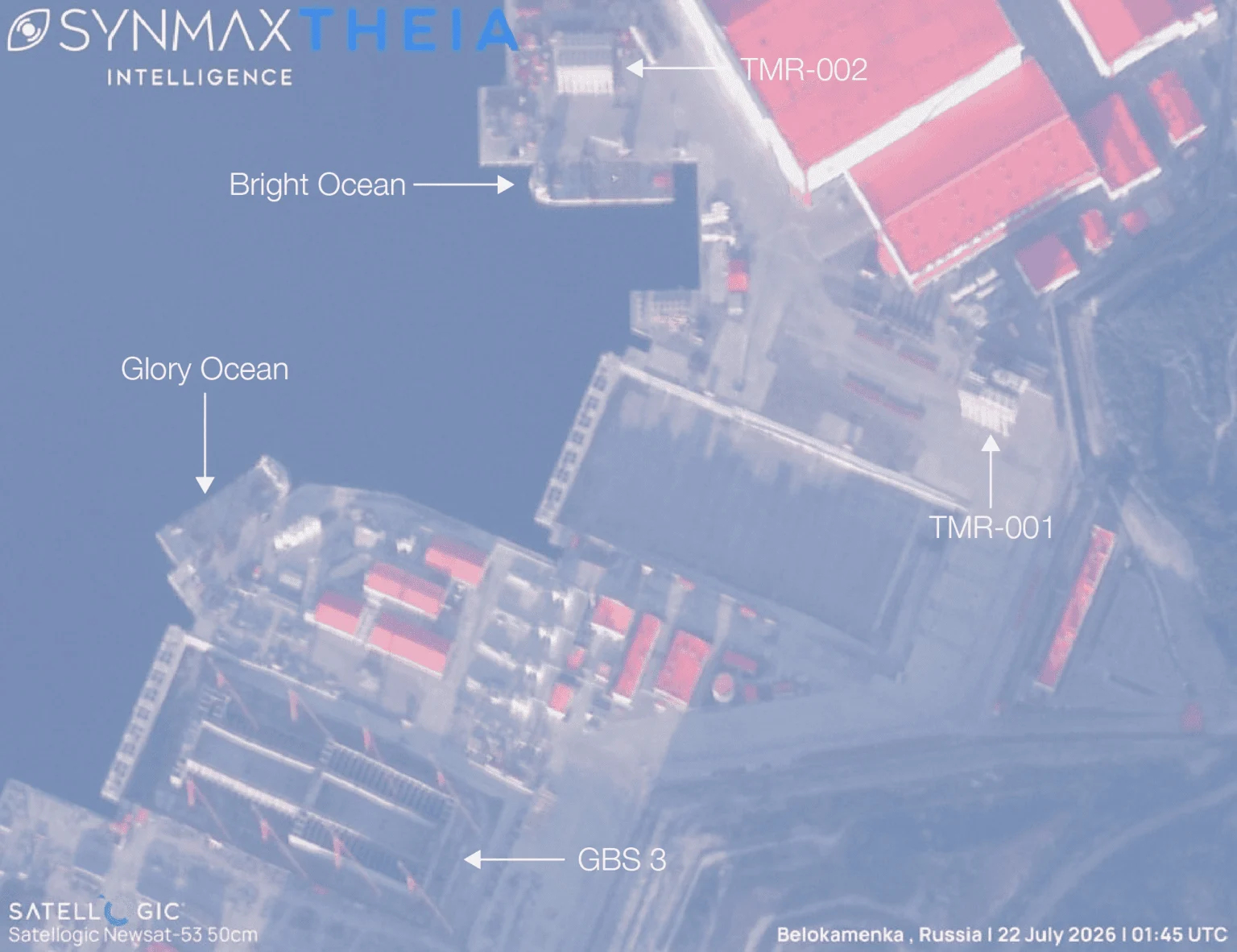
Both vessels had previously been involved in shipments for Arctic LNG 2. In July 2026, Glory and Bright delivered two process modules for the project’s third train from China to Novatek’s shipyard in Belokamenka (Murmansk Region). During that voyage, the vessels operated under a false Malian flag registration. After delivering the equipment, they switched off their AIS systems and headed east via the Northern Sea Route and the Bering Strait. By August 24, they had reappeared in vessel tracking data, this time under the Russian flag.
Modules unloaded in Belokamenka. Image: Synmax Intelligence / annotations by gCaptain
In September, another Chinese heavy-lift cargo vessel, Ya Qing Hai Yang (IMO 1021570), attracted attention. Like Glory and Bright, it had previously been involved in delivering equipment for the Arctic LNG 2 project in 2024 and was subsequently sanctioned. On July 11, 2026, the vessel departed the Chinese port of Zhuhai and sailed along the Northern Sea Route toward Murmansk. According to vessel tracking data from Windward, it initially listed Ust-Luga as its destination, later changing it to Helsinki, although it was actually heading toward Murmansk.
«Recent developments surrounding Arctic LNG 2 suggest that Russia has managed to reach an agreement with China on long-term LNG supplies from the plant. As a result, Novatek is likely to complete the second production train in the near future and increase LNG shipments to China via the Northern Sea Route, although a shortage of high ice-class LNG carriers could limit shipment volumes.
China, meanwhile, is completing port infrastructure to receive Russian LNG. The Longkou LNG terminal in Yantai, Shandong Province, is already completed, and another terminal is planned in Dalian.»
On September 8, Reuters reported that Arctic LNG 2 was seeking approximately $1 billion in compensation from South Korean shipbuilder Hanwha Ocean (formerly DSME). The arbitration claim was filed with the Singapore International Arbitration Centre on September 1 over the termination in 2022 of contracts to build three Arc7 ice-class LNG carriers for Sovcomflot, due to sanctions imposed on Russia in connection with the war in Ukraine.
This is not the first legal dispute involving these contracts. Hanwha Ocean is already defending itself against earlier claims totaling approximately $850 million, filed in 2023 by three companies affiliated with Sovcomflot: Elixon, Azoria and Glorina.
The September arbitration claim was filed directly by Arctic LNG 2, which alleges that Hanwha Ocean breached the terms of separate step-in agreements related to the terminated contracts.
Heightened Industrial Activity in the Russian Arctic
On September 6, Vladimir Putin remotely launched the first commercial oil shipment and the commissioning of the Vostok Oil project via video link. The oil was loaded onto the tanker Valentin Pikul.
Vostok Oil is the largest oil production project along the Northern Sea Route and in the Arctic as a whole. It involves the development of fields in the Vankor cluster and several other fields on the Taymyr Peninsula, with combined oil reserves estimated at 6.5-7 billion metric tons.
The project’s full production capacity is expected to reach 100 million metric tons per year, more than twice the total cargo volume transported along the Northern Sea Route. According to the NSR Development Plan through 2035, production at Vostok Oil was originally scheduled to begin in 2024 and reach full capacity by 2030.
Rosneft CEO Igor Sechin during the first shipment ceremony at Vostok Oil. September 6, 2026. Photo: kremlin.ru
At the ceremony marking the first oil shipment, Rosneft CEO Igor Sechin announced revised production targets. According to Sechin, Vostok Oil is expected to reach a production capacity of 30 million metric tons per year by the end of 2027 and 50 million metric tons per year by 2030.
According to industry estimates cited by Reuters, the project is expected to operate at a production rate of around 150,000 barrels per day (approximately 20,900 metric tons per day) through the end of 2026, equivalent to an annual production capacity of 7.6 million metric tons.
Read more about the environmental risks posed by Vostok Oil’s operations in the highly fragile tundra ecosystem in this article by Arctida and Bellona.
On September 9, Lukoil began commercial oil production at the Komandirshor field in the Nenets Autonomous Okrug. The Komandirshor oil treatment facility, with a capacity of more than 800,000 metric tons of oil per year, has been built. Residential facilities for rotational workers and administrative and support facilities have also been constructed, along with a main access road network, an external power supply system, and an oil and gas gathering system.
The produced oil will be transported by pipeline to the Varandey terminal on the coast of the Pechora Sea, where it will be loaded onto tankers.
The initial recoverable oil reserves of the Komandirshor group of fields are estimated at 11 million metric tons. The group also includes the Severo-Komandirshorskoye and Zapadno-Komandirshorskoye fields. The development of the Simbeysko-Mishvanskaya group of fields is planned for the next phase of the project.
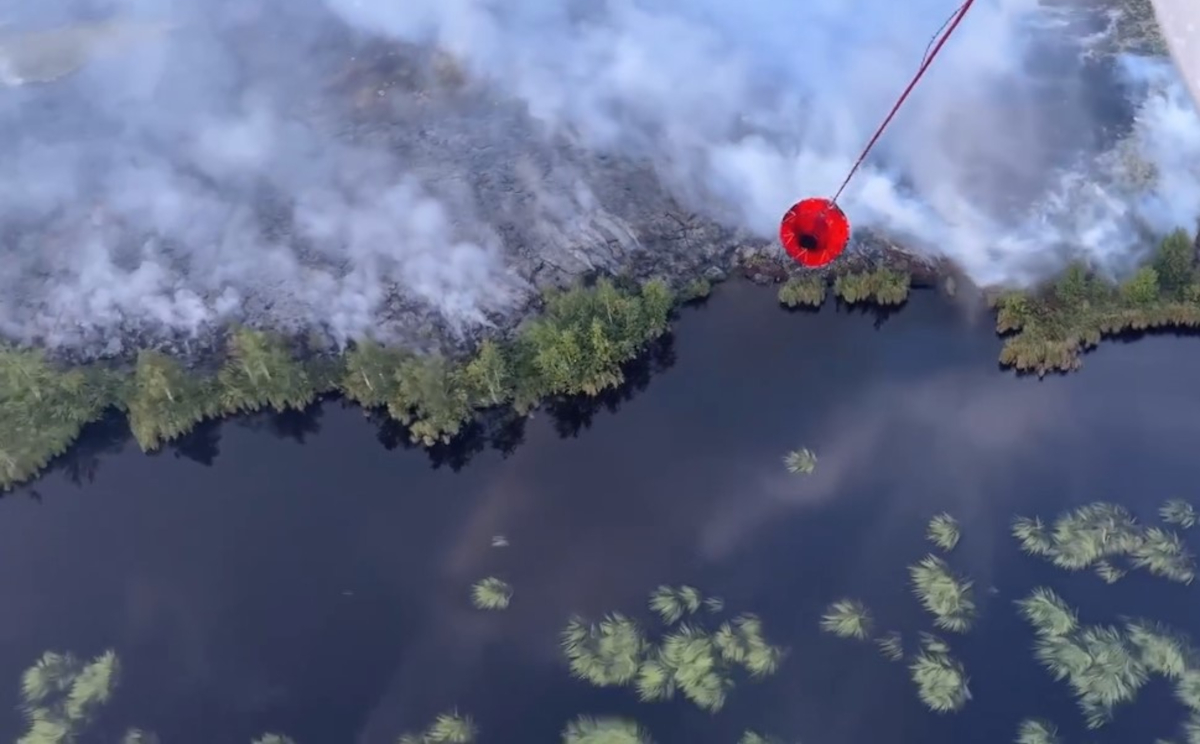
On September 6, the last active wildfire at the time was extinguished. However, wildfires broke out again on September 10 in two districts, Purovsky and Nadymsky. The area affected by the new fires peaked at 5,338 hectares on September 16 before beginning to decline. All remaining fires were extinguished on September 30.
The 2026 wildfire season was particularly devastating for the Yamalo-Nenets Autonomous Okrug (YNAO). Since the beginning of the season, 1,001 wildfires occurred in Yamal, affecting a total area of 811,786.44 hectares.
Fires in Yamal in September. Photo: Avialesookhrana
One factor contributing to the fires was unusually high air temperatures, reaching 10°C above average and up to 33°C in some areas. July 2026 was the third-warmest July in the Arctic since 1950, with above-average air temperatures across more than 70% of the region. These conditions were compounded by a lack of rainfall, low humidity and wind conditions.
Firefighters, however, only responded to fires threatening energy infrastructure and populated areas.
Major wildfires also ceased in the Arctic districts of Krasnoyarsk Krai.
On September 15, a diesel fuel spill occurred in the village of Syndassko on the Taymyr Peninsula. A storm damaged a coastal storage tank belonging to Taymyr Alliance Trading. According to preliminary estimates, approximately 200 m³ of diesel fuel spilled, with some of it entering Khatanga Bay in the Laptev Sea. A regional state of emergency was declared, and a criminal case was opened under a provision concerning violations of environmental protection rules during the operation of industrial facilities.
On September 22, the head of the Taymyr district announced that the spill response operation had been completed, and the state of emergency was lifted.
On the same day, the regional Ministry of Ecology reported that analysis of a water sample collected downstream of the spill site showed petroleum product concentrations 1.98 times the maximum permissible level. On October 5, Russia’s Ministry of Emergency Situations reported that approximately 24 hectares of land had been contaminated.
In September, Bellona published an article on the growing number of shadow fleet tankers transporting Russian oil and liquefied natural gas (LNG) along the Northern Sea Route during the 2026 summer-autumn navigation season. By mid-September, at least 50 shadow fleet oil tankers and 18 LNG carriers had been recorded along the route, exceeding the numbers recorded for the entire year of 2025. The article also examines the environmental risks associated with transporting energy resources along the Northern Sea Route.