Monthly Highlights from the Russian Arctic, April 2026
In this news digest, we monitor events that impact the environment in the Russian Arctic
News
Publish date: 09/07/2026
News
Our focus lies in identifying the factors that contribute to pollution and climate change.
Ensuring complete and reliable access to environmental information in Russia has never been fully guaranteed. Following the Russian invasion of Ukraine on February 24, 2022, it became even more difficult. Some information ceased to be published altogether, such as daily oil production data and annual reports from certain industrial companies. Independent environmental organizations have been banned or closed.
The Arctic region plays a crucial role in comprehending the process of global climate change. Russia owns approximately one-third of its territory, including the exclusive economic zone of the Arctic Ocean. To understand and examine trends, we monitor new legislation, the plans of industry, the Northern Sea Route, international economic sanctions, accidents, and emergencies in the Russian Arctic, as well as provide commentary on the news. Subscribe to our mailing list to make sure you don’t miss the next digest.
Our previous monthly highlights for April can be found here.
NORTHERN SEA ROUTE AND SHIPPING
1. Overview of shipping on the Northern Sea Route in May
2. In May, eight nuclear-powered icebreakers operated along the Northern Sea Route
3. Russia’s EMERCOM opens Arctic integrated emergency rescue center in Sabetta
4. Sovcomflot’s revenue for the first quarter of 2026 increased by 60% to $444 million
5. The Russian government is seeking off-budget sources of additional funding for the construction of the new nuclear icebreakers Leningrad and Stalingrad, as well as a support vessel for their operation
THE INTERNATIONAL SITUATION IN THE ARCTIC AND SANCTIONS ON RUSSIA’S ACTIVITIES IN THE ARCTIC REGION
6. The United Kingdom banned the provision of services for the maritime transport of Russian LNG, while exempting Yamal LNG. It also allowed the import of diesel fuel and jet fuel produced from Russian crude oil in third countries
7. South Korea’s National Assembly adopted a Special Act on the use of the Arctic sea route
8. Representatives of 127 investors and organizations called on the EU to maintain the moratorium on oil and gas exploration and production in the Arctic
ENVIRONMENTAL AND CLIMATE ISSUES IN THE ARCTIC
9. Svalbard records Eurasia’s first confirmed case of a polar bear infected with and killed by avian influenza
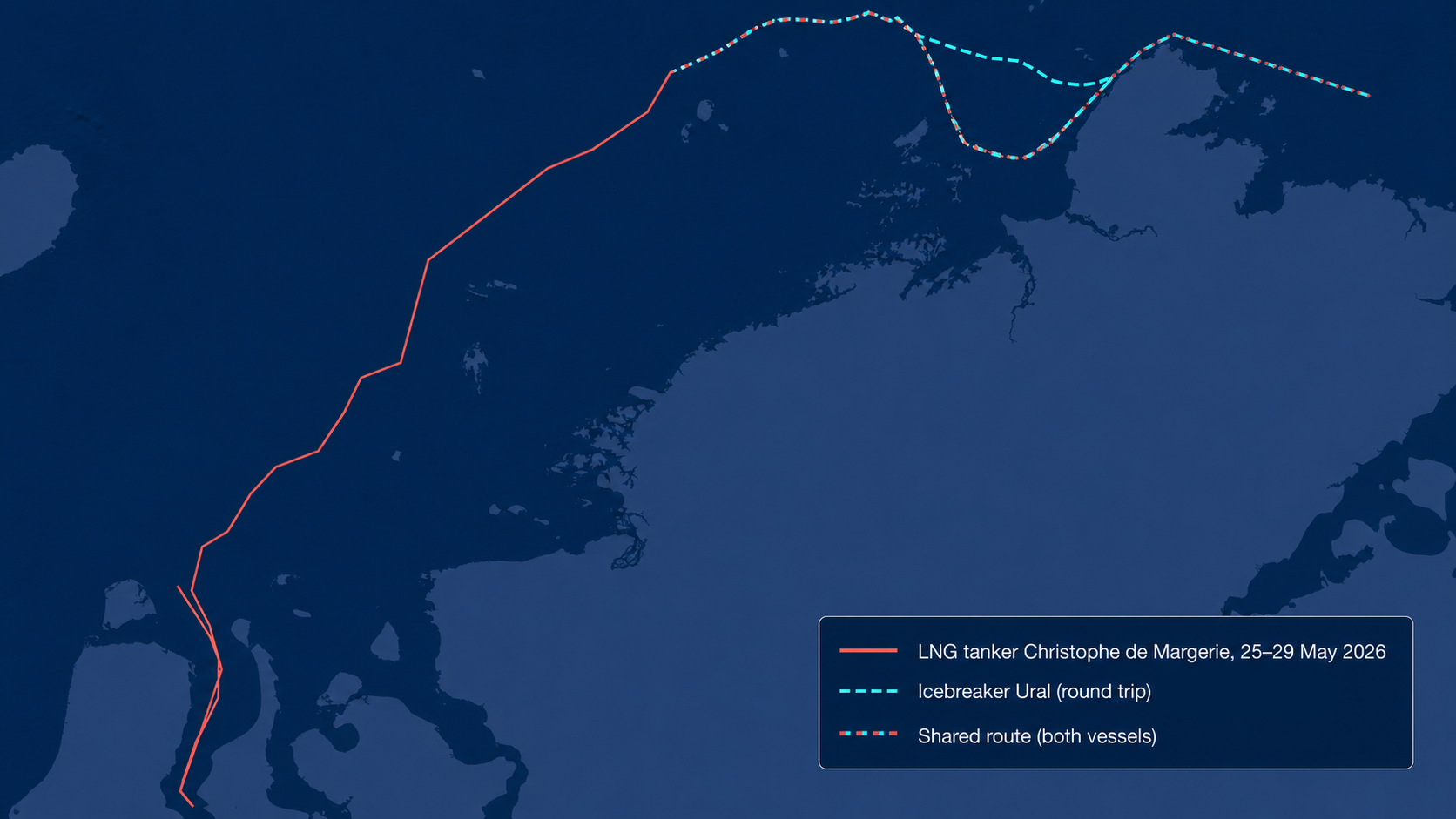
In May 2026, earlier than usual, an LNG carrier escorted by an icebreaker embarked on the first transit along the eastern section of the Northern Sea Route, marking the opening of the summer–autumn navigation season. On 26 May, the Arc7 ice-class LNG carrier Christophe de Margerie loaded cargo at the Arctic LNG 2 project and set course eastward. The voyage was carried out under the escort of the nuclear-powered icebreaker Ural. On 8 June, the vessel reached the Bering Strait.
For comparison, in 2025 the first eastbound voyage took place on 19 June, when the Arc7 ice-class LNG carrier Georgiy Ushakov departed the port of Sabetta carrying an LNG cargo bound for China.
In 2024, the first eastbound voyage was carried out by the oil tanker Shturman Skuratov, which departed Murmansk on 14 June and passed through the Kara Gates on 18 June. In 2023, the first such voyage began in Sabetta on 5 June, and on 19 June the LNG carrier Fyodor Litke entered the Bering Sea.
Otherwise, navigation along the Northern Sea Route during the month proceeded as expected. Cargo traffic in May remained broadly unchanged and was driven by shipments from the Yamal LNG and Arctic LNG 2 projects, crude oil exports from the Varandey, Prirazlomnoye and Novoportovskoye fields, as well as maritime transportation operations of Norilsk Nickel.
On 17 May, the research and expedition vessel Mikhail Somov departed Arkhangelsk on its first voyage of this year’s navigation season. The vessel is tasked with delivering cargo, fuel, equipment and rotating teams of polar researchers to hard-to-reach Arctic weather stations of Roshydromet in the White and Barents seas. At the time of departure, the vessel was 50 years old.
Traditionally, at the end of May, the port of Dudinka, which serves Norilsk Nickel, suspended operations due to the spring flood on the Yenisei River. According to AIS data, the last vessel, Taibola, departed Dudinka on 20 May. On 21 May, the nuclear-powered icebreaker Sibir completed flood-prevention works on the Yenisei, preparing the port for the spring ice breakup and high-water period. The suspension usually lasts about a month; however, this year restrictions on ice navigation were lifted as early as 6 June — less than three weeks after operations were suspended.
In May, Yamal LNG operated without significant changes compared with April. Based on AIS data, it can be assumed that 25 LNG cargoes were shipped from the Sabetta terminal. The main volume of deliveries was carried by 14 Arc7 ice-class LNG carriers operating on direct routes from Sabetta to Europe (Belgium, France, the Netherlands and Spain). In addition, four voyages were made to the area of Kildin Island, where transshipment to non-ice-class LNG carriers was likely carried out.
According to a new analysis by the German environmental and human rights organisation Urgewald, up to six Arc7 ice-class LNG carriers serving the Russian Yamal LNG project may require dry-dock repairs at the Fayard shipyard in Odense, Denmark, this year. The estimate is based on historical vessel maintenance cycles as well as figures from the previous year, when five Arc7 LNG carriers associated with the Yamal LNG project underwent technical servicing at the Danish shipyard.
In May, the number of shipments from the Arctic LNG 2 project increased to six (compared with three in April). The Arc7 ice-class LNG carriers Christophe de Margerie and Alexey Kosygin each completed three loadings. Five LNG cargoes were delivered to the Saam FSU floating storage unit in the Murmansk area, while one cargo was transported eastward along the Northern Sea Route by the LNG carrier Christophe de Margerie.
The LNG was then transshipped onto vessels from the shadow fleet, which proceeded to China via the route around the Cape of Good Hope.
In May, seven shipments were recorded from the Saam FSU floating storage unit, compared with four in April and one in March following the incident involving the Arctic Metagaz tanker. Deliveries were made to the LNG carriers Buran, Voskhod and Arctic Pioneer, as well as to four vessels that joined the project’s operations in May — Kosmos (formerly Salalah), Luch (formerly Ibri), Orion (formerly Nizwa) and Mercury (formerly Ibra).
In addition, on 30–31 May, the shuttle tanker Shturman Shcherbinin (IMO 9759927), which serves Gazprom Neft’s Novoportovskoye field, remained at the Utrenny terminal for approximately one day. The vessel appears to have loaded gas condensate there.
In May, the Varandey terminal (Lukoil) increased the pace of shipments, with nine voyages completed compared with four in April. Oil transportation was carried out by three Arc6 ice-class shuttle tankers: Vasily Dinkov, Kapitan Gotsky and Timofey Guzhenko.
From the Prirazlomnaya platform (Gazprom Neft), the tankers Mikhail Ulyanov and Kirill Lavrov carried out six oil shipments (four voyages were recorded in April).
The Novoportovskoye field (Gazprom Neft) accounted for 15 shipments (compared with 12 in April), carried out by the tankers Shturman Albanov, Shturman Malygin, Shturman Ovtsyn, Shturman Skuratov, Shturman Shcherbinin, Shturman Koshelev and Mikhail Lazarev.
Vessels from all three fields proceeded to the Murmansk area, where the oil was transshipped onto other tankers for further export. At the same time, regular AIS signal outages were recorded in the Murmansk area.
Norilsk Nickel reduced the number of container shipments in May, as the port of Dudinka on the Yenisei River annually suspends operations for several weeks at the end of the month due to the spring flood period.
Seven vessel calls were recorded at Dudinka, including the call of the container ship Monchegorsk, which arrived at the port at the end of April and departed on 6 May. Four voyages were carried out by vessels from Norilsk Nickel’s own fleet of Arc7 ice-class Arctic container ships (Norilsk Nickel, Talnakh, Nadezhda and Monchegorsk), while three additional voyages were performed by chartered vessels — Tersky Bereg, Taibola and Tambey.
One voyage from Arkhangelsk to Dudinka was carried out by the Arctic tanker Yenisei, which specializes in transporting petroleum products to support the needs of the Norilsk industrial region.
In May, all eight nuclear-powered icebreakers of Atomflot continued operations in the western sector of the Arctic, primarily in the Kara Sea, the Ob Bay and the Yenisei Gulf.
By the end of May, the icebreaker Yamal headed to Murmansk, where its signal disappeared in early June. On 24 May, the icebreaker Ural headed eastward, where it escorted the Arc7 ice-class LNG carrier Christophe de Margerie carrying LNG from the Arctic LNG 2 project.
In May, the icebreakers operated primarily in three areas:
On May 12, the Ministry of Emergency Situations (EMERCOM) announced the opening of a new Arctic integrated emergency rescue center in Yamal. Its establishment is envisaged by the Strategy for the Development of the Arctic Zone of the Russian Federation and National Security for the Period up to 2035.
According to the plan, the center is to have a staff of 50, including 24 certified rescue personnel. It is also to be equipped with two Burlak all-terrain vehicles, mobile life-support units, and command vehicles with satellite communications. It has not been specified whether the new center has already received this personnel and equipment.
Alexey Chekunkov, head of the Ministry for the Development of the Far East and the Arctic, stated that integrated emergency rescue centers along the Northern Sea Route would include three units: the Ministry of Emergency Situations, the Federal Medical-Biological Agency (FMBA), and the Marine Rescue Service. However, the Marine Rescue Service was not mentioned in the announcement of the opening of the center in Sabetta. Only representatives of the Ministry of Emergency Situations and the FMBA took part in the opening ceremony. At the same time, in addition to search and rescue operations at sea, the Marine Rescue Service is also responsible for responding to oil spills.
The center in Sabetta was originally scheduled to begin operations in December 2024.
The first Arctic integrated emergency rescue center of the Russian Ministry of Emergency Situations along the Northern Sea Route was established in Pevek, Chukotka, in 2024. Two more centers are planned to be built in Dikson (Krasnoyarsk Krai) and Tiksi (Yakutia). Construction in Tiksi is scheduled to begin in 2026, while construction in Dikson is planned to start in 2028. The creation of additional emergency rescue centers in Khatanga and Anadyr is also under discussion.

The first Arctic integrated emergency rescue center operated by EMERCOM along the Northern Sea Route was established in Pevek, Chukotka, in 2024. Two more centers are planned for Dikson (Krasnoyarsk Territory) and Tiksi (Yakutia). Construction in Tiksi is scheduled to begin in 2026, while work in Dikson is planned to start in 2028. The establishment of additional emergency rescue centers in Khatanga and Anadyr is also under discussion.
PAO Sovcomflot’s revenue (SCF Group) for the first quarter of 2026 amounted to $444 million, up 60% year on year, according to the company’s financial report. Net profit under IFRS stood at $94 million in January–March 2026, compared with a loss of $393 million a year earlier. EBITDA for the reporting period increased 2.2-fold to $227 million. The EBITDA margin was 66%, compared with 47% a year earlier.
Sovcomflot is Russia’s largest shipping company. The company is actively involved in Russian Arctic shipping: it provides ice-class LNG tankers for the Yamal LNG project, carries out shuttle oil transportation, provides floating oil storage operation services, and offers port services, including the management of oil terminals and tugboats.
This was reported by Kommersant, citing a letter from Rosatom’s special representative for Arctic affairs, Vladimir Panov. Initially, 50% of the cost of each vessel was to be financed from the budget, with the rest covered by Rosatom.
Two options for raising funds are currently being discussed.
The first option under consideration is the introduction of a fee on each tonne transported along the Northern Sea Route, starting in 2027, when it would amount to $1.5. It would then gradually increase, reaching a peak of $2.75 in 2030 and 2031, before declining to $0.4 in 2035. In 2025, cargo traffic along the Northern Sea Route amounted to 37.02 million tonnes. Applying the 2027 rate to this volume would generate $55.5 million per year, or RUB 4.1 billion at the current exchange rate, which is less than 5% of the cost of building a Project 22220 icebreaker.
The second option is to introduce a port fee at all Russian seaports for vessels carrying export cargo. The preliminary estimate of the fee is $0.2 per tonne. The document does not specify for how many years it is proposed to introduce it. According to the Association of Commercial Sea Ports, 696.6 million tonnes of cargo were exported through seaports in 2025, which would generate $139.3 million in fee revenue, or RUB 10.3 billion. To collect the same amount as under the first option, with exports remaining static, the fee would need to be introduced for 13 years.
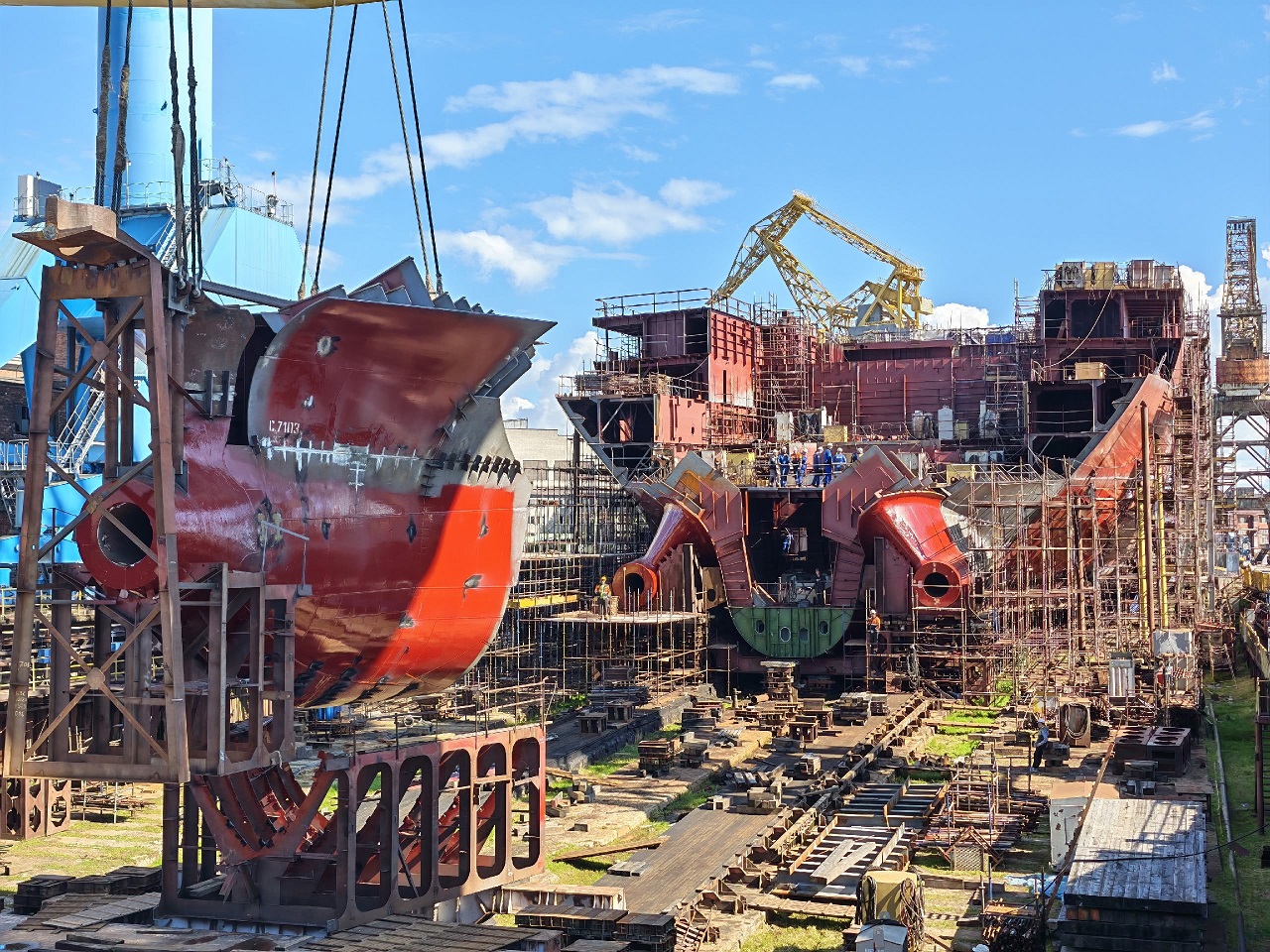
Under the government order of December 15, 2022, the combined cost of Leningrad and Stalingrad was almost RUB 118 billion, while the multifunctional nuclear technology service vessel was estimated at RUB 24.8 billion. According to a Kommersant source familiar with the situation, each icebreaker is now estimated to cost around RUB 85 billion.
Both nuclear icebreakers are being built under Project 22220 and are expected to be commissioned in 2028 and 2030, respectively. Construction of Leningrad is reportedly ahead of schedule: as of May, it was 31.45% complete against a planned 30.05%. On May 14, 2026, control assembly of its first RITM-200 reactor unit was completed.
Four Project 22220 icebreakers are currently in operation. The first of them, Arktika, was commissioned in 2020, and the latest, Yakutia, in March 2025. The commissioning date for another icebreaker under construction has been postponed from late 2026 to 2027.
«May saw an unusually early start to eastbound LNG tanker navigation along the Northern Sea Route. The LNG tanker Christophe de Margerie delivered an LNG cargo from the Arctic LNG 2 plant to a floating storage facility off Sakhalin and returned via the same route.
This was not its first voyage through the eastern section of the Northern Sea Route in May. It first sailed a similar route in May 2020, delivering an LNG cargo from the Yamal LNG plant. That voyage was intended not only to deliver LNG to China but also to test the capabilities of the then-new Arc7-class LNG carriers. Both the 2020 and 2026 early-season voyages required nuclear icebreaker escort and took twice as long as a transit along the same route in August–October, when ice cover is at its minimum.
The fact that early-season navigation did not become standard practice for Novatek’s LNG carriers after the trial voyage in May 2020 suggests that its economic viability is questionable. Using a nuclear icebreaker to escort a single vessel in both directions, including one ballast voyage, while taking twice as long as under favorable ice conditions, significantly increases transportation costs. The early voyage in 2026 is therefore more likely to reflect the need to use every available route to market sanctioned LNG from the Arctic LNG 2 plant than an economically justified shift of the summer-autumn navigation season to an earlier date.
Against this backdrop, statements by the Russian authorities about seeking off-budget sources to finance the construction of nuclear icebreakers and developing mechanisms to collect these funds from companies using icebreaker services confirm that current icebreaker escort tariffs are set below cost. This may also indicate that the prices under individual contracts between Novatek and other major Arctic companies, on the one hand, and Atomflot, which operates the nuclear icebreaker fleet, on the other, are likewise below market levels. Under relatively free market conditions, shipping via the Northern Sea Route is unlikely to be commercially viable.
Another notable development in May was the opening of the EMERCOM center in Sabetta after a delay of one and a half years. Emergency response infrastructure in the Arctic consists of a combination of facilities operated by the Marine Rescue Service and EMERCOM. While EMERCOM is primarily responsible for responding to land-based emergencies, the Marine Rescue Service is responsible for responding to maritime accidents and incidents. The opening of the EMERCOM center in Sabetta is therefore important, but it is unlikely to have a significant impact on emergency response infrastructure directly along the Northern Sea Route.»
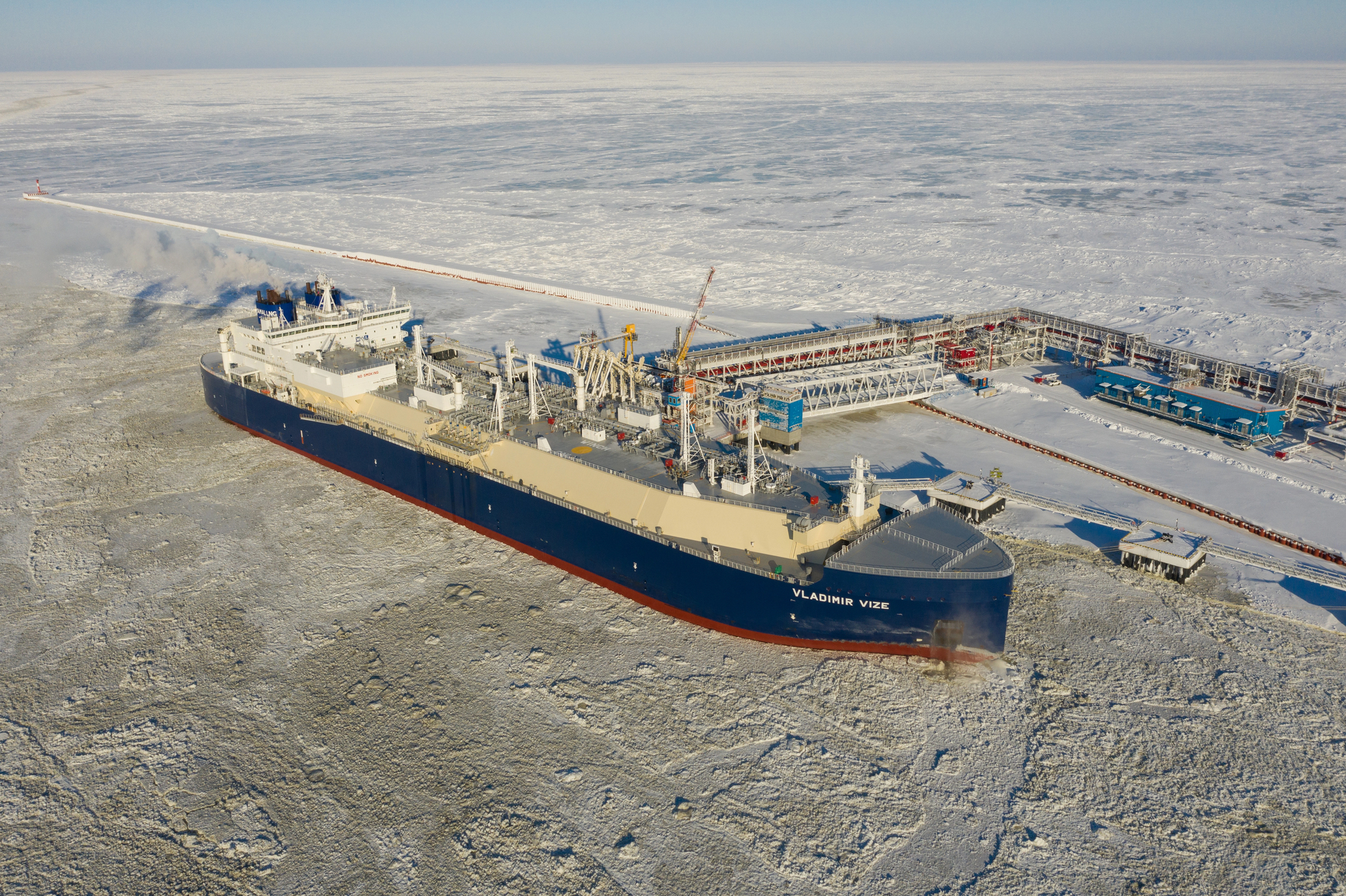
The United Kingdom banned the maritime transport of LNG produced in and exported from Russia to third countries and between third countries, as well as financial, insurance, and brokering services related to such shipments. The ban entered into force on May 20.
At the same time, the UK authorities exempted the Sakhalin-2 and Yamal LNG projects by issuing a temporary license valid until January 1, 2027. The license allows UK companies to participate in the transportation, insurance, and financing of LNG shipments from these projects to third countries.
In its May sanctions package, the United Kingdom also banned the import of petroleum products manufactured in third countries from Russian crude oil.
At the same time, an exemption was granted in the form of a license allowing the import of diesel fuel and jet fuel produced from Russian crude oil in third countries. The decision drew criticism from Ukrainian and British lawmakers. Initially, the license did not specify an expiration date, but on June 12 it was amended to state that it will remain valid until January 1, 2027.
This decision followed a US decision on May 18 to extend for 30 days a license covering maritime shipments of Russian-origin crude oil and petroleum products that had already been loaded onto tankers. The US first introduced these exemptions on March 12, and then extended them on April 18 and May 18.
The United Kingdom imposed sanctions on Russian oil and coal back in 2022. In October 2025, it announced a ban on imports of petroleum products produced in third countries from Russian crude oil. In 2025, the United Kingdom bought 19.5% of its diesel and jet fuel imports from India, a country that refines Russian crude oil for export.
On May 7, the National Assembly of the Republic of Korea adopted, at a plenary session, the Special Act on the Promotion of Utilization of the Arctic Route and the Development of Related Industries, aimed at preparing the country for the use of Arctic shipping routes. The act was promulgated on June 16 and will enter into force on December 17, 2026.
The law provides for the establishment of an Arctic Sea Route Committee under the Prime Minister to coordinate and advise on issues related to the use of the Arctic shipping route. The route is expected to include the Northern Sea Route. The law also requires the preparation of a comprehensive master plan every five years covering infrastructure, including search and rescue capabilities, international cooperation, workforce development, financing, and investment attraction.
To study operations in Arctic waters, a delegation from Busan visited the Norwegian port of Tromsø in March, where the parties signed a non-binding agreement to deepen cooperation, exchange knowledge, and explore potential opportunities.
On May 15, it was announced that South Korea’s PanStar Line, part of PanStar Group, had been provisionally selected as the operator of the country’s first trial container voyage along this route. The Busan-based company was the sole applicant in the selection process. The round-trip voyage between South Korea (Busan) and Europe (Rotterdam) via Russia’s Northern Sea Route is scheduled for August or September 2026.
According to gCaptain, PanStar Line has not yet acquired a vessel for the voyage. According to the tender documentation for the selection of the operator, the vessel, with a capacity of about 3,000 TEU, must have an ice class and comply with the International Maritime Organization’s Polar Code requirements for operations in the Arctic.
The Arctic sea route has been a focus of South Korea’s attention for several years. In 2025, becoming one of the countries playing a leading role in the development of the Arctic sea route was identified as one of the country’s strategic development priorities. On May 26, the Ministry of Oceans and Fisheries announced its intention to launch a regular shipping service between South Korea and Europe via the Arctic by 2030.
Several of the largest Nordic financial institutions, including Nordea Asset Management, Norway’s KLP, and Denmark’s Sampension, called on the European Union in an open letter to maintain the moratorium on oil and gas exploration and production in the Arctic in the EU’s new Arctic Strategy, which is due to be adopted in September.
The letter was written on May 27, 2026, and published on the website of the Nordic Center for Sustainable Finance, which supports banks and other Nordic financial institutions in phasing out investments in fossil fuels. It was signed by 127 organizations and individuals representing the financial sector, business, academia, trade unions, think tanks, and civil society. They argue that the EU should maintain and strengthen the protection of Arctic ecosystems from new oil and gas infrastructure.
The authors of the letter emphasize that further expansion of oil and gas development will increase pressure on Arctic ecosystems of global importance, raising the risk of oil spills and leaks that could cause irreversible environmental damage. They also warn that increased shipping will further intensify pressure on the region.
The letter was written in response to Norway’s efforts to persuade the European Union to reconsider its moratorium on oil and gas exploration and production in the Arctic. One of the key arguments has been the crisis around the Strait of Hormuz and the associated risks to the EU’s energy security. Norwegian Prime Minister Jonas Gahr Støre has argued that the European Union needs stable energy partners and that Norway can serve as such a partner. Oil and gas exports from Norway’s continental shelf currently meet about 30% of the European Union’s demand.
Although Norwegian companies such as Equinor and Vår Energi are already developing several oil and gas projects in the Barents Sea, lifting the EU moratorium would make it easier to secure financing from European banks.
In response to such proposals, the authors of the letter argue that new resource projects in the Arctic will not provide a rapid solution to Europe’s energy security challenges. According to their estimates, the average development time for projects on the Norwegian continental shelf is 13 years, and even longer in the Barents Sea. The letter also emphasizes that the region’s oil and gas infrastructure is a potential target for hybrid attacks because of its proximity to Russian territory and the Northern Sea Route.
The letter also cites the results of an oil spill simulation at the Wisting field in the northern Barents Sea, which Norway plans to develop. According to the simulation, only about 7.8% of spilled oil could be recovered during the winter. The authors also emphasize that the Barents Sea is of critical importance for numerous species, including sperm whales, dolphins, Atlantic salmon, several coral species, and others.
«The UK’s May sanctions continue a series of slow-moving prohibitions against Russia’s gas and oil industry. Sanctions exemptions prolong the process and allow Russia to restructure logistics and find new buyers for its energy resources. The exemptions from sanctions on services for the maritime transport of Russian LNG as they apply to Yamal LNG are coordinated with the EU’s plans to fully stop purchasing Russian LNG from January 2027, while the exemptions for LNG from Sakhalin were made to accommodate Japan and South Korea, which continue to import Russian LNG and have not announced plans to phase it out.
South Korea, meanwhile, is actively creating a legal framework for shipping in the Arctic, primarily along the Northern Sea Route. The first transit voyage from South Korea to Europe is scheduled for August–September of this year. A significant difference from last year’s transit voyage by a Chinese container ship will be the type of vessel. While China sent an old container ship without ice class, South Korea plans to send an ice-class vessel in full compliance with the Polar Code. An analysis of economic feasibility, as well as data on actual fuel use and emissions during the voyage, would be useful for assessing the negative impact on the Arctic environment and climate; otherwise, estimates of shipping emissions on the Northern Sea Route rely on assumptions.
In addition, Bellona supports the call to maintain the moratorium on oil and gas exploration and production in the Arctic, as set out in the open letter by Nordic financial institutions. We expressed the same position in our recommendations for the EU Arctic Strategy published in March. The replacement of Russian LNG and petroleum products derived from Russian crude oil should not rely on finding new suppliers, but on reducing fossil fuel consumption.»
Norwegian authorities report that this is the first case of a polar bear infected with avian influenza recorded in Europe. No similar cases have been reported in Asia to date. The first, and until now the only, confirmed case of a polar bear infected with avian influenza was recorded in Alaska in 2023.
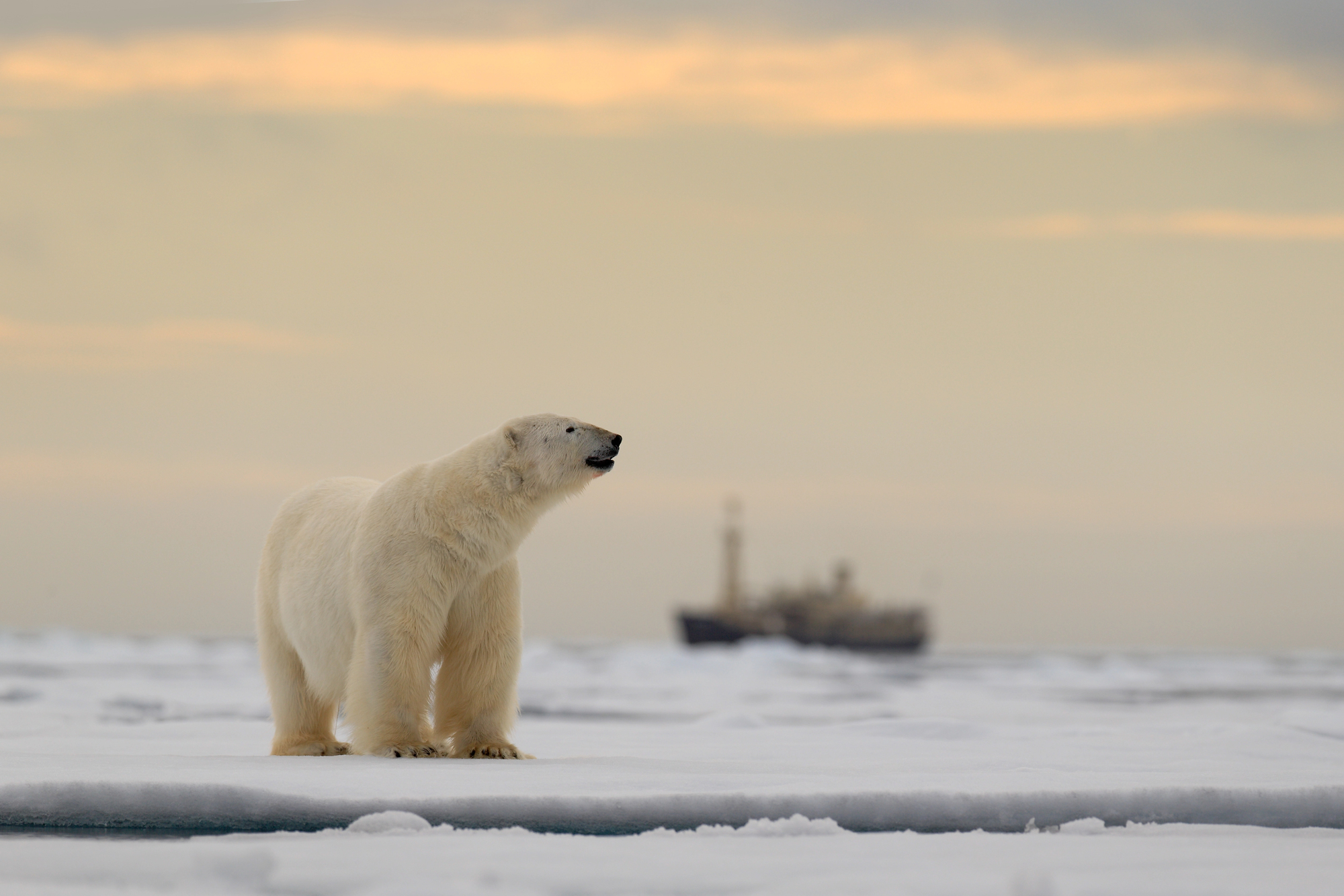
At the same time, Norwegian scientists warn that avian influenza is spreading increasingly among animals in the Arctic region, including Svalbard in particular. It was first detected among animals in the archipelago in seabirds in 2022. The first recorded case of a walrus dying from the virus on Svalbard occurred in 2023, and in 2025 it was found in local Arctic foxes. Another case of a walrus dying from avian influenza on Svalbard was also documented in May.
It was also previously reported that evidence of past avian influenza infection was found in wild animals in Alaska in 2024. The same year, the virus was detected in ringed seals in Canada’s Nunavut territory, marking one of the first documented cases of avian influenza infection in marine mammals.
The mechanism by which avian influenza spreads in the Arctic has not yet been fully studied. Several possible causes exist, including changes in the epidemiology of the virus itself, shifts in the timing of bird migration and the northward movement of waterfowl ranges, as well as greater overlap between migration routes. However, it remains unclear which of these and other factors, or combinations of factors, have the greatest impact. At the same time, one study published in Nature emphasizes that transmission of the virus from birds to mammals occurs mainly not directly, but through the consumption of infected birds.
In this news digest, we monitor events that impact the environment in the Russian Arctic
In this news digest, we monitor events that impact the environment in the Russian Arctic
In this news digest, we monitor events that impact the environment in the Russian Arctic
In this news digest, we monitor events that impact the environment in the Russian Arctic