
Monthly Highlights from the Russian Arctic, November 2025
In this news digest, we monitor events that impact the environment in the Russian Arctic
News
Publish date: 06/05/2026
News
Our focus lies in identifying the factors that contribute to pollution and climate change.
Ensuring complete and reliable access to environmental information in Russia has never been fully guaranteed. Following the Russian invasion of Ukraine on February 24, 2022, it became even more difficult. Some information ceased to be published altogether, such as daily oil production data and annual reports from certain industrial companies. Independent environmental organizations have been banned or closed.
The Arctic region plays a crucial role in comprehending the process of global climate change. Russia owns approximately one-third of its territory, including the exclusive economic zone of the Arctic Ocean. To understand and examine trends, we monitor new legislation, the plans of industry, the Northern Sea Route, international economic sanctions, accidents, and emergencies in the Russian Arctic, as well as provide commentary on the news. Subscribe to our mailing list to make sure you don’t miss the next digest.
Our previous monthly highlights for February can be found here.
NORTHERN SEA ROUTE AND SHIPPING
1. Overview of shipping on the Northern Sea Route in March
2. In March, operations along the Northern Sea Route were supported by seven nuclear icebreakers
3. Direct passenger voyages from Murmansk to Svalbard have resumed
4. The Russian government plans to test ice reconnaissance drones on the Northern Sea Route and in the Arctic zone
5. JSC “Northern Shipping Company” has been selected as the operator of regular cabotage shipping along the Northern Sea Route
THE INTERNATIONAL SITUATION IN THE ARCTIC AND SANCTIONS ON RUSSIA’S ACTIVITIES IN THE ARCTIC REGION
6. France has inspected the sanctioned tanker Deyna, carrying Russian Arctic oil from Murmansk
7. The United Kingdom has authorized the military to detain vessels of the shadow fleet
8. A Ukrainian drone strike on a shipyard in Vyborg damaged the Purga, an Arctic patrol icebreaker currently under construction
9. Canada has presented a comprehensive plan for the development of its Arctic territories
ENVIRONMENTAL AND CLIMATE ISSUES IN THE ARCTIC
10. The annual maximum extent of Arctic sea ice has set a new record low for the second consecutive year
11. New study: polar bears are becoming smaller and losing genetic diversity due to the loss of sea ice
In March, Arctic sea ice reached its annual maximum. According to the U.S. National Snow and Ice Data Center (NSIDC), on March 15 the ice extent was 14.29 million km². This result is virtually identical to the record low value of 2025 (14.31 million km²) and, together with it, is the lowest on record since observations began in 1979.
Shipping along the Northern Sea Route in March was supported by the LNG projects Yamal LNG and Arctic LNG 2, oil shipments from the Varandey, Prirazlomnoye, and Novoportovskoye fields, as well as cargo transport by Norilsk Nickel.
In March, operations at the Arctic LNG 2 project became significantly more complicated, and export shipments slowed following the explosion of the tanker Arctic Metagas in the Mediterranean Sea on March 3. As a result of the explosion, the vessel lost propulsion and is still drifting in the central Mediterranean with LNG and heavy fuel (most likely fuel oil) on board.
After that, vessels servicing Arctic LNG 2 changed their routes. Some carriers began avoiding the Mediterranean Sea and used longer routes via the Cape of Good Hope, which increased fleet turnaround times. This led to a buildup of cargo in the Arctic. The floating storage unit Saam FSU near Murmansk approached full capacity, and LNG carriers were forced to idle in the Barents Sea awaiting unloading. After March 17, not a single loading operation was recorded at the Utrenny terminal of the Arctic LNG 2 plant.
In total, in March the LNG carriers Christophe de Margerie and Alexey Kosygin each loaded twice at the terminal. However, only one cargo was shipped from the Saam FSU—on March 2 to the tanker Voskhod, which then headed around Africa toward China.
The Yamal LNG project continued operating as usual in March. A total of 25 LNG cargoes were shipped from the plant in Sabetta and, as in February, were delivered to EU countries. The bulk of deliveries was carried by 14 Arc7 ice-class tankers operating on direct routes from Sabetta to European ports. At the same time, part of the cargoes was transshipped via ship-to-ship operations near Kildin Island, where LNG was transferred to non-ice-class tankers for onward delivery to Europe.
At the same time, shipments of stable gas condensate (SGC) to the EU continued. Transport was carried out by two specialized tankers—Boris Sokolov and Yuri Kuchiev, each of which completed one voyage in March.
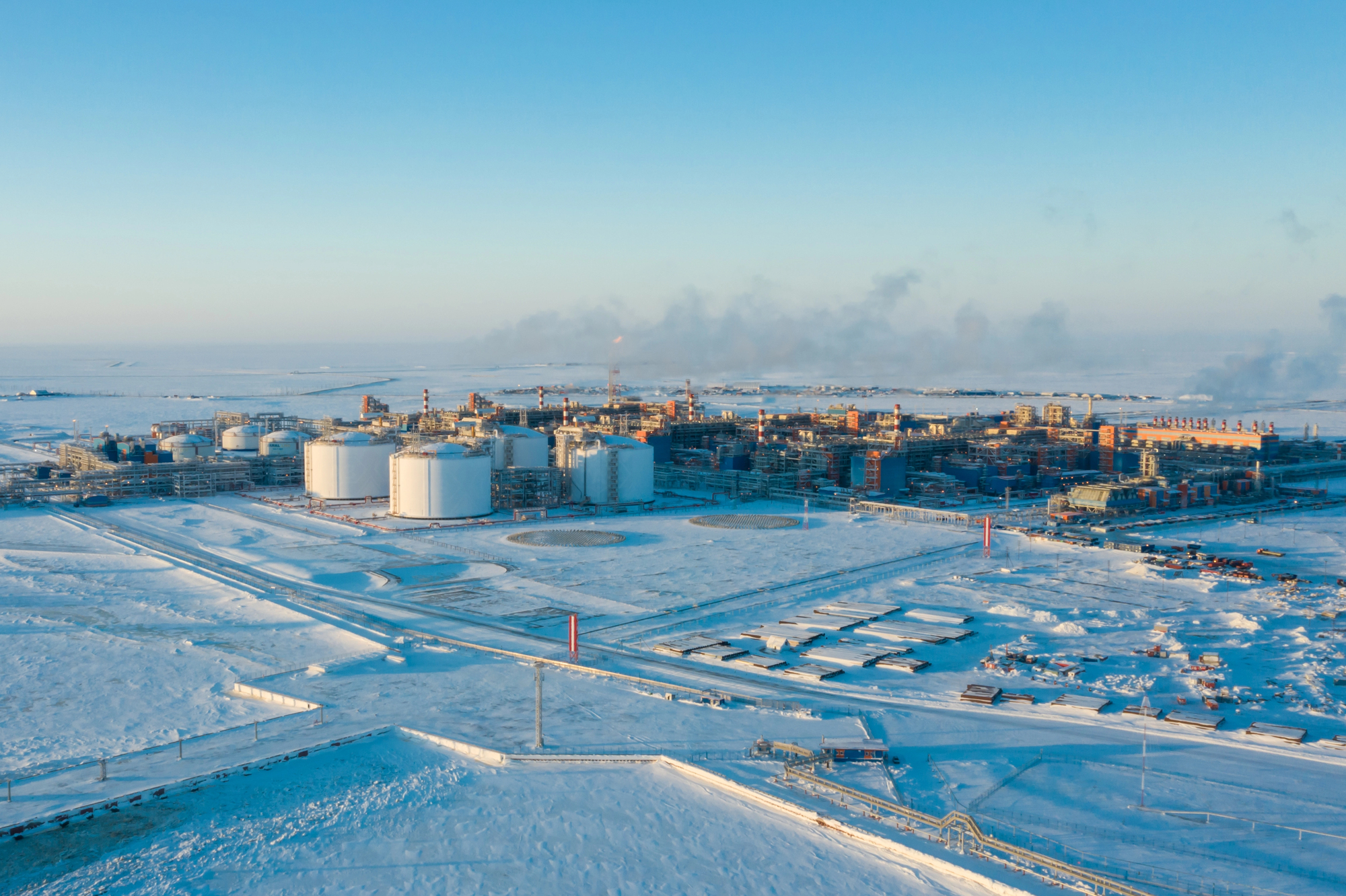
In March, oil shipments from Arctic terminals continued in a stable mode. According to AIS data, the tankers Vasily Dinkov, Kapitan Gotskiy, and Timofey Guzhenko carried out four loadings from the Varandey terminal. From the Prirazlomnaya platform, the tankers Mikhail Ulyanov and Kirill Lavrov completed at least five shipments. From the Gate of the Arctic terminal (Novoportovskoye field), seven Arc7 tankers of the Shturman series carried out approximately 12–13 voyages. Vessels from all three fields proceeded to the Murmansk area (Kola Bay), where oil was transshipped onto other tankers for further export, while AIS signal outages were regularly recorded in the Murmansk area.
The metallurgical company Norilsk Nickel continued regular container shipments along the Northern Sea Route between the port of Dudinka and Murmansk. As in the previous month, seven vessel calls were recorded in Dudinka in March. These vessels mainly transported non-ferrous metals for export, while in the opposite direction they delivered general cargo, equipment, and materials for the needs of the Norilsk industrial region.
The company’s own fleet of Arc7 ice-class container ships (Norilskiy Nikel, Talnakh, Nadezhda, Monchegorsk, and Zapolyarny) completed five voyages in March, and the chartered vessels Terskiy Bereg and Taybola carried out two additional voyages.
In March, seven nuclear icebreakers of Rosatomflot operated actively along the Northern Sea Route, ensuring navigation in its western sector. Their main operations were concentrated in the Gulf of Ob and the Kara Sea, where they operated between the following key points:
On the evening of March 17, the nuclear icebreaker Sibir (Project 22220) returned to the Arctic after a month-long mission in the Gulf of Finland, where it had been deployed due to severe ice conditions. The icebreaker arrived on February 18 and over 28 days escorted 165 vessels—mainly tankers and bulk carriers—to and from the port of Primorsk. After returning, Sibir resumed operations on the Northern Sea Route.
Along with Sibir, the diesel-electric icebreaker Murmansk (Project 21900M) arrived in the Gulf of Finland on February 19. According to AIS data, around March 27 Murmansk completed its operations and departed back toward the Arctic. Thus, the icebreaker spent approximately 37 days in the Gulf of Finland.
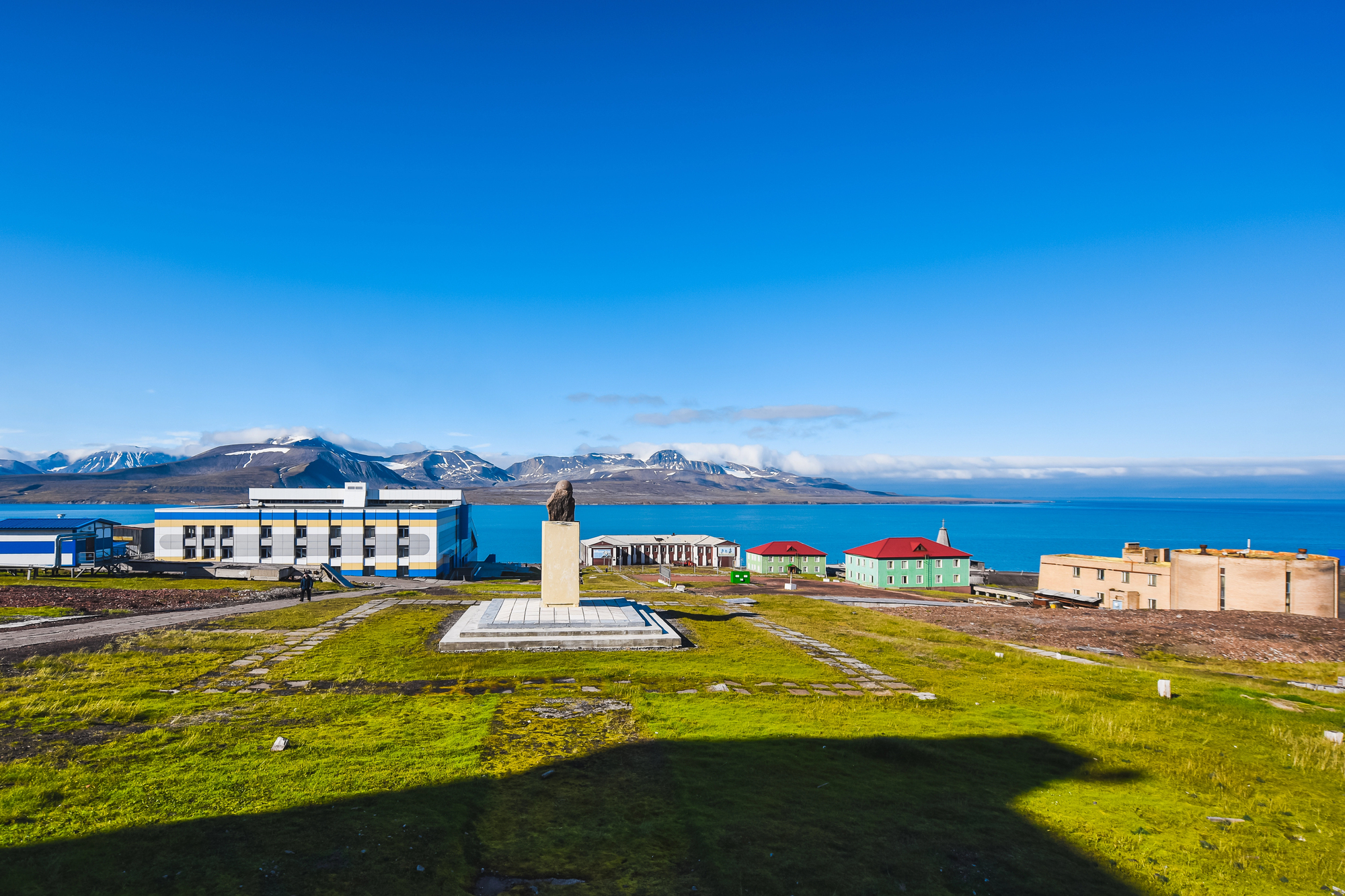
The first voyage in 2026 of the research vessel Professor Molchanov took place on March 8, delayed by several days due to a storm. The departure had originally been scheduled for March 4. It is currently the only vessel operating on this route.
Transport operations are organized by the Arktikugol trust. The main purpose of the voyages is to transport employees, their family members, contractors, and scientists, as well as to supply the settlement. The voyages are also used for tourism purposes.
Direct maritime service between Murmansk and Barentsburg was restored in 2025 after a 27-year hiatus. Last year, Professor Molchanov completed five voyages, and in 2026 the number is planned to increase to ten.
Regular passenger sea transport from Murmansk to Barentsburg ceased in the late 1990s. This happened after, in 1998, Arktikugol halted operations at the mine and mothballed the settlement of Pyramiden due to unprofitability. However, the mine in Barentsburg continued operating, and people remained in the settlement.
Arktikugol is also attempting to develop its tourism business. In 2020, flights from Russia to Svalbard were suspended due to the COVID-19 pandemic, and later additional restrictions were imposed as a result of sanctions.
On March 20, the Russian government approved Resolution No. 300 introducing an experimental legal regime for the operation of unmanned aerial vehicles on the Northern Sea Route and in the Arctic zone (AZRF). The document was published on March 31. The initiator and operator is FSUE Atomflot.
The experimental legal regime is introduced for a period of three years. It allows for simplified rules, including the suspension of certain provisions of the Air Code and certification requirements, and applies in the waters of the Northern Sea Route and adjacent Arctic territories, including the Yamalo-Nenets, Nenets, and Chukotka autonomous okrugs, Arkhangelsk and Murmansk regions, Krasnoyarsk Krai, Yakutia, Karelia, and Komi.
The main objective is to test an ice reconnaissance system based on deck-based unmanned aerial vehicles. Such systems are intended to provide real-time information on ice conditions, which is expected to improve the safety of navigation along the Northern Sea Route and support the development of year-round shipping in challenging Arctic conditions.
In addition, testing of aerial cargo delivery and other aviation operations is planned. Flights are to be conducted under the direct control of an external pilot, with real-time transmission to a geoinformation portal.
Over the three-year period, at least 600 flights for ice reconnaissance are planned, covering an area of no less than 6,000 km² along the Northern Sea Route.
The Russian Ministry for the Development of the Far East and Arctic has announced the results of the selection of a recipient of a federal subsidy for organizing regular cabotage cargo shipments along the Northern Sea Route in 2026–2028. The winner of the tender is JSC “Northern Shipping Company”.
Minvostokrazvitiya, Russia’s ministry for the development of the Far East, has for the first time designated a single operator for the entire three-year period. Previously, such shipments were carried out on an occasional basis. The new approach is expected to enable the establishment of a regular sailing schedule and a transition to systematic planning of Arctic logistics.
JSC “Northern Shipping Company” will operate voyages between ports in the European part of Russia (St. Petersburg, Murmansk, Arkhangelsk) and the Far East (Vladivostok, Nakhodka, Vostochny, Korsakov) in both directions.
The company confirmed its readiness to carry out shipments with a subsidy of 244.3 million rubles, compared to the maximum possible funding of up to 1.3 billion rubles for the entire period from 2026 to 2028.
«In March, shipping along the Northern Sea Route was typical for this winter navigation period, with the exception of a reduction in voyages from the Arctic LNG 2 plant caused by a successful Ukrainian drone attack on the shadow LNG carrier Arctic Metagas in the Mediterranean Sea. The attack, which completely disabled the vessel, forced a revision of routes for other shadow tankers exporting LNG from the sanctioned plant, or led to their suspension altogether.
This highlights the vulnerability of logistics for sanctioned Russian gas. Any incident involving a shadow LNG tanker can significantly slow down or halt shipments. If Russia fails to establish regular gas deliveries from Arctic LNG 2 this year as well, the total cargo turnover along the Northern Sea Route will most likely remain at last year’s level.
Other developments in March indicate a continuation of the trend toward centralization of shipping along the Northern Sea Route and the use of state subsidies to support Russia’s presence in the Arctic. At the same time, the promised subsidy for JSC “Northern Shipping Company” (244.4 million rubles per year) turned out to be lower than initially stipulated in the Northern Sea Route development strategy (560 million rubles per year).
The monopolization of cabotage voyages, as well as the previously introduced monopolization of northern delivery by the Northern Sea Route administrator, the State Corporation Rosatom, continues the trend toward establishing a planned, fully state-controlled economy in Russia’s Arctic regions.
In addition, Russia is seeking to maintain and even expand its presence in Svalbard. Under conditions where Norway has stopped issuing tourist visas to Russian citizens, including for transit to Svalbard, the development of the tourism business—handled by the Arktikugol trust on behalf of the Ministry for the Development of the Far East—has required state subsidies for regular maritime voyages from Murmansk to Barentsburg.»
On March 20, France inspected the tanker Deyna in the Mediterranean Sea, carrying oil extracted in the Russian Arctic. According to vessel tracking services, the tanker, which used the flag of Mozambique to circumvent sanctions, was sailing from Murmansk to Port Said, Egypt.
The inspection operation was carried out in cooperation with the UK’s Permanent Joint Headquarters, which had been monitoring the vessel. The tanker was escorted by French Navy ships to an anchorage in the Gulf of Fos, where it is awaiting an investigation by the Marseille prosecutor’s office on charges of sailing under a false flag.
This is already the second detention of a shadow fleet tanker by France in recent months. In late January, the tanker Grinch, flying the flag of the Comoros, was intercepted in the Mediterranean Sea. Like Deyna, it was carrying oil extracted in the Russian Arctic, which it had loaded in Murmansk. Grinch was released by France after the vessel’s owner paid a fine of “several million euros,” as stated by French Foreign Minister Jean-Noël Barrot.
French President Emmanuel Macron commented on the detention of the vessel Deyna amid the oil crisis caused by the war in Iran: “The war involving Iran will not deflect France from its support for Ukraine, where Russia’s war of aggression continues unabated.”
Emmanuel Macron condemned the illegal activities of Russian tankers, emphasizing the role of the shadow fleet in financing military operations in Ukraine.
From March 25, 2026, UK Prime Minister Keir Starmer granted the armed forces and law enforcement officers the authority to inspect and detain Russian shadow fleet vessels passing through the country’s territorial waters. The British authorities expect that Russian tankers will now have to use alternative routes, avoiding the English Channel, which is jointly managed by the United Kingdom and France, or risk being detained.
This decision marks a new step in the United Kingdom’s efforts to counter the Russian shadow fleet. For several years, the Royal Navy has been tracking the routes and activities of sanctioned Russian vessels and has provided support in operations to detain shadow fleet ships carried out by other European states, including France.
In response to the tightening of measures to intercept shadow fleet vessels, Russia’s Maritime Board held meetings to develop additional ways to protect ships departing from Russia or sailing under the Russian flag. The Russian government also condemned the United Kingdom’s sanctions on 554 shadow fleet vessels, calling them unlawful.
Ukraine carried out a series of drone attacks on the Vyborg Shipbuilding Plant in the Leningrad Region, as a result of which the patrol vessel Purga under construction was damaged.
Purga is a multipurpose patrol vessel of Project 23550, intended for use by the Coast Guard of Russia’s Federal Security Service (FSB) Border Service. Project 23550 vessels have an Arc7 ice class and can perform the functions of an icebreaker, tug, firefighting vessel, and combat ship. They are equipped with an artillery mount, a helicopter deck and hangar, and can operate unmanned aerial vehicles and high-speed boats. The ships also feature aft deck space designed to accommodate containerized Kalibr-K cruise missile systems.
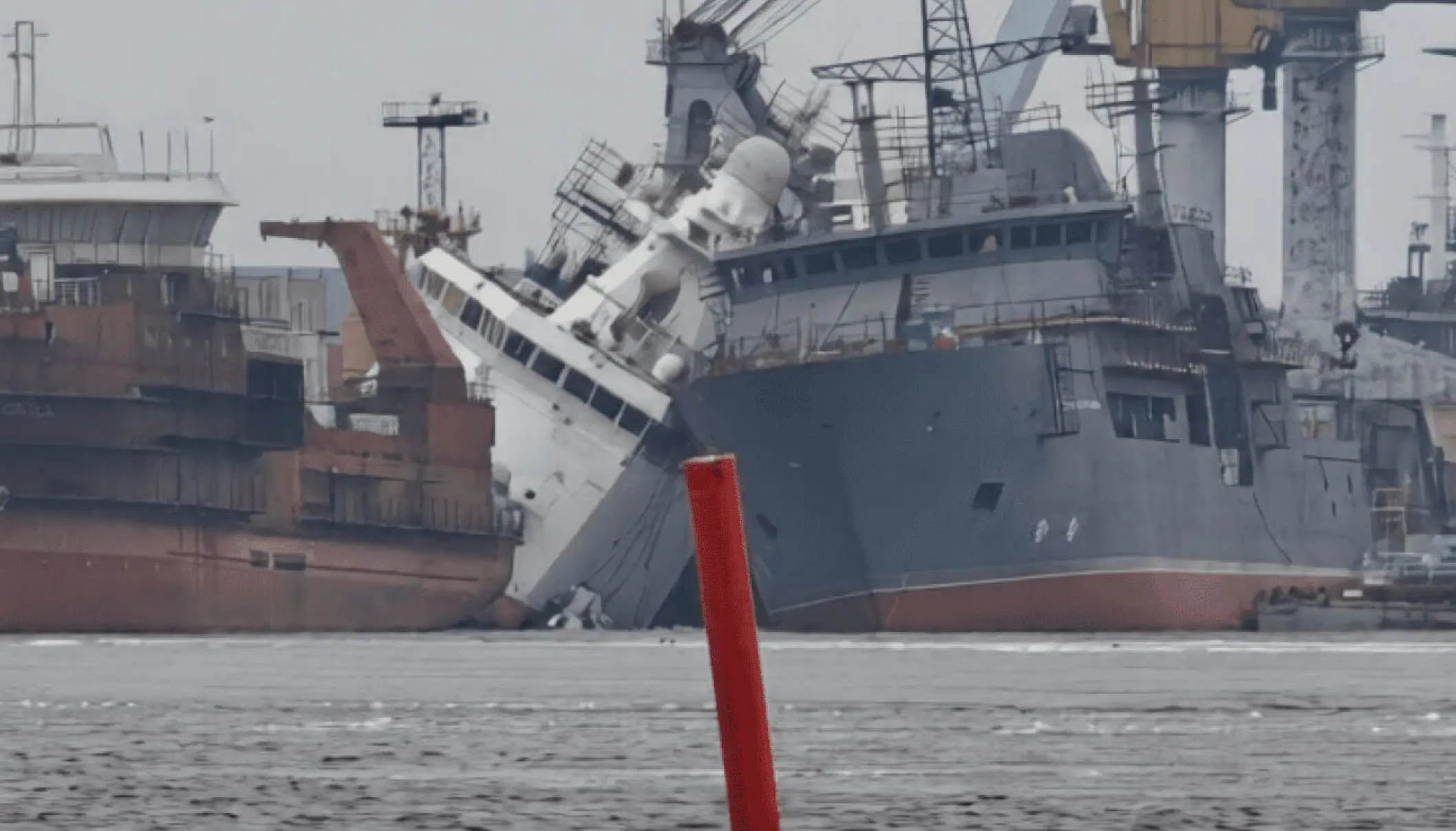
One such vessel, Ivan Papanin, was commissioned in September 2025, while three others, including Purga, are at various stages of construction in Vyborg and at the Admiralty Shipyards in Saint Petersburg.
This strike is the first known case of a Ukrainian drone damaging a Russian military vessel in the Baltic Sea. On the same night, March 25, Ukraine attacked the Russian port of Ust-Luga, which resulted in a large-scale fire.
It is currently unknown to what extent the damage will delay the construction of Purga. The Vyborg Shipbuilding Plant is one of the most significant shipbuilding enterprises in the Russian Federation, specializing in offshore equipment and civilian ice-class vessels.
On March 12, Canadian Prime Minister Mark Carney presented a comprehensive plan for the development of Canada’s Arctic territories.
The program, which includes long-term investments totaling more than 40 billion Canadian dollars, is aimed at strengthening defense infrastructure as well as the region’s socio-economic development. According to Carney, under this plan Canada assumes full responsibility for protecting its sovereignty in the Arctic and also plans to develop mineral resources, expand clean energy, and establish trade corridors.
Four new facilities being developed to strengthen the presence of the Canadian Armed Forces in the Arctic will also be used for search and rescue operations, emergency evacuations, and assistance to populations in remote areas.
The document also places emphasis on the development of renewable energy. A key project is the expansion of the Taltson hydroelectric power plant, which will increase hydropower capacity in the Northwest Territories by 60 megawatts, doubling it.
The project also lays the groundwork for the future connection of the Northwest Territories’ power system to the rest of Canada. This integrated hydropower network will serve more than 70% of the territory’s population, support new mineral extraction projects, and significantly reduce its dependence on diesel fuel, cutting CO2 emissions by 82% to 240,000 tons per year.
In the area of transport infrastructure, plans include the construction of the country’s first deep-water port on the Arctic Ocean at Grays Bay, as well as the implementation of several other infrastructure projects, primarily related to the development of the highway network. These projects are intended to connect isolated Arctic territories with the rest of the country, provide access to critical mineral deposits, create more than 11,000 jobs, and significantly reduce the cost of living in the North. Many of the facilities will have dual military-civilian use.
«In March, there were signs of some progress toward real counteraction by European states against the activities of the Russian shadow fleet. Shadow fleet vessels operating in their territorial waters are increasingly being detained for detailed document checks. If this practice becomes established and scaled up, it could significantly hinder the illegal transportation of Russian oil.
Shadow tankers often have issues with documentation, including outright falsification of the flag or identification number in international databases. In such cases, a vessel may be detained, and any delay disrupts deliveries, making the supplier significantly less attractive to buyers, even if the cargo is sold at a substantial discount.
Moreover, this is a safer way for the environment to reduce Russian oil supplies compared to direct attacks on oil terminals in ports. Following successful Ukrainian strikes on Russian oil terminals in the Black Sea and the Gulf of Finland, similar facilities in Murmansk could become the next target. To prevent potential environmental damage in the Arctic region, European countries, primarily Norway, should detain all Russian shadow tankers entering their territorial waters for thorough inspection.
At the same time, the Arctic development plan adopted by Canada shows that even while engaging in the “race for the Arctic” under current geopolitical conditions, it is possible not to lose sight of renewable energy development, the achievement of climate goals, and the reduction of environmental impact.»
On March 22, the annual maximum extent of Arctic sea ice reached a historic low for the entire period of observations (since 1979), totaling 14.29 million km² and surpassing last year’s record low of 14.31 million km², according to NASA.
The continued decline in ice extent is occurring against the backdrop of a persistent long-term trend. This year’s figures are about 1.3 million km² below the 1981–2010 average. The trend is even more pronounced in summer, when Arctic sea ice reaches its annual minimum. Annual summer measurements show a decline of 12.2% per decade. For example, the summer minimum in 2025 was about 4.6 million km², placing it among the ten lowest values on record.
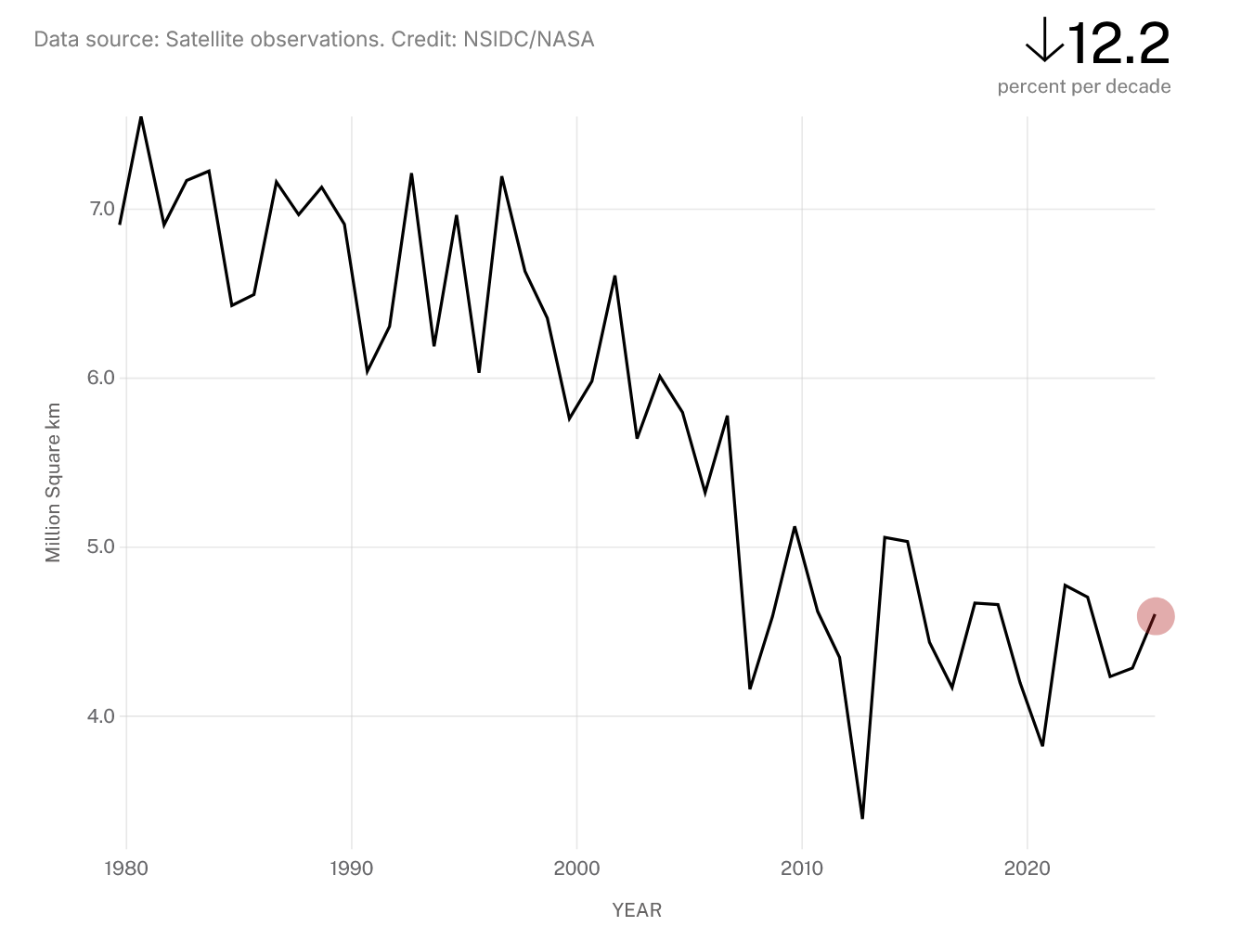
NASA emphasized that, according to data from the ICESat-2 satellite, ice thickness is also decreasing—especially in the Barents Sea to the northeast of Greenland. Relatively low ice concentration was also observed in the Sea of Okhotsk.
An additional factor is anomalous weather conditions. During the 2025 winter season, temperatures in some parts of the Arctic were recorded at up to 12°C above normal, along with strong cyclones that broke up thin ice and hindered its formation.
An international group of researchers, including representatives from Canada, the United States, and Norway, has published a new report in the journal Ecological Monographs on the impact of climate change on the genetics and evolution of polar bears.
Scientists examined all 20 polar bear populations. Some are declining sharply; however, part of the populations remain stable, and some are even thriving due to factors such as high biodiversity, abundant prey, and access to glacial ice, which supplements the diminishing sea ice.
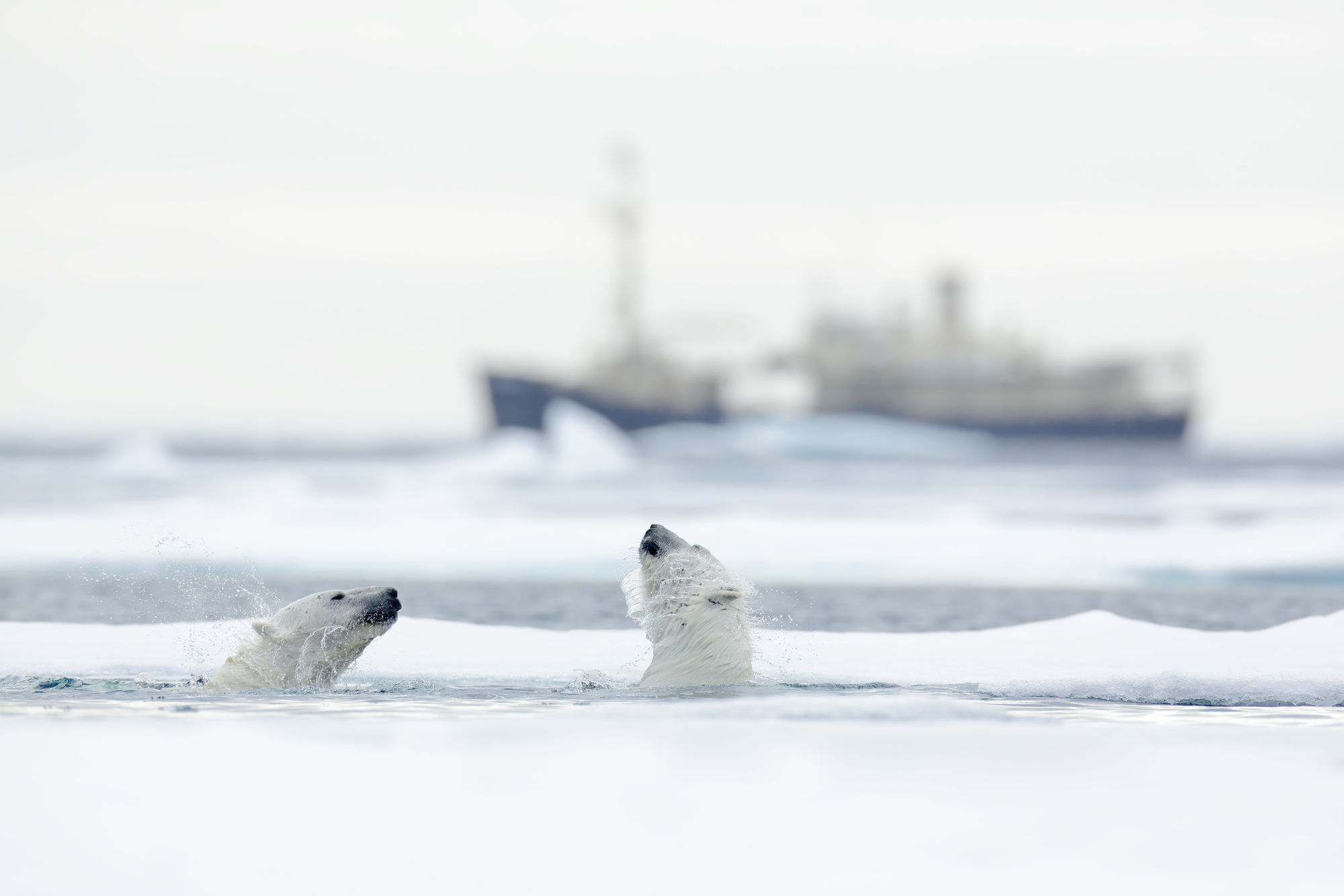
Nevertheless, on average, polar bears are becoming smaller. This is a form of maladaptation, meaning it does not provide a benefit: reduced body size makes bears more vulnerable, limits the time they can go without food, and leads to the birth of smaller cubs with lower survival rates.
In addition, the researchers confirmed that, in evolutionary terms, polar bears are not adapting to climate change. Although some individuals show behavioral flexibility—for example, adopting new hunting strategies—this is not transmitted to offspring through evolutionary mechanisms.
In addition, reduced gene flow between populations is leading to declining genetic diversity in many of them. This decline, along with increasing levels of inbreeding, indicates lower adaptive capacity and greater vulnerability.
Maintaining contact between populations is crucial for the survival of the entire species, the authors of the report emphasize.
“According to our research, one of the most clear-cut ways to preserve polar bears in a warming Arctic is to maintain ecosystem connectivity through habitat preservation. Through marine reserves, strategic shipping lane planning, and other measures, we can ensure that polar bears and other Arctic species can continue to disperse and connect with other populations, which is necessary for preserving genetic diversity and long-term species resilience,” says Dr. Ruth Rivkin, lead author of the study and a researcher at the University of Manitoba (Canada), who also works with the conservation NGO Polar Bears International.
At the same time, Rosatom maintains that shipping along the Northern Sea Route does not have a negative impact on the environment. This suggests that Russia does not plan to introduce any additional measures aimed at protecting Arctic species in the context of maritime transport.
On March 4, Bellona held a session at the annual Arctic Circle – Polar Dialogue in Rome, where experts and journalists examined how Russian propaganda narratives around the Arctic are formed and why they do not reflect reality. A report from the event and its video recording are available here.
Bellona has published the article “Russia is not prepared for oil spills, Kerch Strait report shows” On December 5, 2025, Russia submitted to the International Maritime Organization a report on the response to the accident in the Kerch Strait. The document indicates that Russia lacks a plan for responding to heavy fuel oil spills at sea in winter conditions. We explain what this means in the context of Arctic shipping and the development of the Northern Sea Route.
In this news digest, we monitor events that impact the environment in the Russian Arctic
In this news digest, we monitor events that impact the environment in the Russian Arctic
In this news digest, we monitor events that impact the environment in the Russian Arctic
In this news digest, we monitor events that impact the environment in the Russian Arctic