Monthly Highlights from the Russian Arctic, March 2026
In this news digest, we monitor events that impact the environment in the Russian Arctic
News
Publish date: 12/06/2026
News
Our focus lies in identifying the factors that contribute to pollution and climate change.
Ensuring complete and reliable access to environmental information in Russia has never been fully guaranteed. Following the Russian invasion of Ukraine on February 24, 2022, it became even more difficult. Some information ceased to be published altogether, such as daily oil production data and annual reports from certain industrial companies. Independent environmental organizations have been banned or closed.
The Arctic region plays a crucial role in comprehending the process of global climate change. Russia owns approximately one-third of its territory, including the exclusive economic zone of the Arctic Ocean. To understand and examine trends, we monitor new legislation, the plans of industry, the Northern Sea Route, international economic sanctions, accidents, and emergencies in the Russian Arctic, as well as provide commentary on the news. Subscribe to our mailing list to make sure you don’t miss the next digest.
Our previous monthly highlights for March can be found here.
NORTHERN SEA ROUTE AND SHIPPING
1. Overview of shipping on the Northern Sea Route in April
2. Eight nuclear icebreakers operated along the Northern Sea Route in April
3. The Chinese company NewNew Shipping has announced a new route to Murmansk and plans to operate up to 12 voyages between China and Arkhangelsk in 2026
4. Russia’s Ministry of Industry and Trade has approved the Arctic Ship Repair Development Program
5. Arctic routes will remain secondary over the next five years, especially for container shipping, according to a report by insurance company Coface
THE INTERNATIONAL SITUATION IN THE ARCTIC AND SANCTIONS ON RUSSIA’S ACTIVITIES IN THE ARCTIC REGION
6. The EU has adopted its 20th sanctions package targeting Russian Arctic oil and LNG, the shadow fleet, and diamond exports
7. Russia increased LNG exports by 8.6% in January–April
8. Russian shadow fleet vessels transporting Arctic oil are using fraudulent insurance documents – Bloomberg
9. The International Maritime Organization has adopted a new Emission Control Area in the North-East Atlantic
10. A shadow fleet tanker made a major detour to avoid Norwegian oversight
11. Satellite navigation disruptions are increasing at low altitudes near Norway’s border with Russia
HEIGHTENED INDUSTRIAL ACTIVITY IN THE RUSSIAN ARCTIC
12. Vorkutaugol Announces Production Cuts, Workforce Reductions, and Rollback of Social Benefits
ACCIDENTS AND INCIDENTS IN THE NORTHERN SEA ROUTE
According to the forecast of the Arctic and Antarctic Research Institute (AARI), overall ice conditions along the Northern Sea Route are expected to remain favorable from April through August, with no significantly difficult sections anticipated. At the same time, according to the Northern Sea Route Administration (Glavsevmorput), ice conditions in the Kara Sea during the third ten-day period of April were more severe than during the same period in 2025.
The main cargo traffic along the Northern Sea Route in April was generated by the Yamal LNG and Arctic LNG 2 projects, production at the Varandey, Prirazlomnoye, and Novy Port oil fields, as well as shipments by Norilsk Nickel.
In April, Yamal LNG continued to operate as usual. According to Global Fishing Watch, 25 cargoes of liquefied natural gas were loaded from the terminal in Sabetta. A total of 6.5 million tonnes were shipped during the first four months of the year, 1.5% less than during the same period last year.
According to a report by the Urgewald analytical group, 22 LNG cargoes with a total volume of approximately 1.618 million tonnes were delivered to European Union countries in April, which is 17.1% more than in April 2025. In addition, three cargoes of stable gas condensate with a total volume of 120,000 tonnes were shipped from the plant.
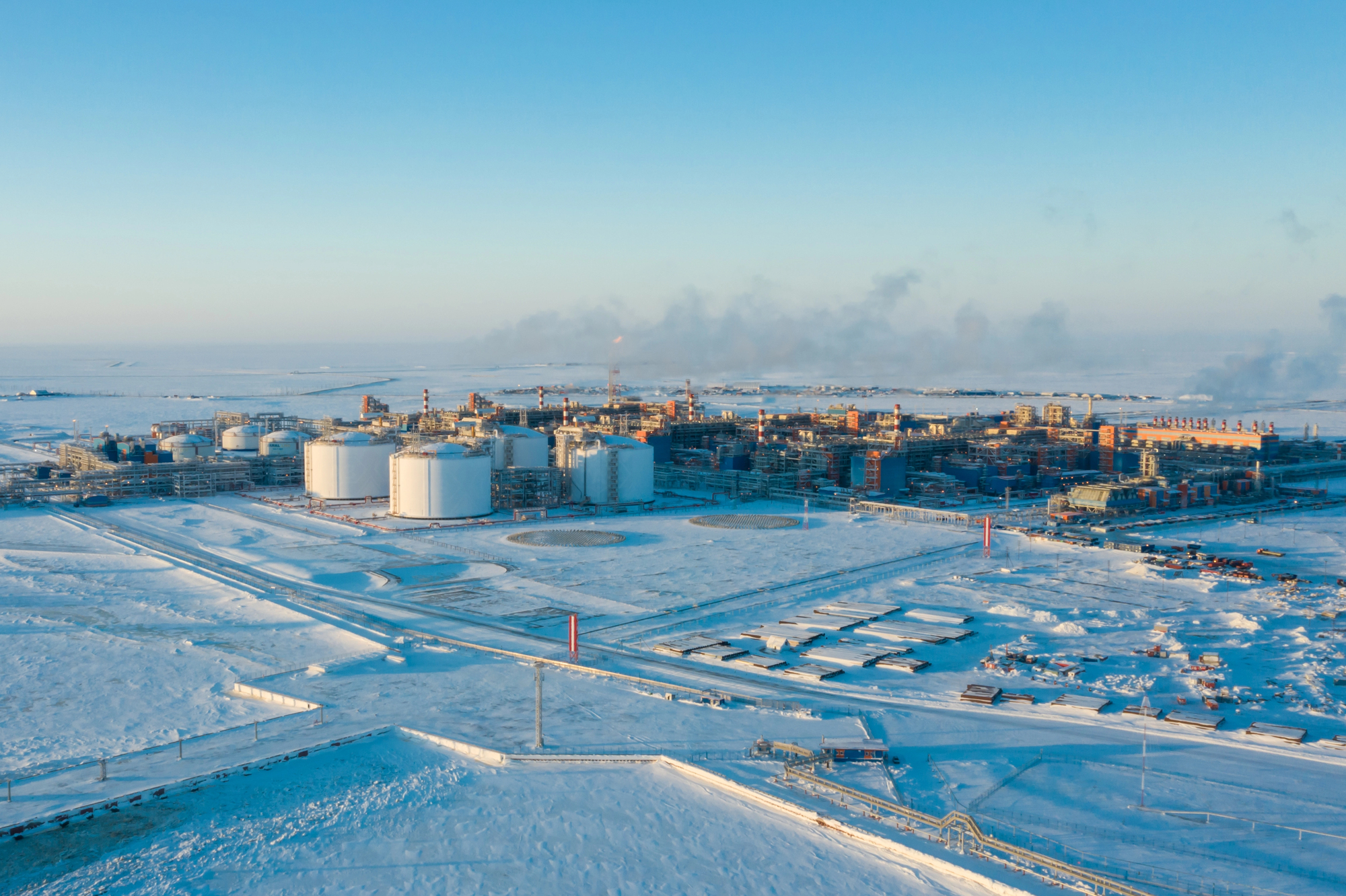
April marked the third consecutive month in which all Yamal LNG cargoes that reached their final destinations were delivered exclusively to Europe. Most cargoes were shipped directly to European ports; however, in six cases, tankers called at the Kildin Island area for transshipment onto non-ice-class vessels. Urgewald recorded two ship-to-ship transfers for the Asian market, with Arc7 icebreaking tankers transferring cargoes to conventional LNG carriers bound for China via traditional routes. As of the end of April, these cargoes were still in transit and had not yet reached their final recipients.
In total, from January through April, the European Union imported a record volume of liquefied natural gas from Yamal LNG—91 cargoes with a combined volume of 6.69 million tonnes, 17.2% more than during the same period in 2025 (for more information on LNG exports from Russian Arctic fields, see here).
In April, Arctic LNG 2 began returning to stable operations following the explosion on the tanker Arctic Metagaz in March, which temporarily disrupted logistics chains. Total shipments during the first four months of the year amounted to 1 million tonnes.
The Arc7 icebreaking LNG carriers Christophe de Margerie and Alexey Kosygin carried out three loadings at the plant and delivered them to the Saam FSU floating storage unit near Murmansk. The LNG was then transshipped onto shadow fleet tankers, which proceeded toward China via the longer route around the Cape of Good Hope.
During April, four cargoes were transferred from the Saam FSU to the tankers Zarya, Arctic Vostok, Arctic Mulan, and La Perouse. At the end of the month, the tanker Arctic Pioneer also joined the operations, completing its loading in May.
In addition, April saw a noticeable expansion of the shadow fleet associated with Arctic LNG 2. According to gCaptain, four tankers—Kosmos, Luch, Orion, and Merkuriy (previously operating under the names Salalah, Ibri, Nizwa, and Ibra)—were observed heading north in the Atlantic at the end of the month. Analysts linked these vessels to the Arctic LNG 2 project, which was subsequently confirmed. In May, Merkuriy and Kosmos were recorded loading cargoes at the Saam FSU.
All four vessels were built in 2005–2006 and spent nearly 20 years as part of the fleet of the Omani company now known as Asyad Shipping, where they were used to export LNG from Oman. These tankers display the typical characteristics of shadow fleet vessels: they are old and have recently been transferred to little-known companies.
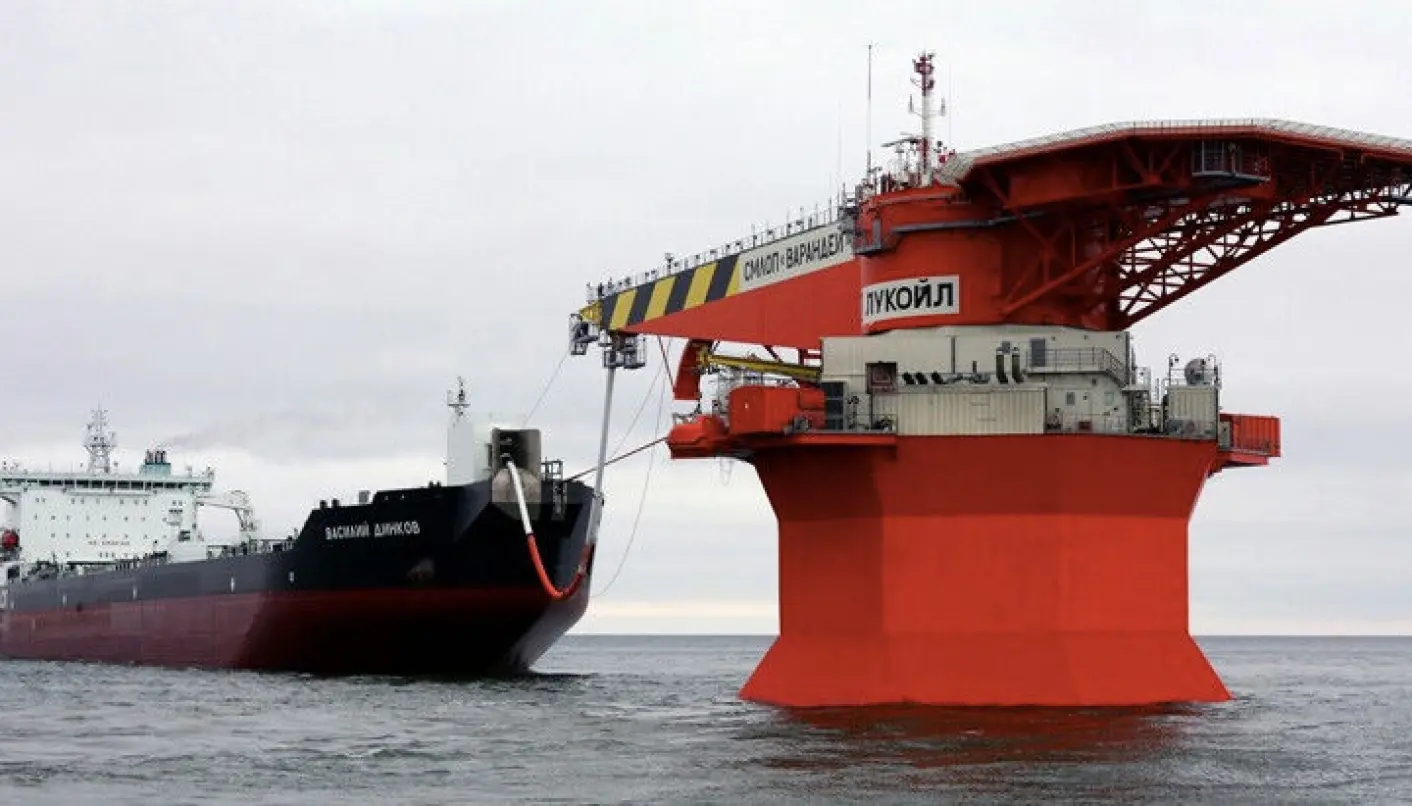
In April, six oil shipments were carried out from the Varandey terminal, performed by three Arc6 ice-class shuttle tankers: Vasily Dinkov, Kapitan Gotsky, and Timofey Guzhenko.
At the Prirazlomnaya platform, the tankers Mikhail Ulyanov and Kirill Lavrov carried out four crude oil shipments, while a fifth was completed with the vessel’s departure on May 1. The support vessels Antey and Hermes were also active; however, a significant portion of their movements was accompanied by the deactivation of their Automatic Identification System (AIS).
A total of 12 shipments were recorded from the Novy Port field, carried out by the tankers Shturman Albanov, Shturman Malygin, Shturman Ovtsyn, Shturman Skuratov, Shturman Shcherbinin, Shturman Koshelev, and Mikhail Lazarev.
Vessels from all three fields proceeded to the Murmansk area, where the oil was transshipped onto other tankers for further export. At the same time, AIS signal outages were regularly recorded in the Murmansk area.
Norilsk Nickel increased its container shipments along the Northern Sea Route in April. A total of 14 vessel calls were recorded in Dudinka, compared with seven calls in both February and March. The company’s own fleet of Arc7 ice-class Arctic container vessels (Norilskiy Nickel, Talnakh, Nadezhda, Monchegorsk, and Zapolyarny) completed eight voyages. Another six voyages were carried out by chartered vessels: Terskiy Bereg, Taybola, Turukhan, Utrenniy, Yastreb, and Mys Manorskiy.
The Arctic tanker Yenisey, which specializes in transporting petroleum products to supply the Norilsk Industrial District, completed one voyage.
In April, the nuclear icebreaker fleet continued to support navigation in the western sector of the Northern Sea Route, primarily in the Kara Sea, the Gulf of Ob, and the Yenisei Gulf. Its main workload was associated with escorting LNG export shipments from Sabetta and the Utrenny terminal, as well as ensuring access to the port of Dudinka.
In addition to Atomflot’s nuclear icebreakers, diesel-electric icebreakers operated by Rosmorport, as well as corporate icebreakers owned by major resource extraction companies, are active in the Arctic. For example, Gazprom Neft operates two diesel-electric icebreakers, Andrey Vilkitskiy and Aleksandr Sannikov, in the Gulf of Ob, providing escort services for tankers bound for the Novy Port oil terminal.
In April, the icebreaking escort season ended in several Arctic areas. Icebreaking escort services in the port of Kandalaksha were discontinued on April 13, while such services in the waters of the port of Arkhangelsk and in the White Sea ceased on April 15.
On April 2, at the International Transport and Logistics Forum, NewNew Shipping Line CEO Ke Jin announced the expansion of the company’s Arctic routes. During the 2026 navigation season, the company plans to begin calls at Murmansk. Apparently, this refers to a pilot call that was mentioned in March by Murmansk Region Governor Andrey Chibis.
On April 13, at a meeting of the Federation Council, Arkhangelsk Region Deputy Governor Igor Murayev stated that NewNew Shipping Line plans to operate up to 12 voyages along the Northern Sea Route between China and Arkhangelsk during the 2026 summer-autumn navigation season. According to Murayev, the company is considering five to six export-import voyages in each direction. Cargo volumes are currently being secured, and planning for the summer-autumn navigation season is underway.
In March, NewNew Shipping and the Arkhangelsk Region signed a memorandum of cooperation for the upcoming navigation season.
In addition, Belarus has expressed interest in cargo transportation through Arkhangelsk. According to Murayev, negotiations are underway on organizing cargo shipments to and from China via the port of Arkhangelsk, with Belarus’s Ministry of Transport and Ministry of Industry leading the discussions on the Belarusian side.

At the same time, plans are being developed jointly with Rosatom for the construction of five Arc7 ice-class container vessels with a capacity of 4,800 TEU each. In March, Rosatom announced that it had accepted the design work for an Arctic-class container ship carried out by the design division of the United Shipbuilding Corporation.
In 2023, the Chinese company NewNew Shipping Line completed seven voyages along the Northern Sea Route, and in 2024 it completed 14 voyages. According to estimates by Minister for the Development of the Russian Far East and Arctic Alexey Chekunkov, NewNew Shipping Line was expected to complete 29 voyages along the Northern Sea Route in 2025, although final statistics were not published. According to data from the Centre for High North Logistics (CHNL), a total of 23 voyages were carried out between Russia and China in 2025, including container and general cargo shipments.
Russia’s Ministry of Industry and Trade has developed and approved the Program for the Development of Ship Repair for Vessels Operating in the Arctic through 2035. The announcement was made on April 17 during a meeting of the State Commission for Arctic Development chaired by Deputy Prime Minister and Presidential Plenipotentiary Envoy to the Far Eastern Federal District Yury Trutnev. The program is aimed at modernizing and expanding ship repair capacity in the Northern Sea Route waters.
The document itself has not been made publicly available. However, in March, a representative of the Ministry of Industry and Trade stated that by 2035 the volume of ship repair services in the Northern Sea Route waters would increase more than threefold, while ship repair capacity would double.
Russian Prime Minister Mikhail Mishustin instructed the Ministry of Industry and Trade to prepare the document as early as October 2024. It was supposed to be completed by June 1, 2025.
Before February 2022, no more than 30% of transport vessels and no more than 15% of fishing vessels were repaired at Russian shipyards. Most repair work was carried out in the Baltic states, Norway, Poland, Germany, Bulgaria, and countries in the Asia-Pacific region. After sanctions were imposed, many foreign shipyards refused to service the Russian fleet. For example, the only shipyard in Europe that continues to repair Russian LNG tankers is Denmark’s Fayard A/S in Odense. Some Russian vessels have also begun undergoing maintenance at Chinese shipyards, including repairs to propulsion system components and other operations.
According to estimates by experts at Nordic Engineering JSC, 14 ship repair facilities operate in the Arctic, and the average age of their dry docks exceeds 50 years.
In April, the international insurance company Coface published a report titled “Will Arctic Maritime Routes Really Reshape the Global Trade Map?” , concluding that despite growing shipping activity in the Arctic, it is unlikely to have a significant impact on global trade over the next five years.
To assess economic viability, Coface compared transportation costs on Arctic and traditional routes between Asia and Northern Europe, as well as Asia and North America, for three types of vessels: tankers, bulk carriers, and container ships.
The authors of the report concluded that the use of Arctic routes may be economically beneficial for the transportation of liquid bulk and dry bulk cargoes. However, container shipping through the Arctic remains uncompetitive. Operational constraints, vessel size limitations, and additional costs associated with Arctic navigation prevent such services from matching the efficiency of traditional routes.
In the short term, only 3.5% of trade between East Asia, Northern Europe, and North America is expected to be carried out via Arctic routes.
The authors of the report believe that, in the short term, the significance of these routes will be more political than commercial.
«Navigation along the Northern Sea Route in April 2026 generally proceeded as planned and did not differ significantly from March. One notable development was the restoration of regular logistics for LNG shipments from Arctic LNG 2 after they were disrupted in March following an attack involving the shadow fleet tanker Arctic Metagaz. As long as buyers for Russian liquefied natural gas remain available in China, shipments are likely to continue, although the economic returns from such sales are significantly below market levels.
The shadow fleet of LNG tankers continues to expand. As with oil tankers, Russia is purchasing older non-ice-class vessels that foreign companies are disposing of as less efficient than modern ships. Construction of the new Alexey Kosygin-class LNG carriers for the Arctic LNG 2 project is running behind schedule. The second vessel in the series is expected to be delivered in June 2026, provided there are no further delays.
Plans for the summer-autumn navigation season along the Northern Sea Route are beginning to be announced. So far, it is clear that China remains virtually the only significant partner, but no substantial growth is expected this year compared with last year. Following the international transit voyage of the Chinese vessel Istanbul Bridge in 2025, China has not yet announced any similar voyages for this year. At the same time, South Korea has announced a pilot transit voyage for September 2026 and has already selected an operator for it.
In addition, plans have been announced to increase the number of voyages from China to Arkhangelsk and to launch a new voyage from China to Murmansk via the Northern Sea Route. Whether the number of voyages can actually be increased remains unclear, as the 29 voyages projected for 2025 by Chekunkov appear not to have taken place, judging by the absence of any official confirmation.
It is also worth noting that a year after Vladimir Putin instructed the government in April 2025 to update the strategy for the development of Russia’s Arctic Zone and to develop a strategy for the Trans-Arctic Transport Corridor, these directives have still not been implemented. An updated version of the Arctic development strategy was prepared but has not been adopted, while the draft financial and economic model for the Trans-Arctic Transport Corridor has not been published. This may indicate that government agencies have been unable to agree on the allocation of state funding, without which implementation of these strategies will be impossible.
Amid financial constraints and new EU sanctions prohibiting the repair of Russian LNG tankers, the ship repair program has become a higher priority for state funding in the Arctic. Without urgent measures in this area, ice-class LNG carriers serving Russia’s Arctic projects may be left without adequate and timely maintenance.»
On April 23, the European Union adopted its 20th package of sanctions against Russia. A substantial part of the package is devoted to new measures aimed at restricting supplies of Russian oil and LNG and countering Russia’s shadow fleet.
The package prohibits the sale or transfer of oil tankers to any Russian person or for use in Russia. For sales to third countries, a due diligence mechanism is introduced to ensure that buyers have no links to Russia. In addition, sales contracts must now include provisions explicitly prohibiting the buyer from reselling the vessel to Russian entities or entities associated with Russia.
In addition, the document contains provisions that lay the groundwork for future sanctions packages to prohibit services related to the maritime transportation of Russian crude oil and petroleum products.
The package also prohibits maintenance and the provision of other services to Russian icebreakers and LNG carriers and, starting in January 2027, bans the provision of LNG terminal services to Russian companies. These restrictions could affect not only Yamal LNG—the only current exporter of Russian LNG to the EU—but also other LNG producers in Russia and the fleet of Russian LNG carriers.
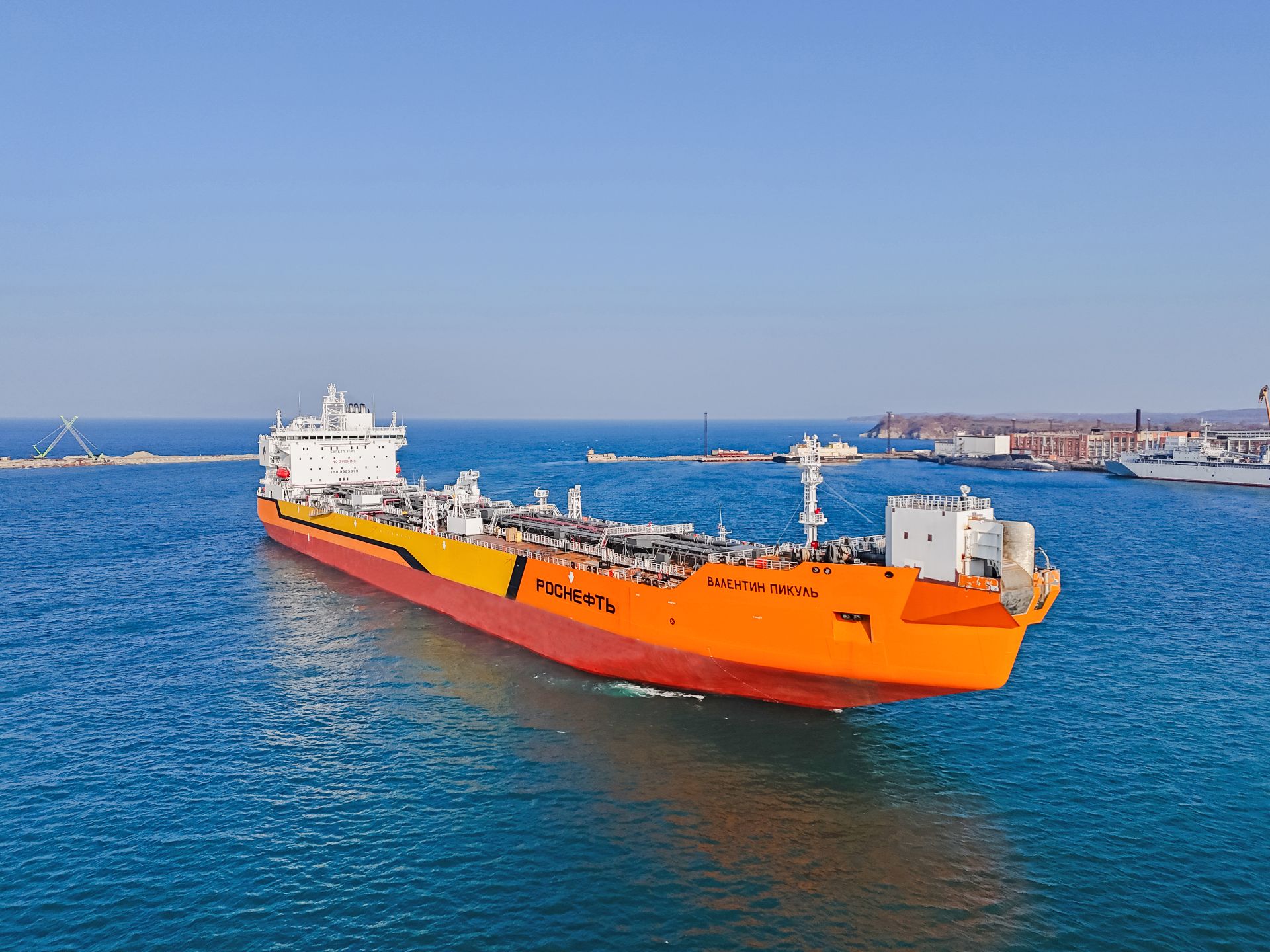
The 20th package adds another 46 vessels to the EU sanctions list, imposing a ban on port access and the provision of services related to maritime transport. Among them are the ice-class tankers Mikhail Lazarev (IMO 9837547) and Mikhail Ulyanov (IMO 9333670), which are involved in transporting oil from the Prirazlomnoye and Novy Port fields. The restrictions also target the new Arc6 ice-class tanker Valentin Pikul (IMO 9885879), built at the Zvezda shipyard to transport oil from the Varandey offshore loading terminal in the Pechora Sea. The tankers Ivan Aivazovsky (IMO 9876359), Sakhalin (IMO 9249128), Ocean II (IMO 9233777), and Elbus (IMO 9290385), all of which have been observed operating in the Arctic, were also sanctioned.
The total number of vessels included on the sanctions list has reached 632.
The package also includes the port of Murmansk, one of Russia’s key hubs for Arctic oil exports. The restrictions are justified on the grounds that the port is actively used by shadow fleet vessels. According to Barents Observer, more than 100 shadow fleet tankers have called at Murmansk since October 2025. EU companies are now prohibited from conducting any transactions with the port of Murmansk, including paying port service fees, charges, using infrastructure, and related activities. The European Commission has clarified that providing services to a vessel that has previously called at such a port does not constitute a violation. However, vessels flying the flags of EU member states are prohibited from calling at the port because doing so would require the payment of port fees.
In addition, the EU has tightened diamond traceability requirements. Importers of polished diamonds will be required to demonstrate that the diamonds were not mined, processed, or manufactured in Russia.
Earlier, in 2024, a blockchain-based diamond traceability mechanism was planned for launch. The timeline was postponed several times, but the system was ultimately not implemented due to uncertainty over how it would function and be governed. Instead, a regime requiring importers to provide documentary proof of diamond origin was introduced.
At present, most Russian diamonds are mined in the Russian Arctic Zone. Despite G7 and EU sanctions against Alrosa, Russia’s largest diamond mining company, and the ban on imports of Russian diamonds introduced in 2024, Russian diamonds continue to find their way into Europe and the United States.
Reuters, citing preliminary LSEG data, reports that Russia increased its LNG exports to 11.4 million tonnes in January–April, up 8.6% compared with the same period in 2025. In April alone, exports reached 2.92 million tonnes, 13.2% higher than a year earlier.
According to Reuters, Russian LNG exports to Europe increased by 20.8% in January–April, reaching 6.4 million tonnes. According to Urgewald, during the same period the EU imported 91 cargoes with a total volume of 6.69 million tonnes, of which 1.618 million tonnes were delivered in April, 17.1% more than in April 2025. All of this gas originated from the Yamal LNG plant.
The terminal in Zeebrugge, Belgium, remains the leading import destination, receiving eight cargoes in April alone.
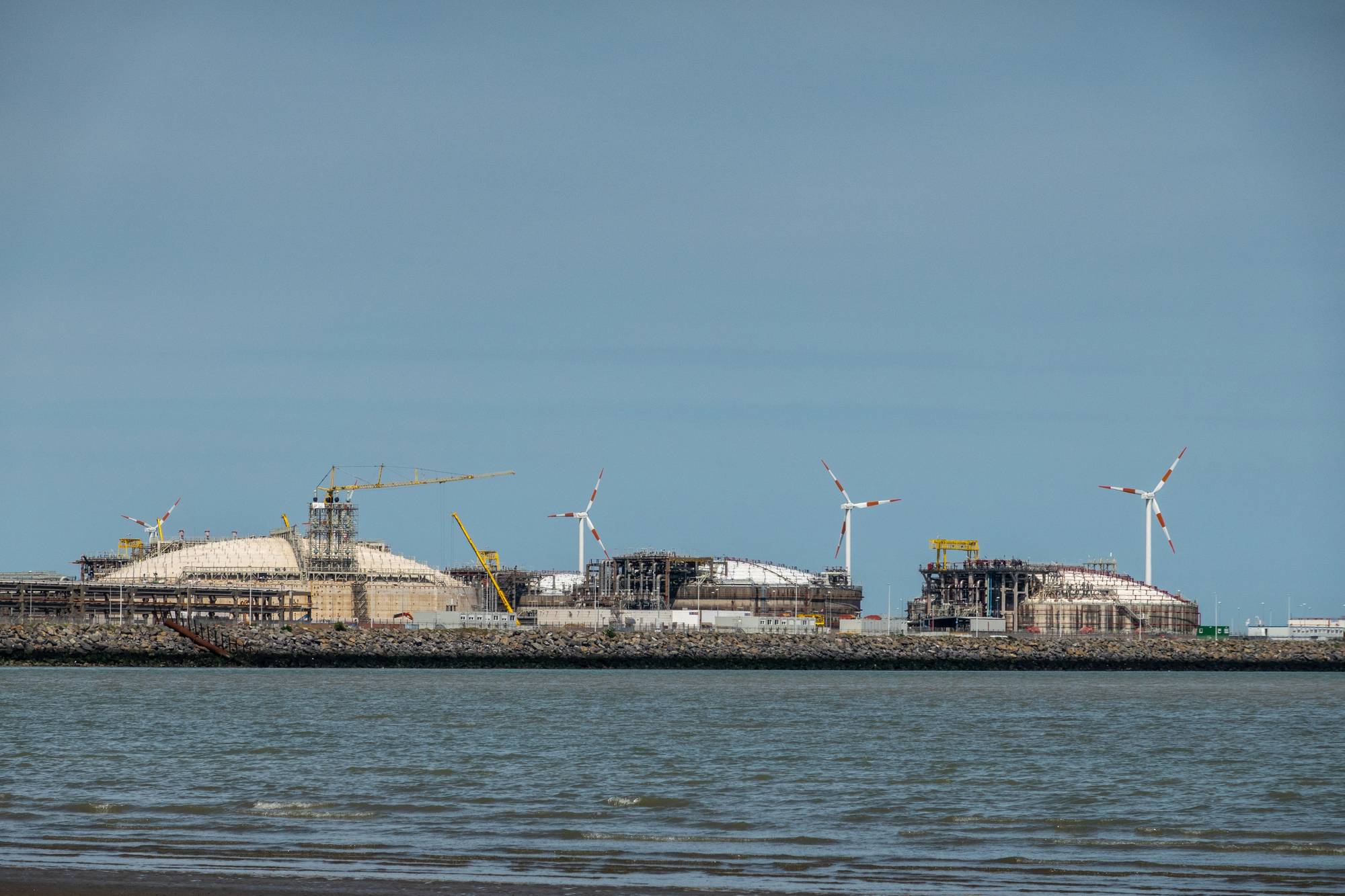
On April 25, 2026, the EU ban on imports of Russian LNG under short-term contracts entered into force. A full ban on supplies under long-term contracts will take effect on January 1, 2027.
The Centre for High North Logistics (CHNL) analyzed export trends at Yamal LNG during 2025 and early 2026 and prepared an assessment of logistics capacity for the period beyond 2027. Following the complete closure of the European market, a reorientation of exports toward Asia is inevitable; however, current logistics capabilities are not prepared for such a shift. According to the Centre’s assessment, the existing fleet will be able to support only 120–130 voyages per year, which is more than two times lower than current levels. This is due to longer transport distances, the seasonal nature of the Northern Sea Route, and the need for transshipment operations.
According to CHNL estimates, maintaining current export volumes via the Northern Sea Route will be impossible without expanding the icebreaker fleet, developing infrastructure, and restructuring logistics.
Despite this, according to Bloomberg, citing anonymous sources, Russia is already seeking to increase exports eastward by offering LNG to South Asian countries at discounts of up to 40% through intermediary companies based in China and Russia. However, China remains the only stable buyer of Russian LNG in Asia so far.
Bloomberg, citing Ukrainian intelligence, reported that some tankers in Russia’s shadow fleet are using insurance certificates issued in the name of Seaguard P&I, a company purportedly registered in Pinneberg, Germany. However, it was later established that the listed address belongs to an ordinary residential building, while the company itself has no confirmed registration in German corporate records.
Documents issued by this entity were used by at least several vessels, including the tanker Paz, which loaded Russian Arctic oil in Murmansk in March 2026 in circumvention of restrictions imposed by the United States, the European Union, and the United Kingdom.
According to intelligence data, at least five additional tankers obtained fraudulent Seaguard P&I insurance certificates, including the tanker Deyna, which was detained by French authorities in March 2026 while transporting Russian oil from Murmansk.
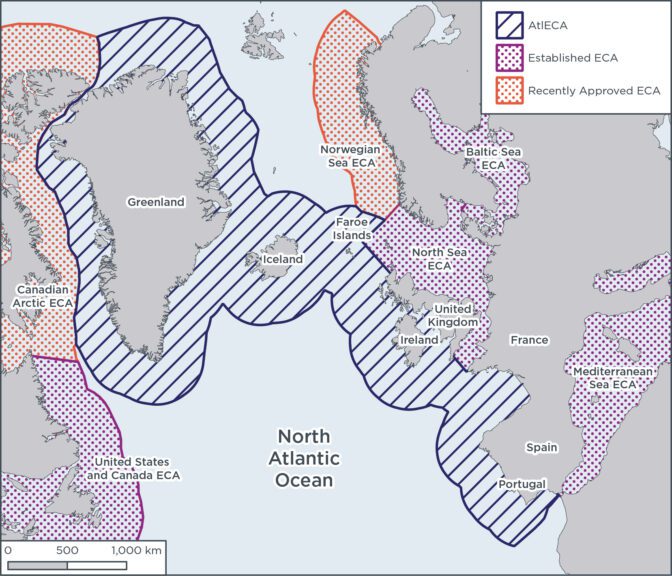
From 27 April to 1 May in London, the 84th session of the IMO Marine Environment Protection Committee (MEPC 84) adopted a new Emission Control Area (ECA) for the North-East Atlantic, covering the waters surrounding Greenland, Iceland, the Faroe Islands, Ireland, the United Kingdom, France, Spain, and Portugal.
Vessels operating in this area will be required to use fuel with a sulfur content of no more than 0.1% and comply with limits on emissions of nitrogen oxides (NOx) and particulate matter (PM). The requirements will enter into force in September 2027, with mandatory compliance beginning in September 2028.
In October 2025, the adoption of this decision was postponed due to disagreements over carbon emissions charges for ships under the Net Zero Framework.
ECAs are already in force in the Norwegian Sea and the Canadian Arctic, where similar restrictions entered into force in March 2026.
Russia opposed the initiative, although its waters are not included within the boundaries of the new ECA. According to Sian Prior, Lead Advisor to the Clean Arctic Alliance, of which Bellona is a member, the Russian delegation indicated that it does not intend to comply with these requirements.
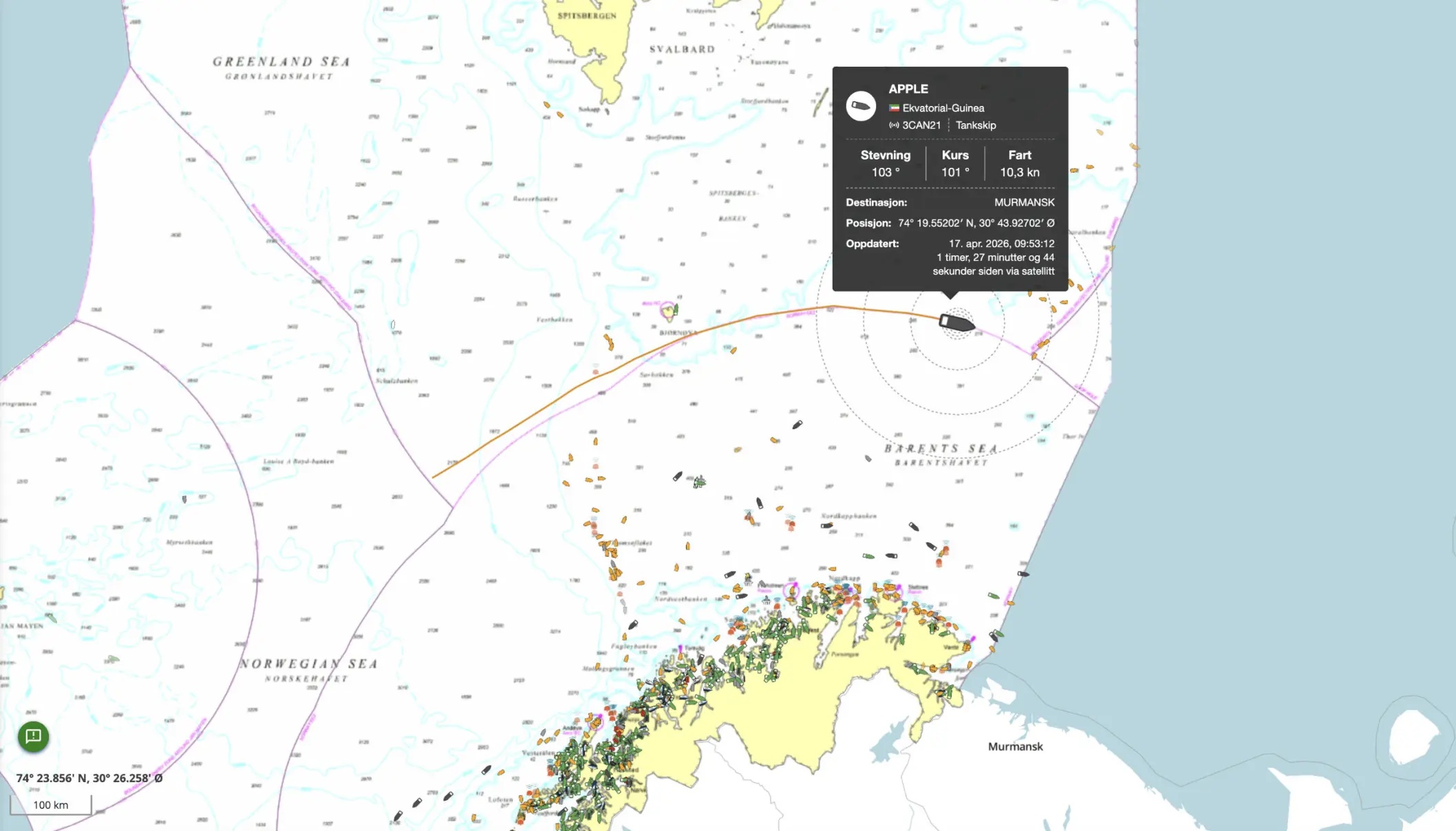
In mid-April, media attention was drawn to the shadow tanker Apple (IMO 9271327), sailing under the flag of Equatorial Guinea. On its way to Murmansk to load Russian oil, it bypassed Norway’s Exclusive Economic Zone, making a significant detour and passing at a distance of 200 nautical miles (370.4 km) from the Norwegian coast. In this way, it was able to avoid inspection.
The tanker Apple is 23 years old and is under sanctions imposed by the EU, the US, the UK, and other countries. It has repeatedly changed its name and flag and has an opaque ownership structure.
Arve Dimmen, Director of Navigation Technology and Maritime Services at the Norwegian Coastal Administration, confirmed to Barents Observer that the Vessel Traffic Service (VTS) in Vardø, northern Norway, attempted to contact the vessel, but was unsuccessful.
“They were unable to make contact,” Dimmen said. “This means we have neither CLC data nor Barents SRS data for this vessel,” he added.
The Civil Liability Convention (CLC) certificate confirms insurance coverage for oil pollution damage. The Barents Sea Ship Reporting System (Barents SRS), established by Norway and Russia in 2013 with the approval of the International Maritime Organization (IMO), requires all vessels carrying polluting cargoes to submit a report before entering the area between the Lofoten Islands and the Norwegian-Russian maritime border.
Persistent interference with GPS/GNSS signals has been regularly recorded for an extended period in northern Norway, particularly in eastern Finnmark and over the Barents Sea. Areas near the Russian border are affected most severely.
According to the Norwegian Communications Authority (Nkom) and the Norwegian police, two types of interference have been recorded: signal jamming and spoofing (the transmission of false signals that cause a navigation system to receive incorrect coordinates).
Measurements conducted since early March have detected interference at altitudes as low as 600 meters above the Varanger Peninsula, lower than previously recorded. Preliminary analysis indicates that Russia remains the source of the interference.
Disruptions to satellite navigation can result in the loss of accurate positioning and complicate the operation of traffic management systems. In Norway’s Arctic regions, where weather conditions are challenging and infrastructure is limited, the associated risks of accidents in maritime and air transport increase significantly.
“Everyone who uses GPS must be able to trust the information they receive. Manipulating these signals is unacceptable. If you are planning a trip near the border, we caution against relying solely on GPS equipment. Bring a map and compass as well,” warned Stein Kristian Hansen, duty chief of staff of the Finnmark Police District.
“Everyone who uses GPS should be able to trust the information they receive. That these signals are manipulated is unacceptable. If you are going on a trip near the border, we warn against blindly trusting the GPS equipment. Bring a map and compass as well”, warned duty chief of staff Stein Kristian Hansen in the Finnmark police district.
Norway is considering raising the issue at the international level, including through appeals to UN bodies involved in radio communications regulation.
«April was marked by increased EU sanctions pressure on Arctic shipping. The ban on servicing Russian LNG tankers at European shipyards, sanctions against the Port of Murmansk, the expansion of the shadow fleet sanctions list, and sanctions targeting insurance companies are all expected to significantly complicate export logistics from Arctic oil and gas fields. This will be especially true if, alongside sanctions restrictions, European countries begin conducting stricter inspections of all shadow fleet vessels entering their waters. Russia will still retain some ability to circumvent inspections and adapt to sanctions as long as buyers remain on the global market, but profits from such sales are likely to continue declining.
However, the environmental risks associated with such logistics will continue to grow. The observed increase in the number of shadow fleet tankers operating along the Northern Sea Route represents the primary risk factor for oil spills in the harsh Arctic environment. Russia’s unwillingness to participate in efforts to reduce environmental risks in the Arctic is further demonstrated by its disregard for the new Emission Control Area adopted by the International Maritime Organization.
Against this backdrop, Russia’s attempts to replace international services, both in ship repair and insurance, appear logical. However, how successfully this can be achieved under conditions of limited financial resources and human capital, as well as an ongoing war with no prospect of a rapid peace settlement, remains highly uncertain.
At the same time, it must be acknowledged that EU sanctions are taking effect much more slowly than would be required to achieve a significant and rapid reduction in Russian revenues. The previously introduced ban on imports of Russian LNG into Europe did not have a substantial impact on LNG import volumes in April. The ban on purchasing LNG under short-term contracts entered into force on April 25 and is likely to produce any noticeable effect only closer to the end of the year.»
This was stated in an official company announcement issued on behalf of CEO Maksim Panov.
The primary reason cited is a decline in the company’s product exports. In particular, its main customer, Severstal PJSC, has replaced part of its Vorkutaugol supplies with cheaper coal from Kuzbass. As a result, deliveries under the long-term contract will be reduced from 280,000 tonnes to 180,000 tonnes per month starting in May 2026. The agreement is also set to expire on April 30, 2027, and it remains unclear whether it will be extended.
In addition, supplies to enterprises in the occupied parts of the Luhansk and Donetsk regions have ceased, as all coke-chemical production facilities there have been mothballed since the first quarter of 2026. Deliveries have also stopped to the Moscow Coke and Gas Plant, which since March 2026 has been unable to pay for new coal shipments or settle outstanding debts for previous deliveries.
Vorkutaugol states that in 2025 the company received support from municipal, regional, and federal authorities, which allowed it to cover the previous year’s losses. However, the situation has worsened this year amid an overall increase in losses across Russia’s coal industry, from 112.6 billion rubles in 2024 to 408 billion rubles in 2025.
As a result, Vorkutaugol is developing a production cutback program and has suspended the Federal Industry Agreement and the Collective Bargaining Agreement, which provided employees with a broad range of medical and financial benefits, including compensation for heating and electricity costs and long-service bonuses.
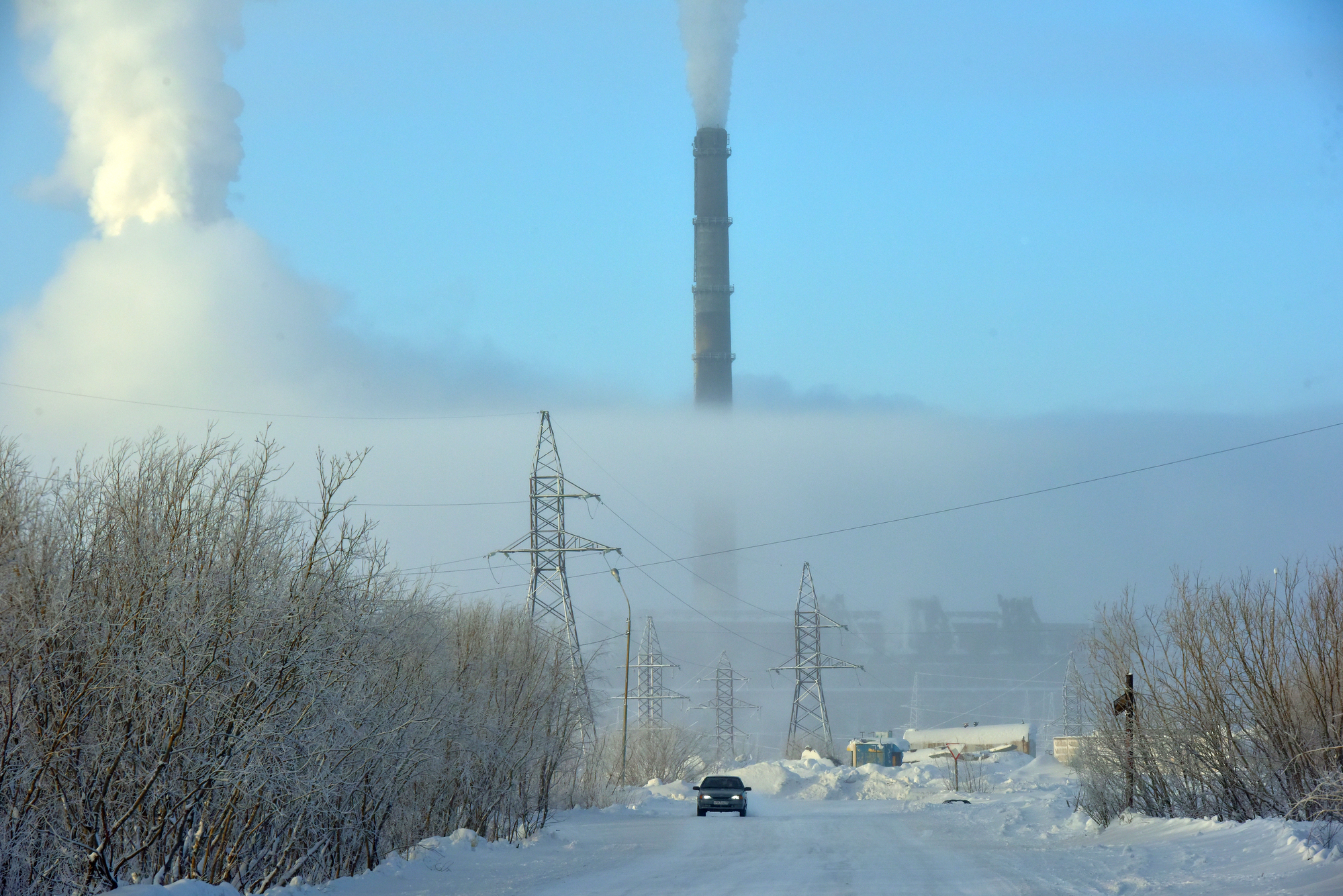
At the same time, the statement emphasizes that any public expression of dissatisfaction with the situation—described in the document as “speculation”—will be interpreted “exclusively as hostile actions aimed at destabilizing the situation and escalating social tensions” and will be subject to “assessment by law enforcement and regulatory authorities.”
It should be noted that Vorkutaugol operates four active mines and one open-pit coal mine.
In October 2025, the Russian government approved a comprehensive development plan for Vorkuta through 2035 with a total investment volume of 330 billion rubles. The program is aimed at turning the city into a “powerful Arctic outpost” and includes, among other measures, the expansion of coal production and the construction of the Vorkuta–Ust-Kara railway to connect Vorkuta to the Northern Sea Route. However, there is still no information on the start of implementation of the plan’s specific measures.
«Despite the efforts of the Russian authorities to support Vorkuta and incorporate it into Arctic development plans, the city is unlikely to see prosperity. Against the backdrop of projected declines in global coal demand, expensive coal mined under Far North conditions and constrained by limited logistics is becoming uncompetitive even within Russia’s predominantly state-controlled economy. To avoid social unrest, the federal government is likely to continue providing limited budget support to maintain the current situation, but Vorkuta is unlikely to become an attractive or promising city as long as it continues to rely on the coal industry.»
In Arkhangelsk Oblast, the wildfire season began on April 18, two weeks earlier than in 2025. By mid-April 2026, around 60 fires had been recorded across an area of more than 57 hectares, compared with only a few incidents during the same period a year earlier.
A court has ordered the owner of the small vessel Schastlivy to compensate for environmental damage caused to Kola Bay near the Port of Murmansk. The vessel sank in January 2024 and was not scheduled to be recovered until September; however, there is no confirmation that it was ever raised.
In 2026, operations are scheduled to begin in the waters of the Port of Tiksi to raise and dispose of 12 sunken vessels that pose environmental threats and create risks to safe navigation.
In this news digest, we monitor events that impact the environment in the Russian Arctic
In this news digest, we monitor events that impact the environment in the Russian Arctic
In this news digest, we monitor events that impact the environment in the Russian Arctic
In this news digest, we monitor events that impact the environment in the Russian Arctic