More Shadow Tankers Spotted on the Northern Sea Route in Two Months of the Summer–Autumn Navigation Season than in all of 2025
Not only the total number but also the proportion of shadow-fleet tankers is growing
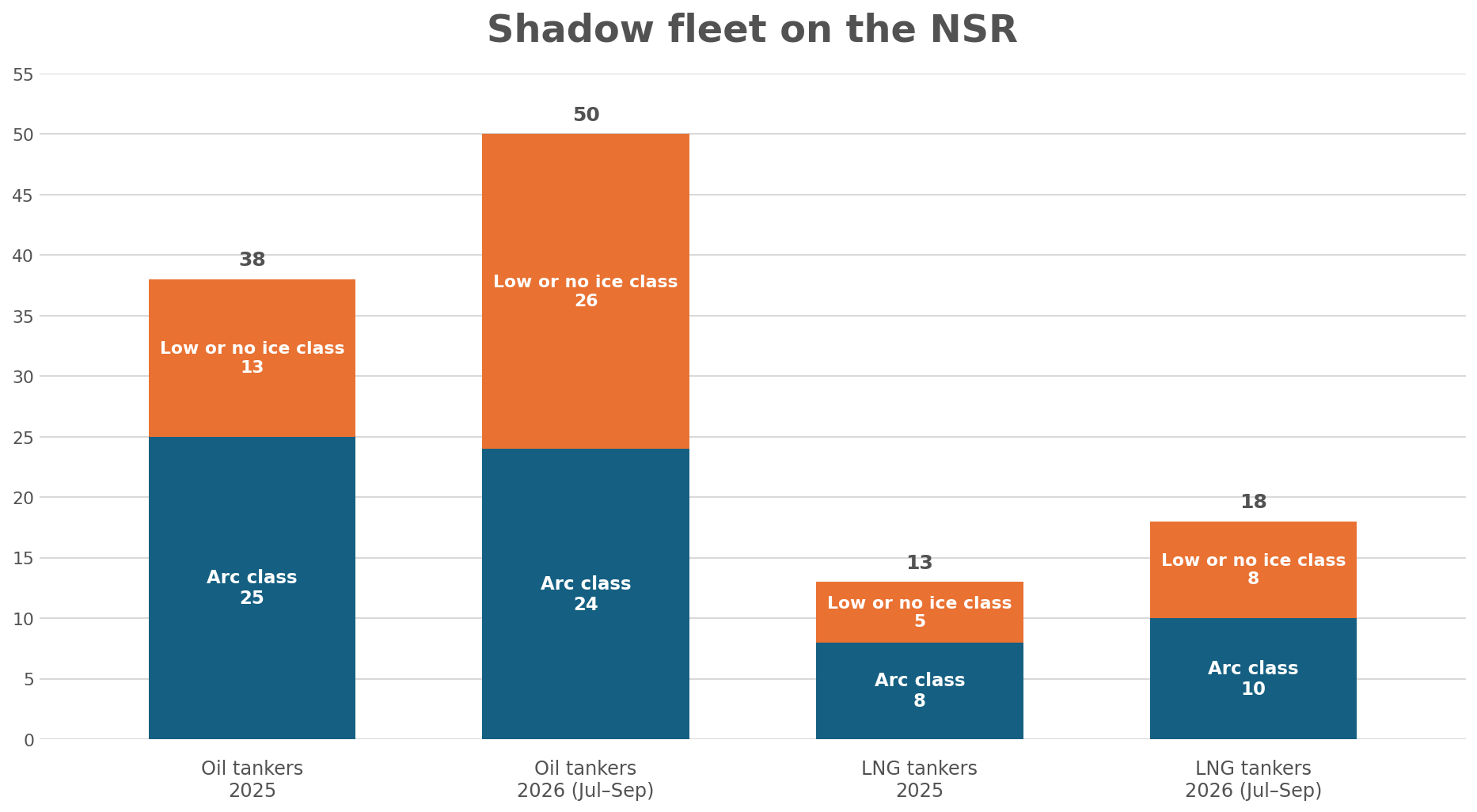
Monitoring of shipping along the Northern Sea Route (NSR) shows that by mid-September, more shadow-fleet oil tankers and LNG carriers had travelled along the route than during the whole of last year: 50 oil tankers and 18 LNG carriers. In 2025, 38 shadow-fleet oil tankers and 13 LNG carriers were recorded on the NSR.
Not only the total number but also the proportion of shadow-fleet tankers is growing. Of all tankers observed on the NSR over the two-month period, around 3/4 of oil tankers and almost 40% of LNG carriers were under sanctions. This significantly increases the risk of accidents, including oil spills in Arctic waters, where the infrastructure needed to respond adequately to their consequences is lacking.
This year’s increase in the transport of Russian oil and gas along the NSR by shadow-fleet tankers has been driven primarily by more intensive shipments to Asian countries. As a result, the number of so-called classic shadow tankers has risen: ageing vessels with no ice class or only a very low one, frequent changes of name, flag and ownership, and questionable insurance.
Source: Bellona
According to Bellona’s monitoring, 26 of the 50 shadow-fleet oil tankers observed have a low ice class—Ice3, which permits independent navigation in sparse, broken ice in non-Arctic seas and navigation behind an icebreaker in continuous ice up to 0.7 metres thick, or lower—or no ice class at all. Thirty-three of the tankers are at least 15 years old. Most sail under the Russian flag, while six are flagged in Oman and one in Sierra Leone.
Of the 18 shadow-fleet LNG carriers, two have a low ice class and six have no ice class at all. Five of them are more than 15 years old. Most of the shadow-fleet LNG carriers sail under the Russian flag; two are flagged in the Marshall Islands and two in Oman. Clean Vision, meanwhile, continues to sail under the Maltese flag despite being sanctioned by the United Kingdom and Canada.
The Impassable Vilkitsky Strait
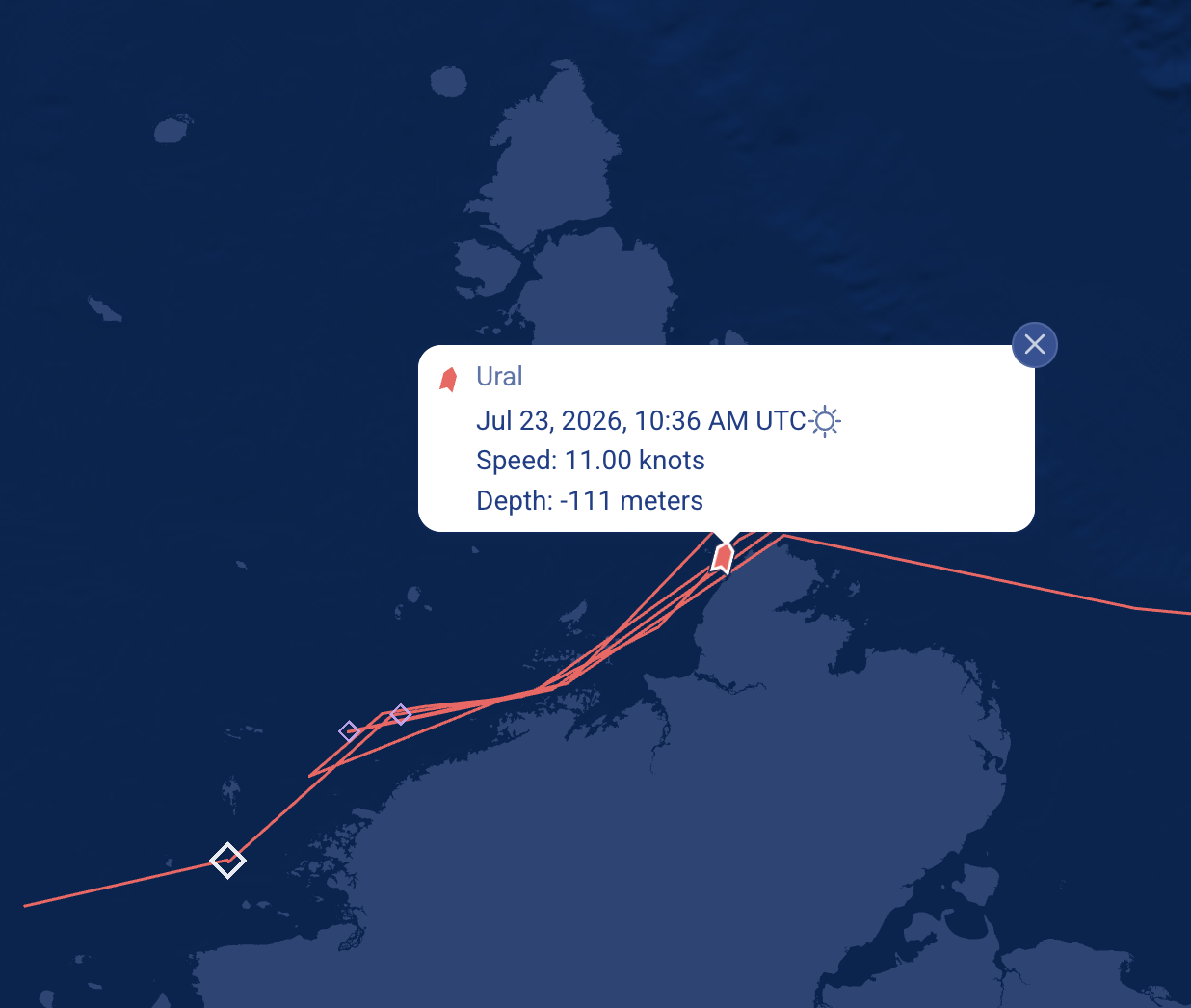
As expected, tankers with a low ice class encountered difficult ice conditions in the eastern part of the NSR. In late July, a group of at least nine shadow-fleet oil tankers gathered in the Kara Sea in preparation for an eastbound passage along the route. Seven of them—Viktor Bakaev, Vostochny Prospect, Liteyny Prospect, Jagger, Ligovsky Prospect, Saga and Hyperion—have a low ice class, while Breeze and Jupiter are Arc4-class tankers. In early August, another low-ice-class shadow tanker, Mirabel, joined them. The vessels were waiting for permission to pass through the Vilkitsky Strait, where two nuclear-powered icebreakers, Ural and Sibir, were operating simultaneously.
Ural icebreaker operating in Vilkitsky Strait. Source: globalfishingwatch.org
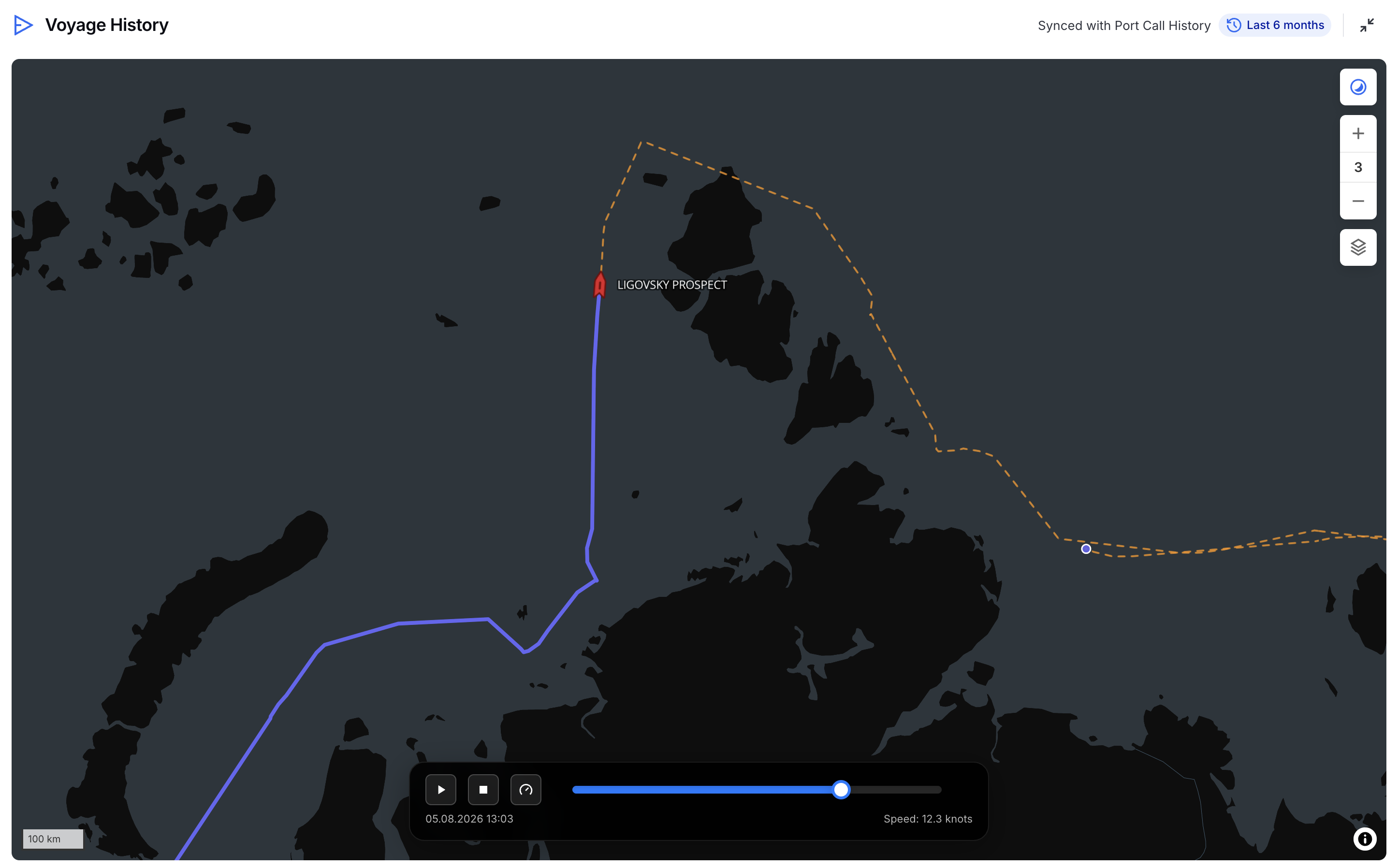
Despite the intensive work of the icebreakers, only the Arc4-class tanker Breeze managed to pass through the strait. The others were forced to take a high-latitude route north of the Severnaya Zemlya archipelago—an exceptional occurrence in the history of navigation on the NSR. An unusually low concentration of ice along the archipelago allowed the tankers to bypass the islands without icebreaker assistance. However, after entering the Laptev Sea, the vessels again encountered difficulties and had to wait for help from nuclear-powered icebreakers. Ultimately, the tankers lost between seven and 14 days and travelled approximately 550 nautical miles (1018,6 km) farther.
Liteyny Prospect tanker with a low ice class had to take a high-latitude route north of the Severnaya Zemlya archipelago. Source: magicport.ai
Cabotage and Shipments to China
According to AIS vessel-tracking data, most of the shadow-fleet oil tankers observed on the NSR were engaged in cabotage between ports in northern Russia, and Baltic ports in Leningrad Region, as well as serving the Novoportovskoe oil field. At least fourteen oil tankers were carrying oil to China or heading towards other Asian countries; at the time of writing, not all had completed their transit.
Shadow-fleet oil tankers that had travelled along the NSR were also observed conducting ship-to-ship oil transfers near Nakhodka for onward shipment to China. On 7 September, after completing their NSR passages, Jagger and Mirabeltransferred oil to Navistar and Lumin. Jagger had carried oil from Murmansk, while Mirabel had sailed from Ust-Luga (Leningrad Oblast). Yvika, Okeansky Prospect and Zaliv Vostok were also observed loitering in the Nakhodka area at various times.
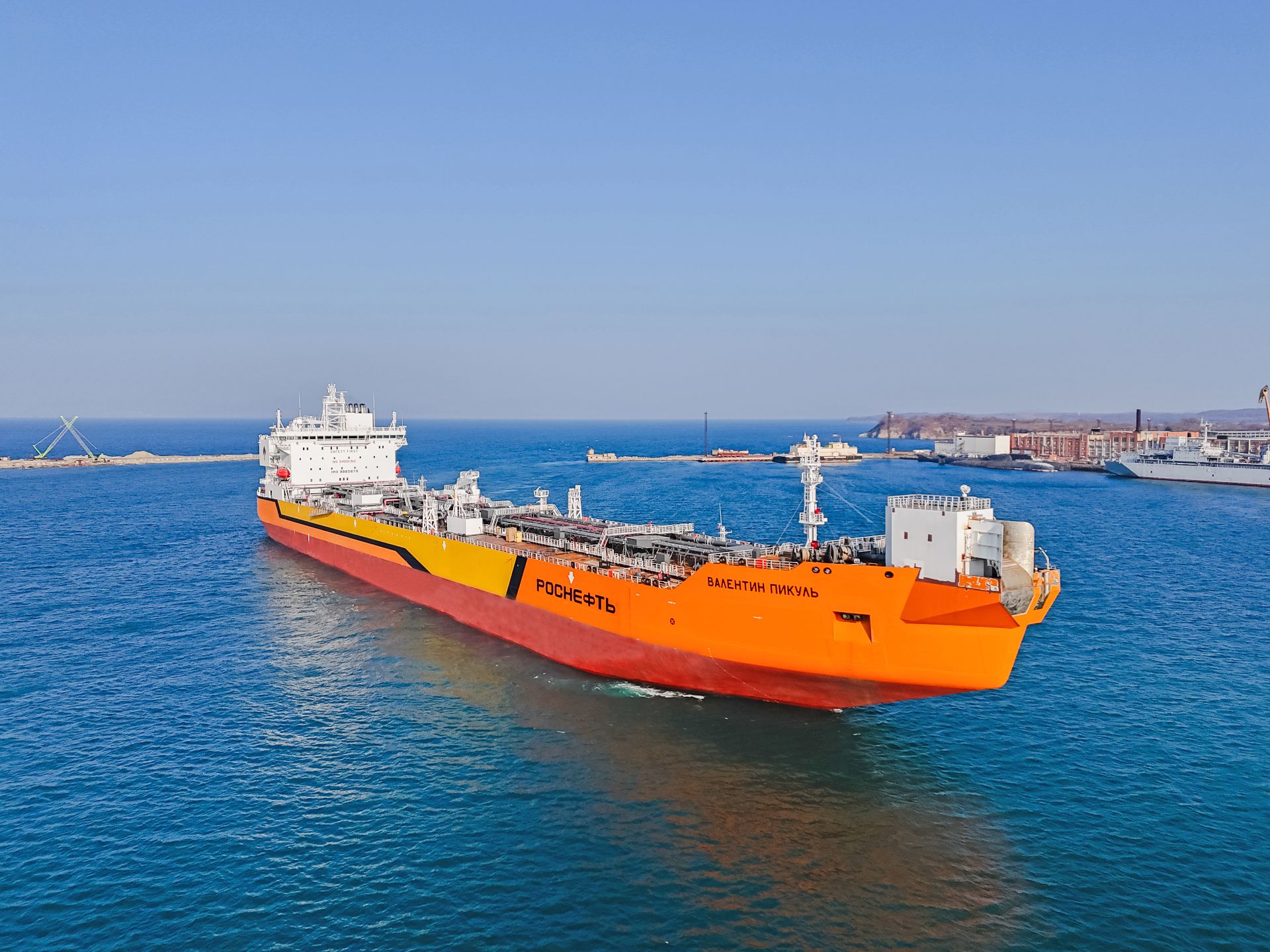
Four tankers, Valentin Pikul, Akademik Gubkin, Vladimir Monomakh and Vladimir Vinogradov, had arrived near the port of Bukhta Sever, apparently to load oil from the Vostok Oil terminal, which began operations in September.
At the same time, most shadow-fleet LNG carriers were delivering LNG to buyers in China. At least eleven LNG carriers loaded cargo at the Utrenny terminal serving the sanctioned Arctic LNG 2 project.
Two LNG carriers, Clean Ocean and Clean Vision, delivered LNG from Sabetta, the Yamal LNG project, to Europe. In August, Clean Vision also made one voyage to China via the NSR, and in September set out on its return journey, again via the NSR.
The Public Will Not Know About an Accident
No incidents or accidents on the NSR have been reported so far. It is worth recalling, however, that since last year the NSR administration has stopped publishing information about incidents and accidents along the route, while publicly available satellite imagery provides insufficient coverage of the Arctic for independent monitoring of the NSR. Consequently, even if an accident occurs on the route, the public—both in Russia and abroad—is unlikely to learn about it.
This can be illustrated by a recent statement from Russian insurer AlfaStrakhovanie regarding compensation paid for damage to a tanker’s hull. The insurer said that the accident occurred while the tanker was travelling along the NSR under icebreaker escort, but did not disclose when or exactly where it happened, or name the vessel. It is also unknown whether oil products—either fuel or cargo—were released during the accident. Given how insurance companies operate, the incident could have occurred either at the start of this year’s summer–autumn navigation season or last year.
The number of shadow-fleet oil tankers and LNG carriers on the NSR has been growing for three consecutive years, increasing the likelihood of an accident involving an oil spill. With no official information about incidents expected from the NSR administration and independent satellite monitoring remaining limited, the public is unlikely to learn that an accident has occurred.
The summer–autumn navigation season will not end until mid-to-late October. By then, the number of shadow tankers with low or no ice class operating in Arctic waters may rise further, while some of those that entered the NSR in late July may attempt a second passage during the same season. This situation is the result of insufficient sanctions against Russian Arctic oil and gas projects and the shipping sector, as well as the near-total absence of meaningful secondary sanctions against buyers of Russian energy resources.