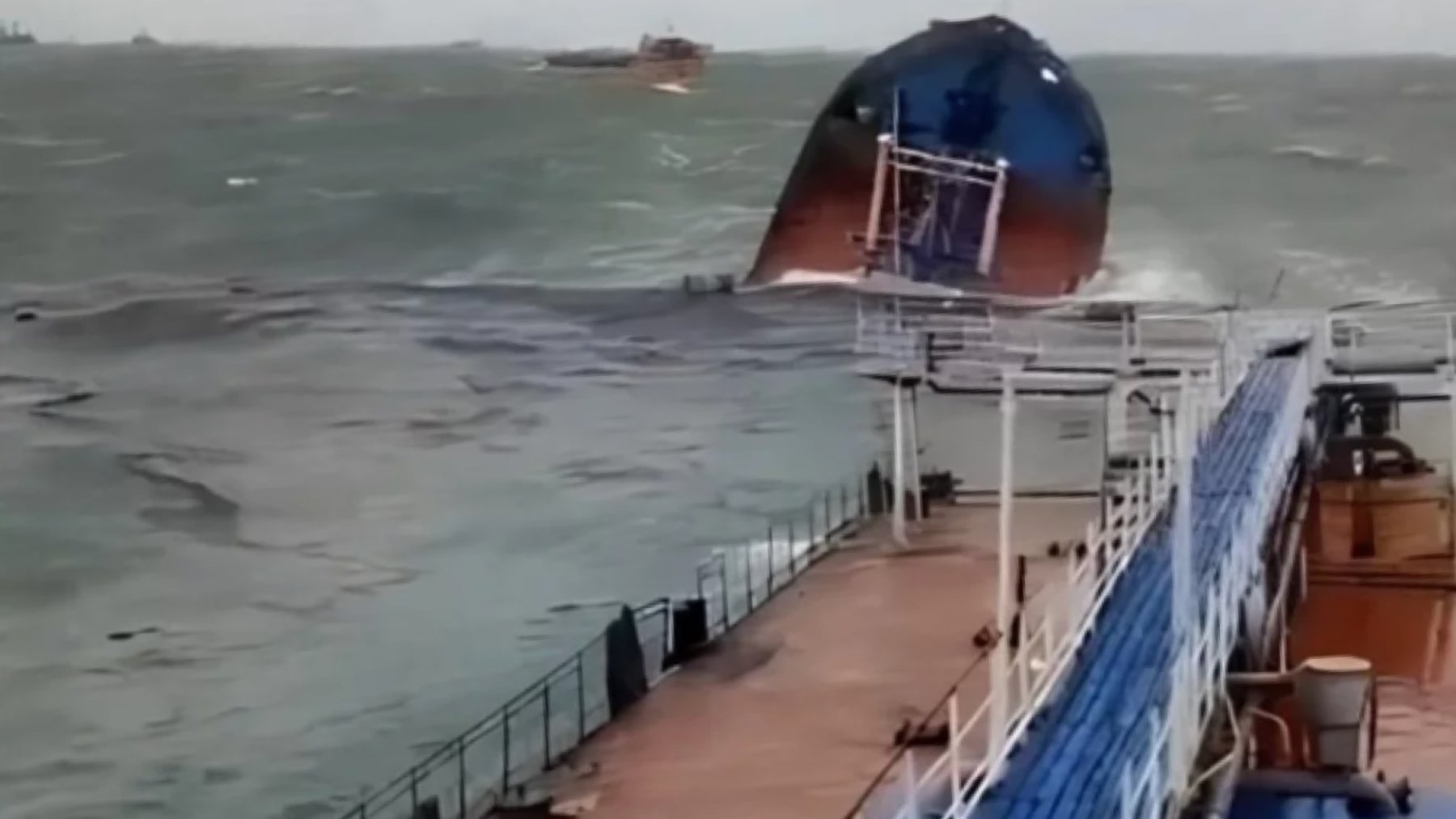
Russia is not prepared for oil spills, Kerch Strait report shows
And what that means for Arctic Shipping and the Northern Sea Route
News
Publish date: 21/04/2026
Written by: Ksenia Vakhrusheva
News
Following an explosion on the Arctic Metagaz LNG tanker on March 3 in the Mediterranean Sea, Bellona sent inquiries to Italian and Maltese authorities asking whether they have mounted a response to secure the drifting and damaged ship and whether they would conduct an environmental assessment of the mishap. As of now, we have not received any answer suggesting that either country has a concrete plan for such operation—even now, a month following the incident.
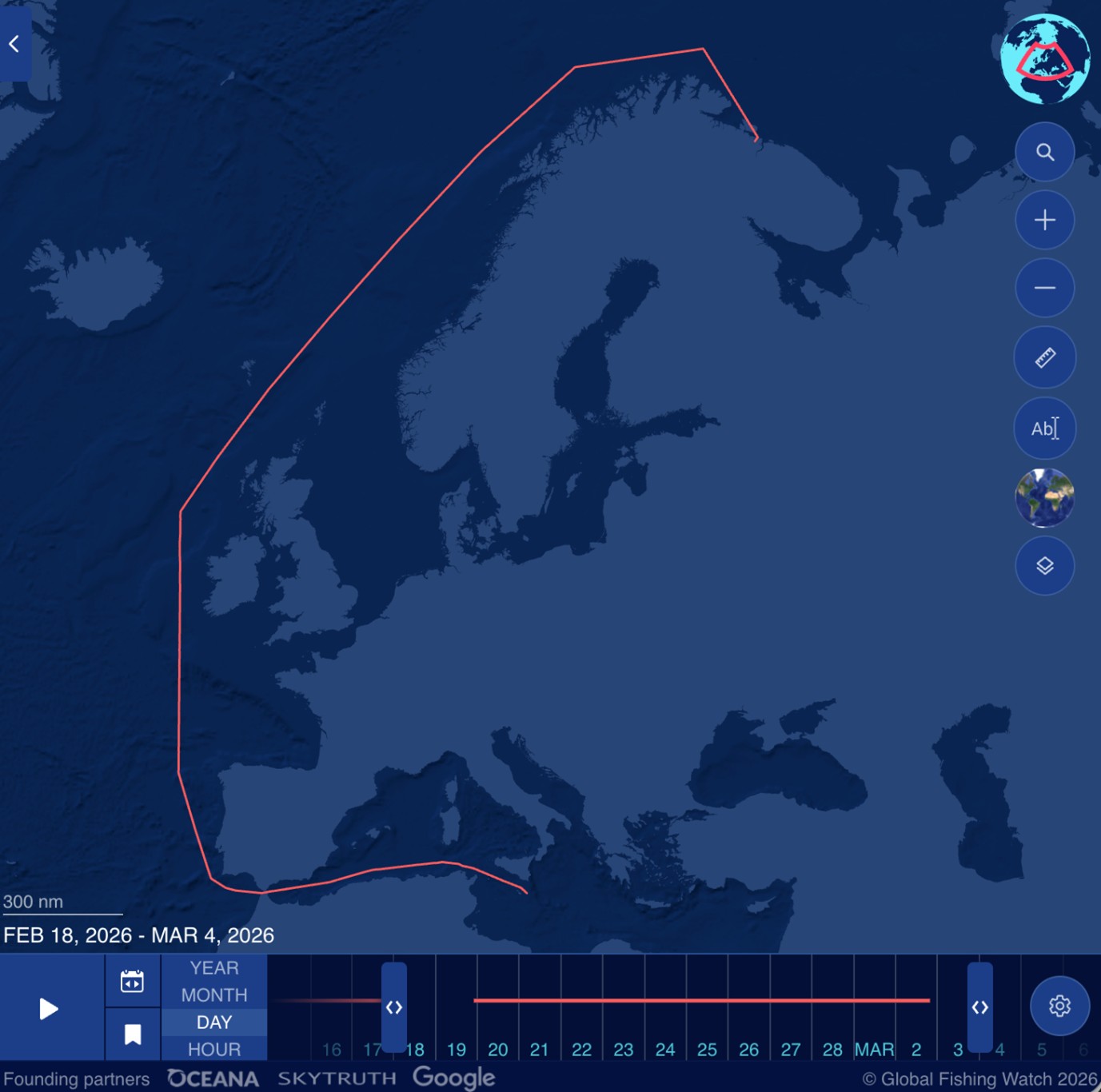
The 23-year-old Metagaz tanker, which is a part of Russia’s shadow fleet, was carrying LNG from Russia’s sanctioned Arctic LNG-2 plant. Some time in mid-February, it had loaded near Murmansk at the Saam floating LNG facility (Saam FSU) and plotted a course for Port Said in Egypt. But on March 3, it was allegedly attacked by unmanned Ukrainian boats and drones near Sicily.
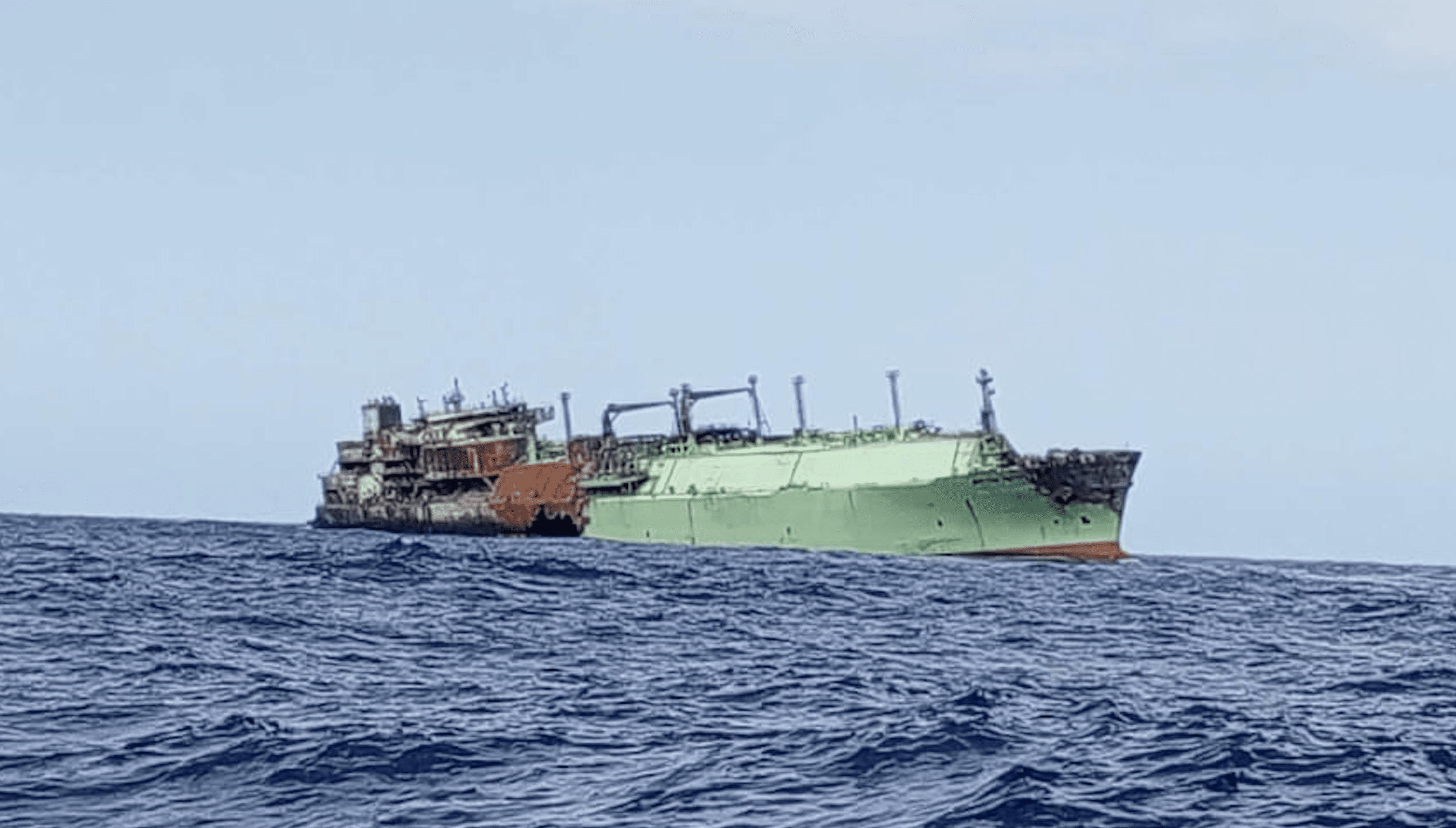
According to the Russian Ministry of Foreign Affairs, the ship was fully laden at the time of the incident and carried nearly 138,000 m3 (~60,000 tonnes) of LNG. As shown in photos taken after the incident and carried in the media, it seems possible that two tanks out four might have remained undamaged. This may mean that the ship is still carrying LNG of an approximate volume of 60-65 thousand m3 (~30000 tonnes) and remains a danger to other ships, coastal communities and marine species should further explosions and/or fire caused by overpressure in tanks and leaks of LNG take place.
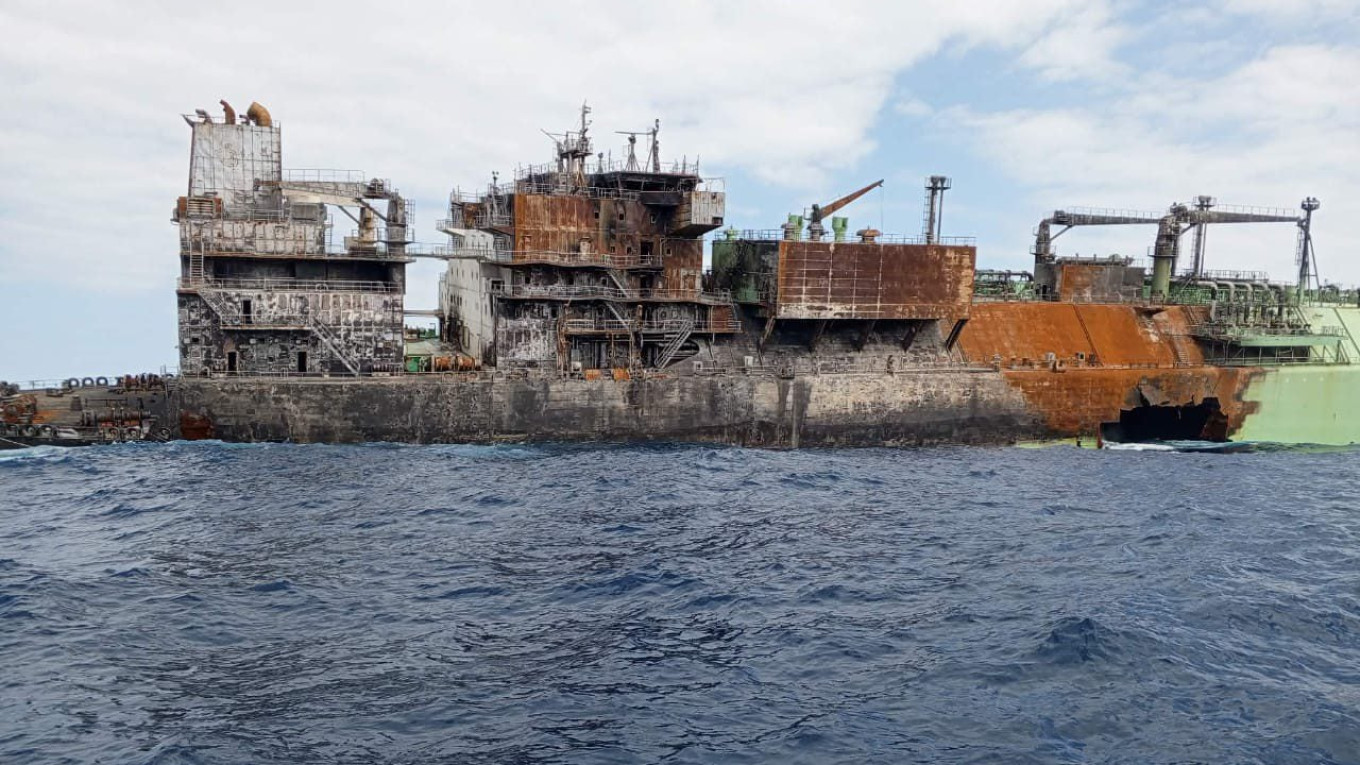
Additionally, according to the announcement of the Russian foreign affairs ministry, the tanker was also carrying 450 tonnes of fuel oil (likely HFO) and 250 tonnes of diesel fuel. This could potentially be used as a fuel while doing a ballast voyage—when ship’s sail without cargo—or when the volume of boil-off gas is not enough.
Now, after more than a month since the incident, the damaged ship continues to drift in the Mediterranean Sea with no apparent coordination among Italy, Malta or Libya. An attempt to tow the ship away from the Libyan coast and its oil platform was made by the Libyan National Oil Corporation at the end of March. This effort managed to drag the ship toward international waters, where, in April, Libyan authorities attempted to stabilize the vessel in international waters. But waves and wind mean the ship’s situation is still precarious, and it can continue to drift at any time.
This is an outstanding case to highlight two systemic problems.
LNG tankers carry flammable and explosive cargo, which, if left without any control, can lead to spills with ignition and/or combustion potential. Natural gas, liquified at a temperature of –162C, is transported in highly insulated tanks in the absence of any supporting cooling system on board. The warmth from the surrounded environment causes slow changes in pressure and temperature inside a vessel’s tanks, which leads to release of the boil-off gas.
This boil-off gas, during normal ship operations, is used to fuel the engines, and during periods of excessive pressure, it can be burned or flared. In rare cases it can be re-liquified on board. But the Arctic Metagaz likely did not have a reliquification plant on board. While being heavily damaged and drifting without any crew on board, adequate boil-off management—which would allow for the safe evaporation of what LNG remains in the vessel’s undamaged tanks—is impossible.
There are no exact figures for the volume of LNG that Arctic Metagaz is still carring, which make it difficult to predict the ignition and combustion potential of the remaining cargo.
The actions of coastal European countries and the European Union have shown that there is no established publicly available operation plan to neutralize threats posed by damaged LNG ships at sea. Maltese contingency plan only included monitoring of its position, a warning to shipowners sailing in the area and potential towing it away from Malta.
Two weeks after the accident, the leaders of nine EU countries, including those around the Mediterranean Sea, warned the European Commission about the potential environmental damages should further explosions occur aboard the Arctic Metagaz, and asked for advice and leadership on a rescue operation. But there were no publicly announced steps from the EU authorities to address this situation.
Russia, as the flag state of Arctic Metagaz, has redirected responsibility for the safety operation to coastal countries affected by the accident, and does not seem willing to organize a rescue operation. This is not the first time that Russia has abdicated responsibility for the fate of its shadow fleet ships. In November 2025, Russia left the damaged Gambian-flagged oil tanker Kairos in Turkish waters without any assistance. In the case of Arctic Metagaz, Russia’s affiliation is official. The ship sailed under the Russian flag, but likewise received no assistance from Russian authorities, aside from flying the crew’s Russian nationals home after their rescue by the Libyan coast guard.
The coastal European countries, including Italy and Malta, seem willing to mount an emergency response only if a damaged ship is located in their territorial waters, and do not foresee any rescue operations if their shores or other facilities are not in immediate danger—although they admit high environmental risk of the situation. There is also no publicly announced plan for emergency operations or mitigation of potential negative consequences.
The International Maritime Organization is monitoring the situation but is not providing any guidance for a potential rescue operation. It does, however stand “ready to provide technical and coordinative assistance”.
Methane—comprising 85-95% of LNG—is a short-lived but highly potent greenhouse gas. According to the International Energy Agency, methane is responsible for 30% of global temperature rise since the Industrial revolution. The gas leaks to the atmosphere—which is exactly what occurred aboard the abandoned LNG tanks of the Arctic Metagaz—contributing to global warming. The highly flammable and explosive properties of LNG endanger species near or around the damaged ship.
What’s more is that the spill of any remaining fuel oil could leave a long-lasting negative impact on the marine and coastal life. If a similar accident occurs in Arctic waters—all the more possible given that the bulk of Russia’s shadow fleet cargo originates from Arctic LNG plants and oil terminals in Murmansk—the environmental consequences of an oil spill there would be far more long-lasting and severe than one in warmer southern regions.
And what that means for Arctic Shipping and the Northern Sea Route
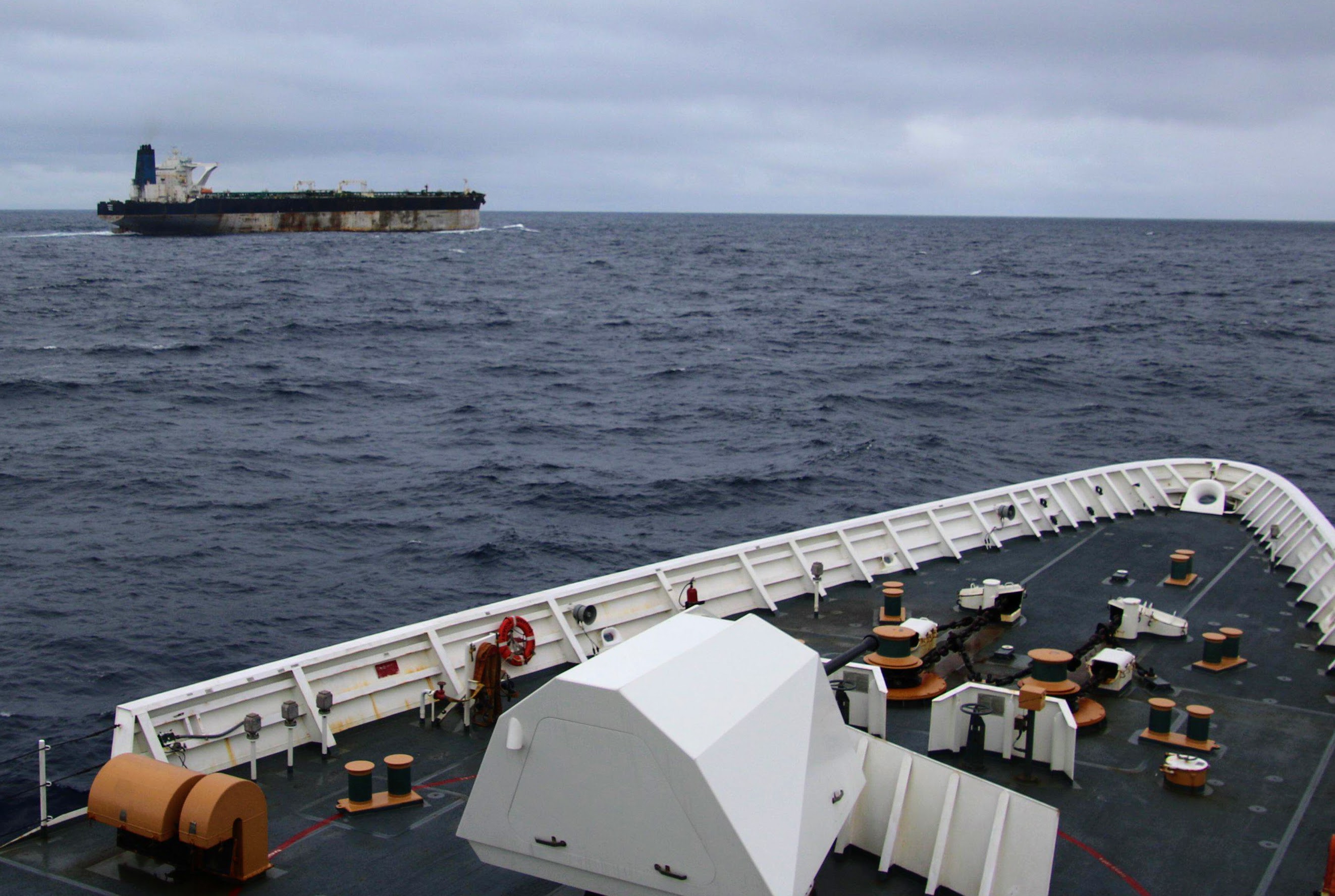
The oil tanker Marinera, detained on January 7 by the U.S. Coast Guard, has no direct connection to Russian resource extraction projects and is linked to Hezbollah. Russia attempted to hide it in the port of Murmansk

This is 87 more than in the previous year

How Emergency Rescue Systems Operate Along the Northern Sea Route – and the Environmental Risks Involved.