Monthly Highlights from the Russian Arctic, January 2026
In this news digest, we monitor events that impact the environment in the Russian Arctic
News
Publish date: 02/04/2026
News
Our focus lies in identifying the factors that contribute to pollution and climate change.
Ensuring complete and reliable access to environmental information in Russia has never been fully guaranteed. Following the Russian invasion of Ukraine on February 24, 2022, it became even more difficult. Some information ceased to be published altogether, such as daily oil production data and annual reports from certain industrial companies. Independent environmental organizations have been banned or closed.
The Arctic region plays a crucial role in comprehending the process of global climate change. Russia owns approximately one-third of its territory, including the exclusive economic zone of the Arctic Ocean. To understand and examine trends, we monitor new legislation, the plans of industry, the Northern Sea Route, international economic sanctions, accidents, and emergencies in the Russian Arctic, as well as provide commentary on the news. Subscribe to our mailing list to make sure you don’t miss the next digest.
Our previous monthly highlights for January can be found here.
NORTHERN SEA ROUTE AND SHIPPING
1. Overview of shipping on the Northern Sea Route in February
2. Russia redeployed two icebreakers from the Arctic to the Baltic Sea due to severe ice conditions
THE INTERNATIONAL SITUATION IN THE ARCTIC AND SANCTIONS ON RUSSIA’S ACTIVITIES IN THE ARCTIC REGION
3. The profit of Novatek, which produces LNG in the Arctic, decreased by 60% in 2025
4. The United Kingdom has introduced its largest package of sanctions against Russia
5. The European Union failed to agree on a new package of sanctions against Russia
6. Ice-class LNG tankers of Mitsui O.S.K. Lines, intended for the Yamal LNG and Arctic LNG 2 projects, remain idle after their removal from the sanctions list
7. The new U.S. maritime strategy envisions a strengthened presence in the Arctic and the construction of icebreakers
ENVIRONMENTAL AND CLIMATE ISSUES IN THE ARCTIC
8. A glacier in Svalbard, which serves as an indicator of climate processes for scientists, has shrunk by 20% over five years
9. Rising temperatures in the Barents Sea have led to a decline in fish biomass
PERSECUTION OF NON-GOVERNMENTAL ORGANIZATIONS BY THE RUSSIAN AUTHORITIES
10. The NGO “Arktida,” which covers political processes and environmental issues in the Russian Arctic, has been designated as “undesirable” in the Russian Federation
ACCIDENTS AND INCIDENTS IN THE NORTHERN SEA ROUTE
11. Ukrainian drones struck Lukoil oil refinery in Ukhta
February is a key month for assessing the winter state of Arctic sea ice, as its extent typically reaches a seasonal maximum during this period. According to the National Snow and Ice Data Center (NSIDC), Arctic sea ice extent increased from 13.6 million km² at the beginning of February to approximately 14.1 million km² by early March. Although this figure was slightly higher than in February 2025, when it set a new record low at 13.75 million km², it remained significantly below historical averages (the 1981–2010 average maximum was 15.30 million km²), continuing the long-term downward trend in ice extent.
In February, shipping along the Northern Sea Route maintained regular activity under winter ice conditions. The main cargo flow was ensured by the Yamal LNG and Arctic LNG 2 projects, as well as oil shipments from the Varandey, Prirazlomnoye, and Novoportovskoye fields. In addition, regular voyages by Norilsk Nickel continued.
The Yamal LNG project maintained a high level of shipments. In February, 21 LNG cargoes with a total volume of 1.54 million tonnes were dispatched from the Sabetta terminal. For the first time since 2018, all cargoes were delivered to European Union countries, with no supplies to Asia.
Shipments were carried out by Arc7 ice-class tankers Eduard Toll, Rudolf Samoylovich, Vladimir Voronin, Yakov Gakkel, Boris Vilkitsky, Georgy Brusilov, Boris Davydov, Nikolay Zubov, and Vladimir Rusanov directly to European ports. Meanwhile, Vladimir Vize and Nikolay Urvantsev, according to Global Fishing Watch data, conducted ship-to-ship transfers near Kildin Island close to Murmansk onto non-ice-class tankers, including Seapeak Yamal, LNG Phecda, and LNG Dubhe, which then proceeded to European ports. Of the 14 Arc7 vessels serving Yamal LNG, six are operated by Seapeak (United Kingdom) and five by Dynagas (Greece).
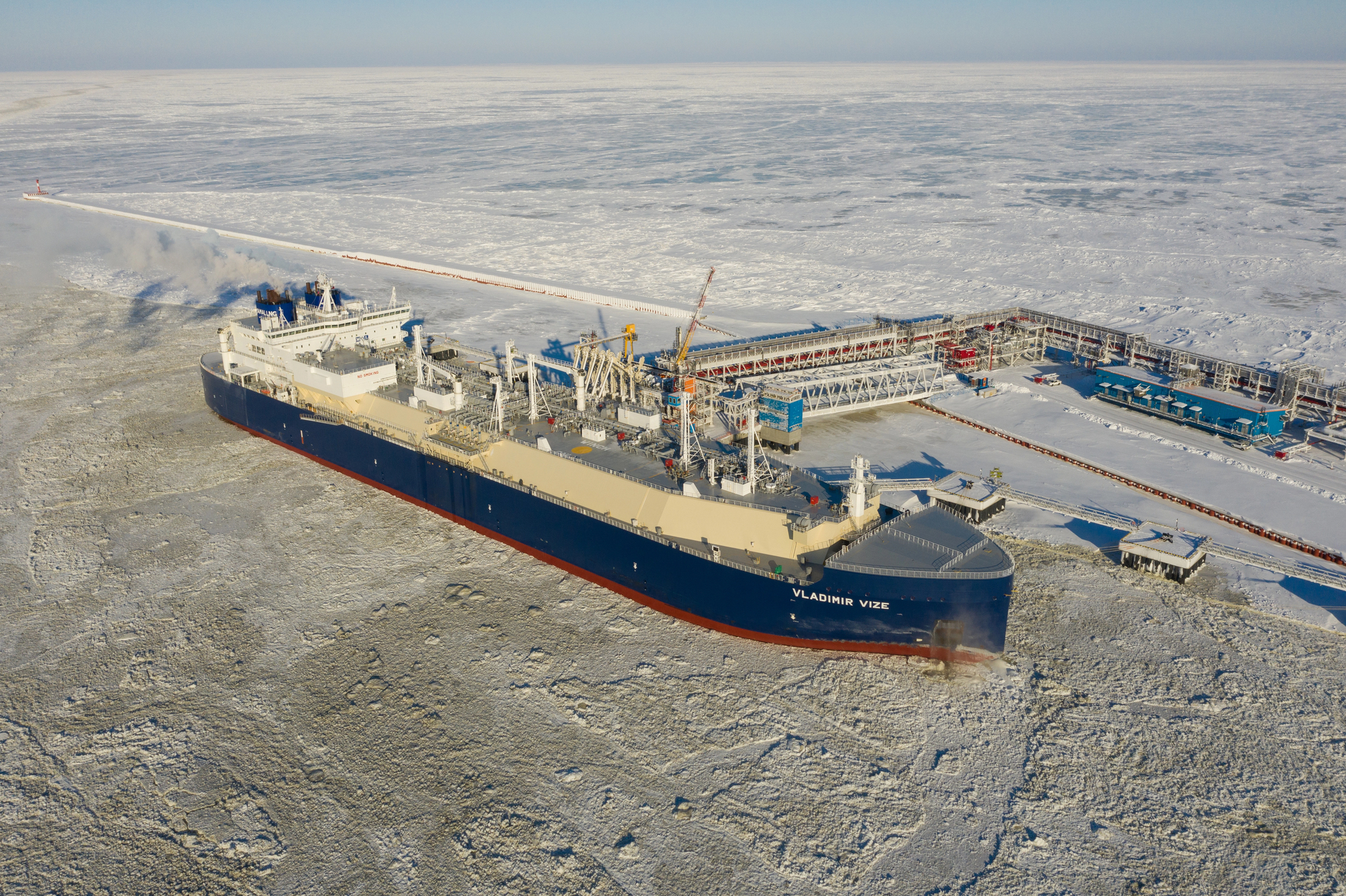
The Arctic LNG 2 project in February continued operating under the established LNG transshipment scheme via the floating storage unit Saam FSU in Ura Bay near Murmansk. Arc7 ice-class tankers were loaded directly at the plant in the Ob Bay and delivered LNG cargoes to the storage facility. Christophe de Margerie loaded three times, while Alexey Kosygin loaded once. The cargo was then transshipped onto shadow fleet tankers, which subsequently sailed to China either around Africa or via the Suez Canal. In February, five cargoes were shipped from the Saam FSU by the tankers Iris, Arctic Mulan, La Perouse, Arctic Metagaz, and Buran.
In February, approximately six oil shipments were carried out from the Varandey terminal (Lukoil). Operations were conducted by Arc6 ice-class shuttle tankers Vasiliy Dinkov, Kapitan Gotskiy, and Timofey Guzhenko. The tankers were loaded directly at the ice-resistant berth in the Pechora Sea, after which they delivered oil to the Murmansk area for transshipment onto shadow fleet vessels, which then proceeded to China and India. Despite frequent AIS signal disruptions in the Murmansk area, Global Fishing Watch data confirm stable and regular shipment cycles.
The Prirazlomnoye field (Gazprom Neft). Transportation was carried out using a similar shuttle scheme; however, AIS signals were switched off for longer periods, complicating the tracking of operations. Global Fishing Watch data suggest that approximately five shipments were made from the platform in February by the tankers Mikhail Ulyanov and Kirill Lavrov, with the assistance of the support vessels Antey and Hermes.
Regular AIS signal disruptions were also observed during oil shipments from the Novoportovskoye field. Global Fishing Watch data suggest that around 13 voyages were carried out in February—one more than in January. Active vessels included Arc7 ice-class tankers of the Shturman series: Shturman Albanov, Shturman Malygin, Shturman Skuratov, Shturman Shcherbinin, and Shturman Koshelev, as well as Mikhail Lazarev and Shturman Ovtsyn.
The metallurgical company Norilsk Nickel also continued exporting its products via the Northern Sea Route. In February, seven calls were made at the port of Dudinka. Of these, five voyages were carried out by Arc7 ice-class cargo vessels from the company’s own fleet (Talnakh, Zapolyarny, Nadezhda, Norilskiy Nickel, and Monchegorsk), which transport metal products, containerized, and general cargo. Two additional voyages were performed by chartered vessels from the Severny Proekt fleet—the dry cargo ships Utrenny and Turukhan. One more voyage was carried out by the Arctic tanker Yenisei, which specializes in transporting petroleum products (diesel fuel and aviation kerosene) to supply the Norilsk industrial district.
«Winter navigation along the Northern Sea Route this year differed little from last year, except that LNG shipments from the Arctic LNG 2 project are now carried out more or less regularly despite international sanctions imposed by Western countries. By contrast, last year Arctic LNG 2 was largely idle throughout February due to the absence of buyers. Currently, as a result of the war initiated by the United States in the Middle East, sanctioned gas is finding buyers in Asia even under the threat of secondary sanctions.
At the same time, the gas logistics of the Arctic LNG 2 project have moved closer to what Novatek originally planned: high ice-class Arc7 tankers load LNG at the plant and transfer it to a floating storage unit located near Murmansk. LNG carriers with a lower ice class are then loaded at the storage facility and dispatched to buyers via southern routes. This approach allows the more expensive high ice-class tankers to be used only on route segments where they are necessary, thereby reducing overall logistics costs.
Shipments from Yamal LNG to Europe are proceeding at maximum volume and are not supported by optimal logistics, as the Saam FSU floating storage unit and a large number of LNG tankers are under sanctions. Novatek is forced to deliver LNG to Europe using high ice-class tankers all the way to the destination, resulting in higher costs.
The actions of France, Belgium, and Spain, which purchase LNG from Novatek under long-term contracts, raises questions about whether they will be ready to fully phase out imports of Russian gas by the end of 2027, as planned. None of these countries has yet published a gas supply diversification plan, which they were required to prepare by 1 March 2026.»
On 18 February, to address unusually severe ice conditions in the Gulf of Finland, the nuclear-powered icebreaker Sibir (Atomflot) and the diesel-electric line icebreaker Murmansk (Rosmorport) were redeployed from the Arctic. According to monitoring data from the Arctic and Antarctic Research Institute, about 80% of the Gulf’s waters were covered with ice up to half a meter thick.
In the Gulf of Finland, diesel-electric icebreakers of Rosmorport—Vladivostok, Mudyug, Kapitan Kosolapov, Kapitan Sorokin, Viktor Chernomyrdin, Kapitan M. Izmailov, Kapitan Nikolaev, Kapitan Plakhin, and Kapitan Zarubin—were deployed for icebreaking support during the 2025–2026 winter navigation season. However, they were not fully capable of escorting large deadweight vessels, which require a wider channel in the ice.
Prior to the redeployment, Sibir, intended for year-round operations along the Northern Sea Route (NSR), supported cargo shipments for Norilsk Nickel, Novatek, and Gazprom Neft. In the Gulf of Finland, the icebreaker’s primary task was to escort large oil tankers along the route between the port of Primorsk and Rodsher Island.
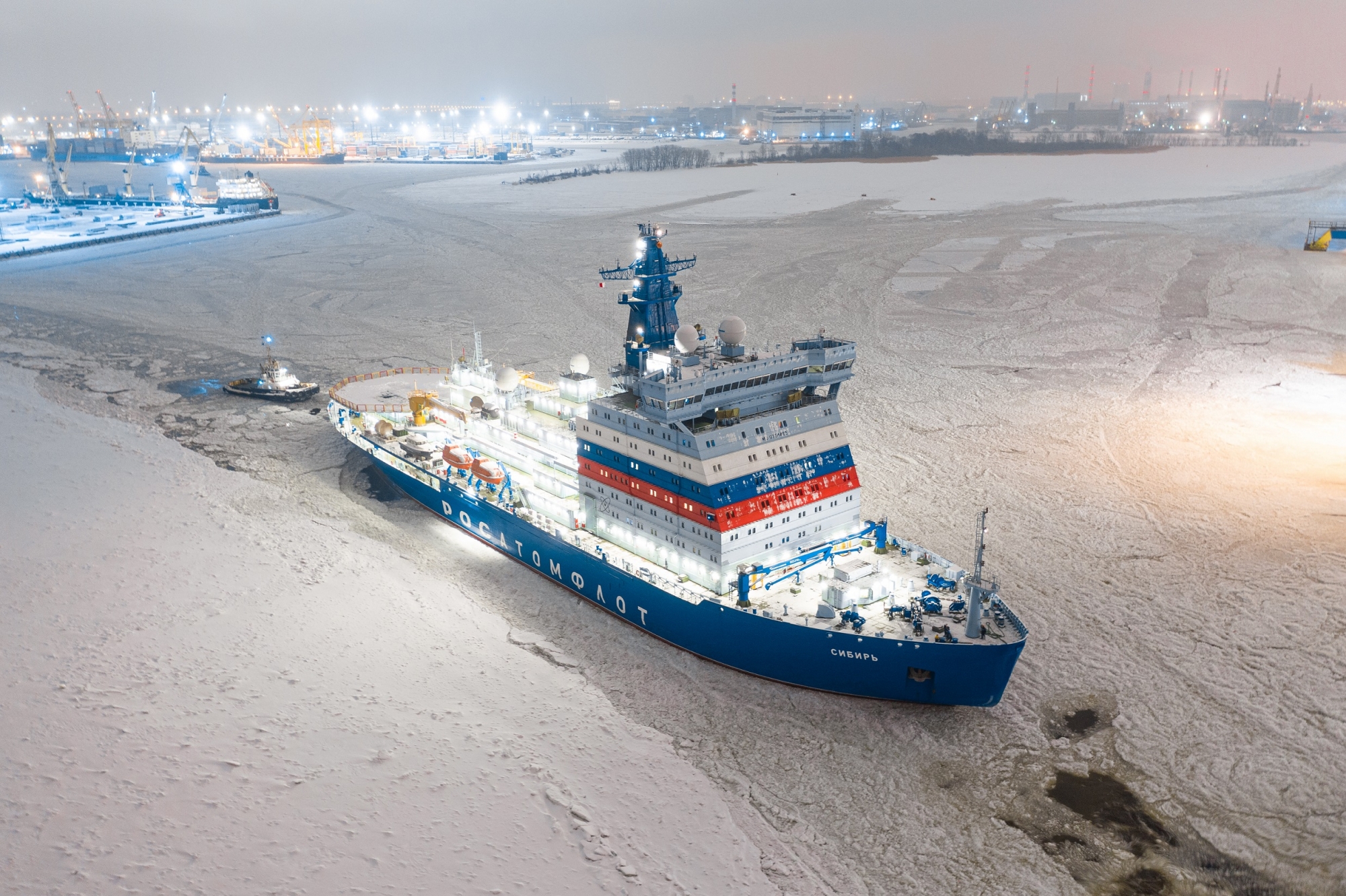
The icebreaker Murmansk was previously based in Arkhangelsk and carried out line escort operations in the Kara Sea and the Yenisei Gulf. After redeployment, it was assigned to the route between the port of Ust-Luga and Rodsher Island.
In late February, Russian media actively circulated claims that Russian icebreakers were allegedly assisting Finnish vessels in the Gulf of Finland. However, this information was refuted by both Finnish media and the Russian authorities. The reports were based on a press release issued by the Finnish Transport Infrastructure Agency on 26 February, which had been misinterpreted.
In fact, the press release referred to standard international practice, under which Russian icebreakers assist vessels bound for Russian ports, such as Primorsk or Ust-Luga. If such a vessel is pushed by drifting ice into Finnish territorial waters, the Finnish agency may, upon request, allow a Russian icebreaker to enter Finnish waters to provide assistance.
«The redeployment of two icebreakers from the Northern Sea Route to the Gulf of Finland due to unusually severe ice conditions became the basis for the spread of misleading information claiming that Russian icebreakers were assisting Finnish vessels in navigating the ice. In many social media posts, this was presented as evidence of Russia’s technological strength and Europe’s, particularly Finland’s, inability to cope with weather-related challenges independently.
The pattern of dissemination of these messages suggests coordinated disinformation on the part of Russia. On 27 February, major Russian propaganda media outlets published the story, misinterpreting the Finnish Transport Infrastructure Agency’s press release of 26 February. Immediately on 27–28 February, dubious social media accounts began replicating the story with similar commentary. After clarifications from the Finnish side, the media acknowledged the misinterpretation of the original press release, but numerous posts on social media had already spread and continued to pollute the information space.»
On 11 February, Novatek published its financial results for 2025, showing a decline in profit of more than 60% to 183 billion rubles (approximately $2.37 billion), compared to 493 billion rubles in 2024. This occurred against the backdrop of a slight increase in hydrocarbon production of about 1%.
According to industry media estimates, this is linked to the cumulative impact of Western sanctions, which since 2022 have significantly affected Arctic LNG projects, especially Arctic LNG 2. The project is operating at low capacity and is forced to sell its output to China at discounts of 30–40%, while logistics are complicated by the use of a shadow fleet and ship-to-ship transfers.
Further tightening of sanctions pressure is expected in the near term. The EU plans to fully ban imports of Russian LNG after the transition period ends, effectively closing the European market. Anticipated restrictions on maritime services from the United Kingdom are expected to increase pressure on logistics, insurance, and fleet maintenance. As a result, vessels will have to use longer routes, leading to higher costs.
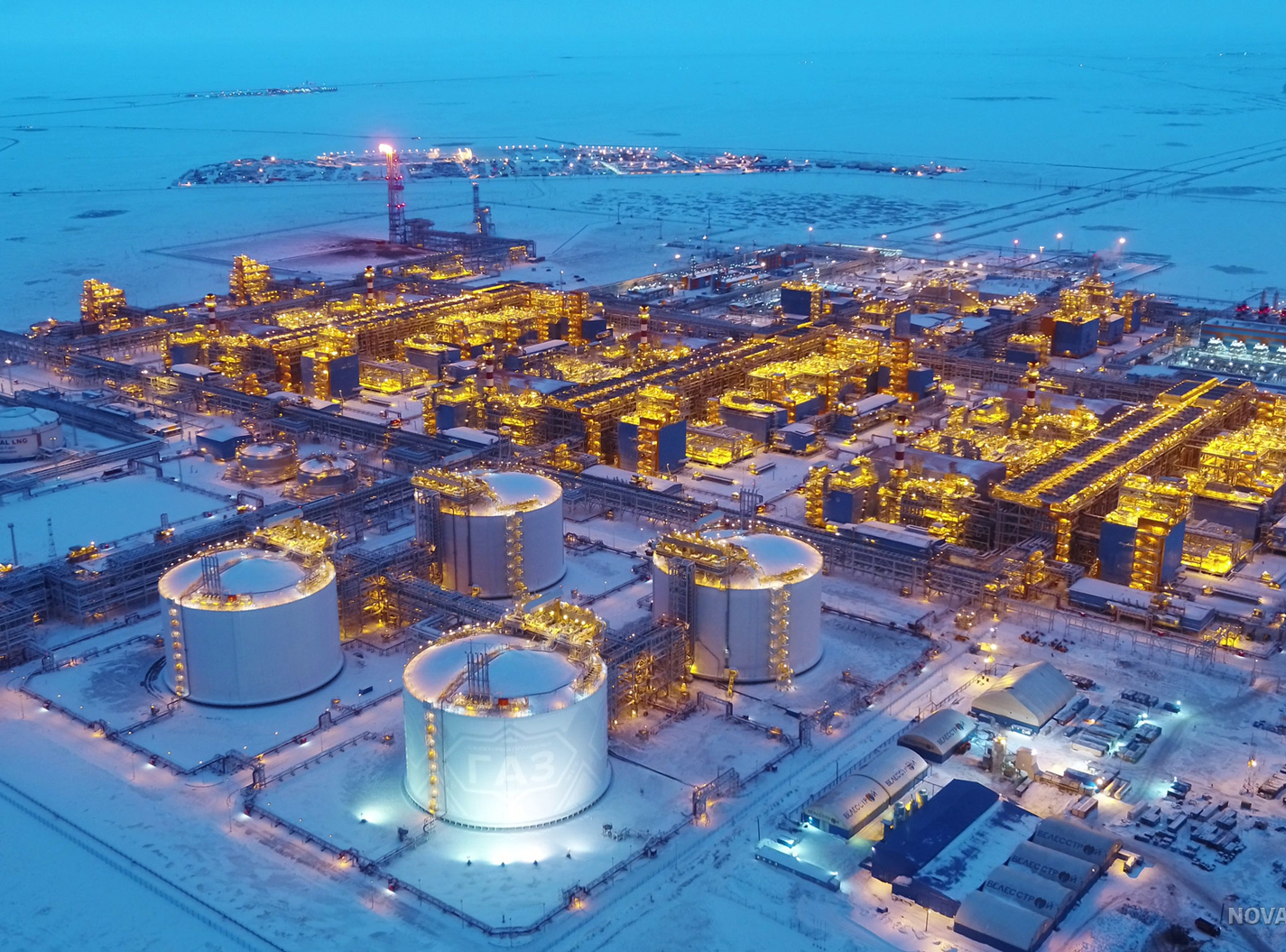
The French company TotalEnergies, which holds a 19.4% stake in Novatek and 20% in Yamal LNG, in February requested clarifications from the French government and the European Commission regarding the upcoming EU ban on imports of Russian LNG. TotalEnergies CEO Patrick Pouyanné stated that, in light of the planned EU ban on LNG imports from 2027, the company could redirect supplies from the Yamal LNG project to other markets if the ban applies only to deliveries to Europe. In response, the European Commission clarified that European companies will not be allowed to redirect Yamal LNG to other countries.
On 24 February 2026, the United Kingdom introduced its largest package of sanctions against Russia, marking the fourth anniversary of the war in Ukraine. A number of the companies targeted by the sanctions are linked to Arctic projects:
The European Union failed to agree on the 20th package of sanctions against Russia, which had been proposed by the European Commission in early February with a call for adoption by the fourth anniversary of Russia’s full-scale invasion of Ukraine on 24 February.
The package included a full ban on maritime transport of Russian oil, an expansion of the list of shadow fleet vessels, restrictions on new tankers, maintenance of LNG carriers and icebreakers, which were intended to undermine gas export projects, as well as other measures.
However, on 23 February, at a meeting of the Foreign Affairs Council, ministers failed to reach a consensus. Hungary and Slovakia opposed the adoption of the 20th package, blocking the decision, which requires unanimity among all 27 countries.
Hungary stated that it would not support the sanctions until Ukraine resumes the transit of Russian oil through the southern branch of the Druzhba pipeline. Slovakia took a similar position. Both countries justified their refusal by citing energy dependence, as Hungary and Slovakia remain the only European Union countries still receiving Russian oil via pipeline.
«If by the end of 2025 it had become evident that the economic development of the Russian Arctic was beginning to stall due to international sanctions—with cargo traffic along the Northern Sea Route declining, Novatek’s profits falling, Arctic LNG 2 and Vostok Oil failing to reach full launch, and export logistics becoming more expensive—then at the beginning of 2026, with the outbreak of war in the Middle East, conditions for Russian exporters of hydrocarbons produced in the Arctic may become more favorable.
Moreover, the tightening of EU sanctions has also slowed. The failed 20th sanctions package included, among other measures, a ban on European ship repair companies servicing LNG carriers operating for the Yamal LNG project, which would have increased repair and logistics costs for Novatek.»
In February, media reported on the situation involving four tankers of the Japanese company Mitsui O.S.K. Lines (MOL)—North Moon, North Ocean, North Light, and North Valley (Arc4 ice class), built in 2024 for the Yamal LNG and Arctic LNG 2 projects.
Three of them were placed under European Union sanctions in May 2025. In July of the same year, the restrictions were lifted after MOL officially pledged not to use these tankers for transporting Russian Arctic LNG. However, after the sanctions were removed, all four LNG carriers remained idle for more than six months. Three vessels were anchored off Batam, Indonesia, while the fourth was located in European waters, first off the coast of the Netherlands and later Spain.
In March, the first signs of movement appeared. According to Global Fishing Watch data, the tanker North Moon headed towards South Korea. The other three vessels remain inactive for now.

In mid-February, the United States published the America’s Maritime Action Plan, a new maritime strategy that includes a dedicated section on the Arctic. The document is aimed at restoring U.S. maritime dominance, with a particular emphasis on developing its domestic shipbuilding industry.
The section on the Arctic is based on the assumption that melting Arctic ice and technological innovation are opening access to the region, increasing interest in resource extraction, new trade routes, scientific research, and strategic expansion by both the United States and its allies, as well as by competitors. The document identifies only China as a competitor.
A significant expansion of the U.S. Coast Guard’s icebreaker fleet is planned to patrol the Arctic coastline. To date, 11 Arctic Security Cutters have already been ordered, with the first expected to be delivered in early 2028. Contracts have been distributed among three contractors: the American shipbuilder Davie Defense will build two icebreakers in Finland at Helsinki Shipyard and three in Texas; Bollinger Shipyards will build up to four units at shipyards in the United States; and Finland’s Rauma Marine Constructions will build up to two units in Finland.
The strategy envisages strengthening the U.S. presence in Arctic waters, developing resilient communications and navigation at high latitudes, enhancing maritime domain awareness, investing in ports, logistics, and search-and-rescue capabilities, as well as exploring opportunities for seabed mineral extraction and expanding hydrocarbon production in Alaska, including a liquefied natural gas project.
At the same time, it became known that American investor Gentry Beach, who, according to media reports, has ties to the circle of Donald Trump, has signed an agreement with the Russian company Novatek on potential cooperation in an LNG project in the North Slope Borough in the far north of Alaska.
Most likely, this refers to the sale of the third technological train of the Arctic LNG 2 project, which began construction in 2023 at the Center for the Construction of Large-Scale Marine Structures (CSKMS) in Belokamenka, Murmansk Region. However, due to sanctions against Novatek and its subsidiaries, active construction has been suspended until 2026. The launch was planned to be postponed to 2028.
In an interview with The New York Times, Gentry Beach said that the agreement is at an early stage and faces serious obstacles. According to Anchorage Daily News, oil and gas industry experts in Alaska believe that the project is unlikely to be implemented.
«The section on the Arctic in the new U.S. maritime strategy is based on the premise that climate change is increasing interest in northern sea routes and resource extraction in the region. Although the document briefly mentions the risks that will inevitably accompany the melting of Arctic ice, they are not given sufficient attention. Instead, the United States appears ready to join the “race for the Arctic” by increasing the number of patrol icebreakers and initiating the development of new hydrocarbon fields in Alaska. Notably, Russia is not mentioned at all in the text of the maritime strategy, although the need to strengthen national security in the Arctic to counter strategic competitors is emphasized. China is identified as the competitor.
The news about secret negotiations between an American businessman and Novatek regarding a gas project in Alaska raises concerns that the United States may repeat the mistake the EU made for many years in its relations with Russia—attempting to strengthen economic ties in exchange for ending the war in Ukraine and reducing geopolitical ambitions. Such a strategy has already failed once with the current Russian regime and is therefore unlikely to succeed this time.»
The Aldegonda Glacier in Svalbard has decreased by about 20% over the past five years, The Barents Observer reports. Scientists from St. Petersburg who studied the glacier believe it could disappear within 30 years. Norwegian scientists suggest this may happen somewhat later, but still relatively soon—before 2100.
“The Aldegonda Glacier serves as an indicator of large-scale climate processes occurring on the planet. By observing it, we ‘capture’ climate fluctuations across at least the entire Northern Hemisphere. Over the past decade, this glacier has been losing mass at an unprecedented rate… This period has also included some of the warmest years on record in the Arctic,” the website of the Arctic and Antarctic Research Institute quotes its researcher, Candidate of Sciences Anton Terekhov. According to some data, the rate of warming in Svalbard exceeds the global average by 5–7 times.
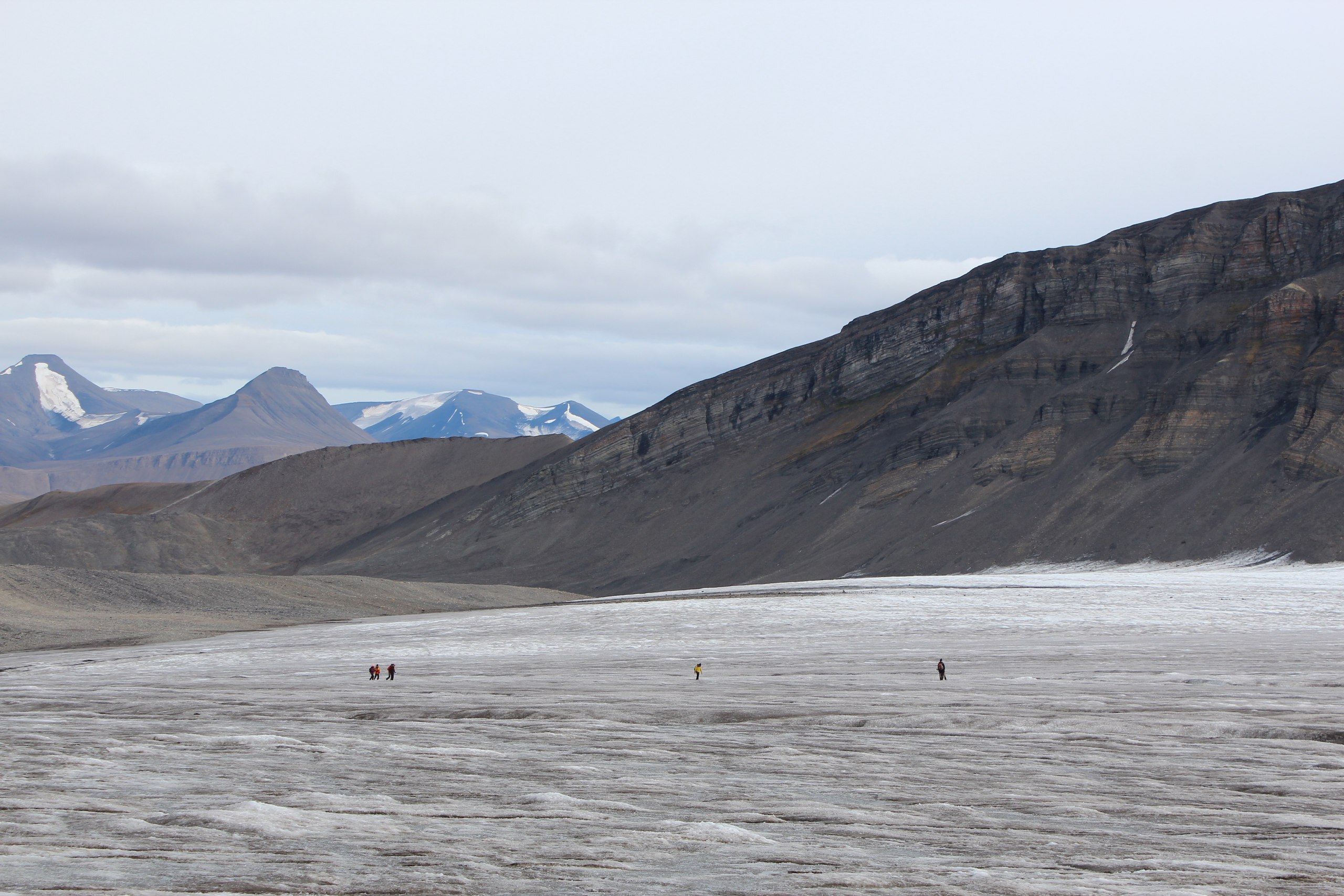
Senior researcher at the Norwegian Polar Institute Jack Kohler also believes that if the trend continues, Aldegonda and other small glaciers (with an area of about 10 km² or less) are also likely to disappear, but not within 30 years—rather by 2100.
“We annually monitor four glaciers in the area of Ny-Ålesund [northern part of the Spitsbergen archipelago – ed.], and the longest series of observations has been conducted since 1960,” he told the Barents Observer. “I personally have not worked on the Aldegonda glacier, but in 2004-2010 we carried out similar measurements on the neighbouring Linnébreen glacier, and we also have data on glaciers in the Ny-Ålesund area.”
A new study by the Institute of Marine Research found that in recent years, sea surface temperatures in the Barents Sea have increased by 0.5–2.5°C. The northern part of the Barents Sea to the west and north of Svalbard, as well as the eastern part of the sea, have been particularly affected. The results were presented at the Arctic Frontiers conference in Tromsø in early February 2026.
Warming is significantly affecting not only spawning grounds but also leading to a reduction in the food base. As a result, fish populations are declining, particularly species inhabiting the pelagic zone, i.e. not located in close proximity to the seabed. Some fish are also migrating to colder areas.
Overall, according to scientists, fish biomass in the seas surrounding Norway, including the Arctic seas, declined twofold from 35 million to 17 million tonnes between 2013 and 2025, reaching the lowest level for the entire observation period since 2000.
Another factor exacerbating the situation is fishing. Geir Huse, Director of Marine Ecosystems and Resources at the Institute of Marine Research of Norway, says that the most commercially important northern fish stocks, such as Arctic cod, have reached a critical level.
“This is primarily due to a failure in recruitment – not enough young fish are growing up. But in recent years, more Arctic cod has also been harvested than recommended,” he warns.
On February 16, 2026, the Russian authorities added “Arktida” to the register of “undesirable organizations.”
This means that it can no longer operate in the country, and Russian citizens and legal entities are prohibited from working with it, cooperating with it, participating in its projects, distributing its materials, donating money, or providing any other form of funding. Even materials published by the organization before it was designated as “undesirable” can still be used as grounds for prosecution. A first violation entails administrative liability in the form of a fine, while a repeated violation can lead to criminal liability, with prison sentences of up to four years for participation in the organization’s activities and up to six years for leadership roles.
“Arktida” is an NGO focused on climate issues, Indigenous rights, and corruption in Russia’s Arctic regions. In particular, the organization prepared a detailed report on key decision-makers in Russian Arctic policy and their specific areas of influence.
Following its designation as “undesirable,” Arktida stated that it disagrees with this status and will continue its work, but will close all projects in Russia and cease cooperation with individuals and organizations located or registered in the country in order not to put them at risk.
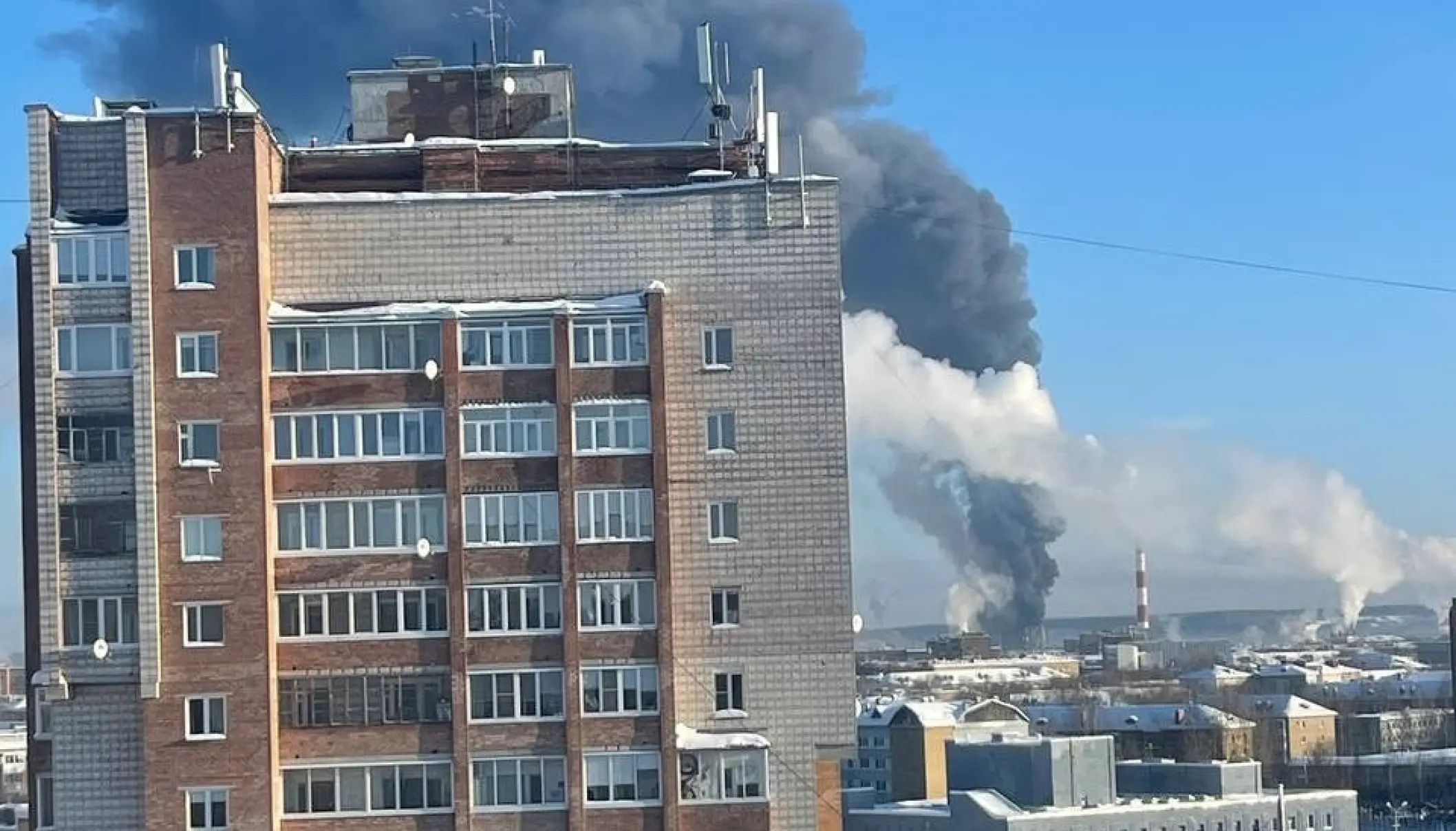
On February 12, Ukrainian drones carried out a strike on a Lukoil oil refinery in Ukhta (Komi Republic), located nearly 2,000 km from Ukraine. The attack caused explosions and a fire in the industrial zone. Ukhta is an important transport hub for oil and gas in Russia’s North, with oil pipelines from the Nenets Autonomous Okrug and gas pipelines from Yamal passing through the city. This marks a repeat attack on the facility following a strike in August 2025.
Bellona held a seminar on countering Russian disinformation in the Arctic at the Arctic Frontiers international conference in Tromsø, Norway. The American Sunlight Project (ASP) and the Bellona Foundation shared new evidence on how Russia communicates about the Northern Sea Route. The findings are striking — and extend far beyond the Arctic.
In this news digest, we monitor events that impact the environment in the Russian Arctic
In this news digest, we monitor events that impact the environment in the Russian Arctic

In this news digest, we monitor events that impact the environment in the Russian Arctic

In this news digest, we monitor events that impact the environment in the Russian Arctic