
The Northern Shadow Route – 100 sanctioned ships sailed along Russia’s Arctic coast in 2025
This is 87 more than in the previous year
News
Publish date: 03/02/2026
Written by: Vsevolod Levchenko
News
The following article, written by Bellona’s Vsevolod Levchenko, originally appeared in Arctic Today
The Russian Arctic is rapidly filling up with vessels from the shadow fleet. Whereas in 2024 only 13 such ships were recorded on its main transport artery, the Northern Sea Route (NSR), in 2025 their number reached 100, or nearly one third of all cargo vessels operating along this route.
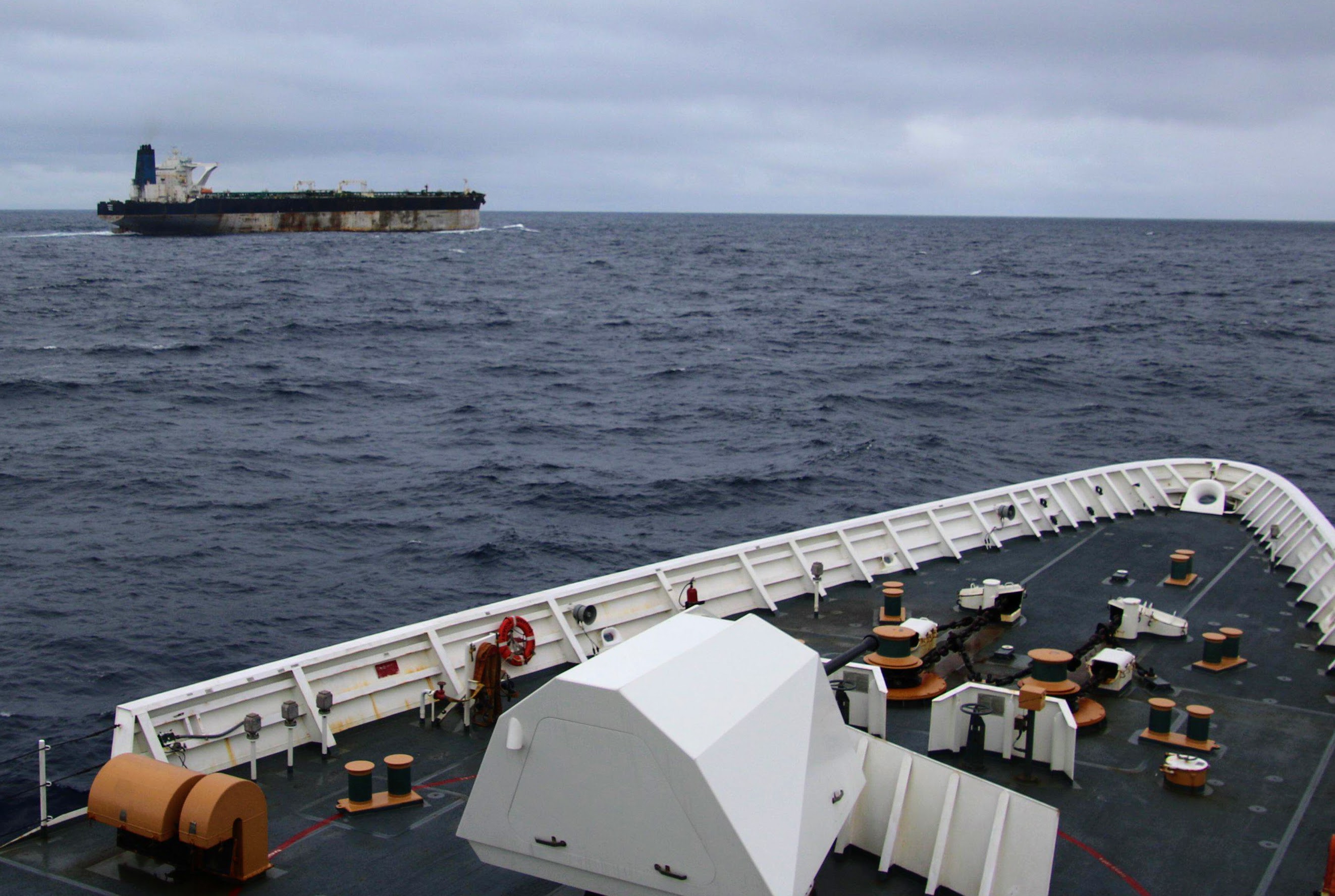
At the start of 2026, the situation developed further. The shadow-fleet oil tanker Marinera (IMO 9230880, deadweight 318,518 tons) set course for Murmansk while evading the U.S. Coast Guard, which had obtained a warrant for its arrest.
The vessel, known as Bella 1 until the end of December 2025, is under U.S. sanctions for transporting Iranian oil and is accused of attempting to breach the maritime blockade around Venezuela imposed by the United States on sanctioned oil tankers.
Additionally, the UK Ministry of Defence, whose forces took part in the tanker’s detention, points to its links with Hezbollah. Earlier, in 2024, the U.S. Department of the Treasury also reported that the tanker belonged to a company connected to Hezbollah and the Islamic Revolutionary Guard Corps, an Iranian military-political organisation through which a significant share of Hezbollah’s funding is channelled.
In this context, the fact that the tanker was heading to Venezuela also does not appear accidental. Think tanks and U.S. government agencies have for years reported on Hezbollah’s ties with Venezuela, including the operation of its training bases on the country’s territory.
Initially, the U.S. Coast Guard attempted to detain the tanker on December 21 in the Caribbean Sea as it was sailing from Iran toward Venezuela. The crew refused to comply with orders, and the vessel changed course. To evade pursuit, crew members painted a Russian flag on the hull and declared that they were operating under Russian jurisdiction.
A few days later, the tanker was renamed Marinera, received the Russian flag and was entered into the Russian Maritime Register of Shipping, with its home port listed as Sochi. Burevestmarine LLC, a company registered in Ryazan, Russia, became its new owner. Shortly before the New Year, Russia also sent an official request to the United States asking it to cease the pursuit of the tanker and subsequently condemned its seizure.
Thus, the risks associated with the presence of shadow-fleet vessels in the Arctic, including the risk of accidents, continue to grow. In addition to the shadow vessels used by Russia for its own purposes, ships from other countries evading arrest may also appear. Russia has already made the first attempt to shelter such a ship, albeit unsuccessfully.
Moreover, the case of the Russian shadow-fleet tanker Kairos (IMO 9236004) demonstrated that Russia is in no hurry to assist such vessels in the event of an accident. After Kairos was allegedly struck by a Ukrainian drone on November 28 in the Black Sea’s Turkish exclusive economic zone, a Turkish tugboat dragged it to Bulgarian waters and left it there due to severe weather conditions.
The tanker had unloaded its oil before the accident. However, it soon emerged that 10 people of the crew were left aboard the tanker with only limited food, water and energy supplies. Bulgaria commenced rescue operations on December 7, while the Russian side made no effort to assist the crew and the ship.
At the same time, Marinera is a textbook example of a shadow-fleet vessel. It is an old oil tanker built in 2002, lacking an ice class, used to circumvent sanctions and changing its flag and ownership in the middle of a voyage. Although on this occasion it was reportedly sailing empty, having failed to load oil in Venezuela, over the past four years it has been observed carrying out large-scale ship-to-ship oil transfers in the open sea, amounting to approximately 9.3 million barrels in total.
Ship-to-ship transfers carry a high risk of oil spills in the open ocean, and when they are conducted by shadow-fleet tankers that often conceal their location, spill response in the event of an accident becomes effectively impossible.
Notably, Marinera has no direct connection to Russian exports or imports, nor to servicing Russian oil production projects. Nevertheless, Russia not only attempted to shelter it on its territory and protect it under its flag, but also reportedly dispatched a submarine and other naval forces to escort it. This was reported by The Wall Street Journal and CBS News, citing US officials.
The use of naval forces, including submarines, to protect shadow tankers, including those linked to the financing of terrorism, leads both to a sharp increase in the risk of military escalation and to heightened environmental risks. Marinera was intercepted near the coasts of Iceland and the United Kingdom. However, if such practices continue, accidents involving military confrontation may occur in the Arctic region or in its immediate vicinity, leading to highly unpredictable military and environmental consequences.
This is 87 more than in the previous year

How Emergency Rescue Systems Operate Along the Northern Sea Route – and the Environmental Risks Involved.

But it’s unlikely to impact emissions from shipping along the Northern Sea Route.

An accident aboard numerous Volgoneft oil tankers in the Kerch in mid December clearly show what can happen to aged ships when they are operated in bad weather—and when economic and military objectives are prioritized over the lives of crews and environmental safety