
Monthly Highlights from the Russian Arctic, February 2026
In this news digest, we monitor events that impact the environment in the Russian Arctic
News
Publish date: 02/04/2026
News
On December 5, 2025, Russia submitted a report to the International Maritime Organization (IMO) on its response to the tanker disaster in the Kerch Strait. The document reveals a critical gap: the country lacks a strategy for dealing with heavy fuel oil spills at sea in winter conditions.
Even beyond that, serious questions remain about the effectiveness of the response. More than a year after the accident, its consequences have yet to be fully addressed.
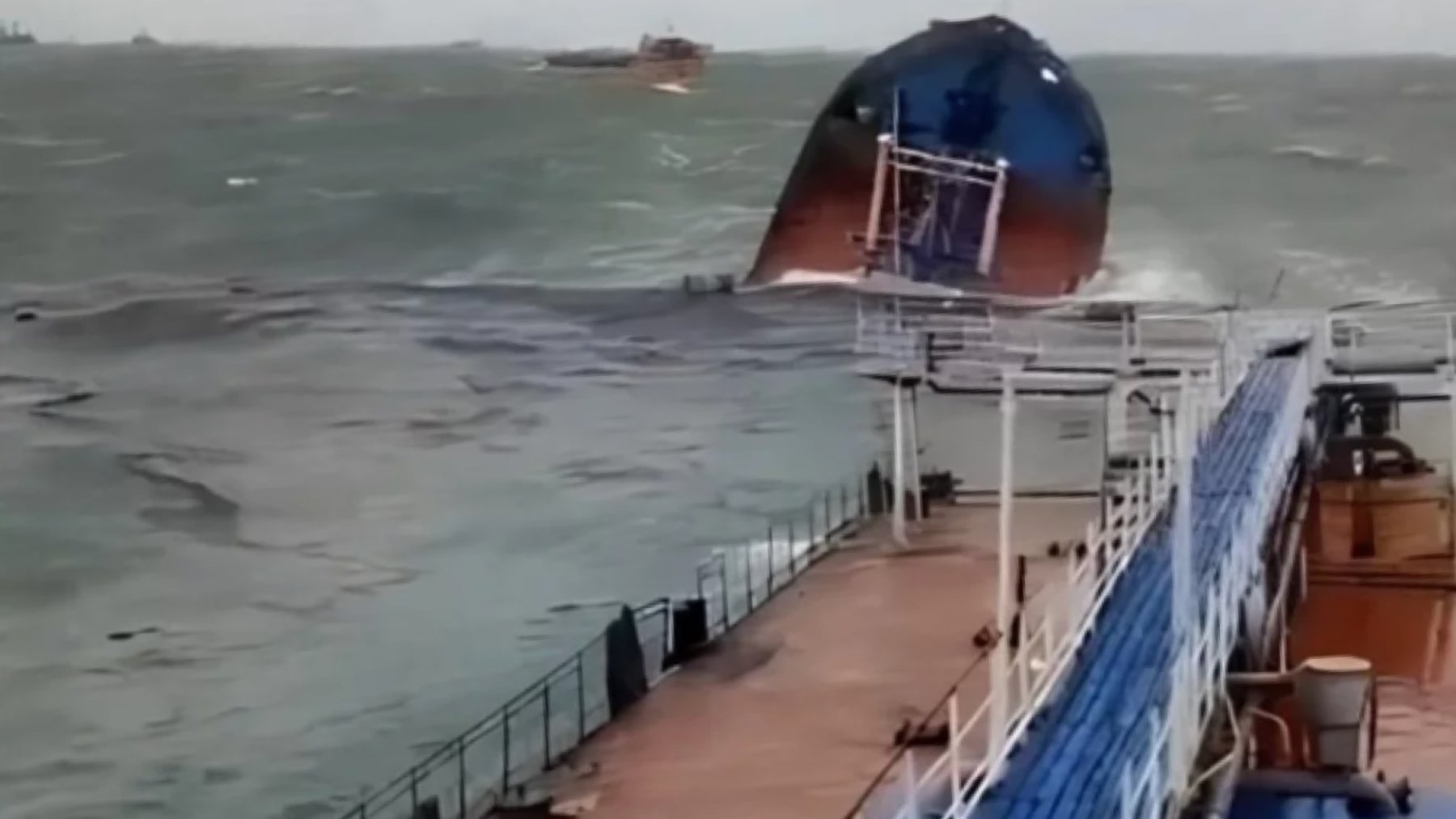
On December 15, 2024, two tankers carrying heavy fuel oil—Volgoneft-212 and Volgoneft-239—broke apart during a severe storm rated at force 7, with waves reaching up to nine meters and wind speeds exceeding 20 m/s.
Both vessels were “river-sea” class tankers, originally designed for transporting oil products along inland waterways and later retrofitted in the 1990s for limited operation in coastal marine areas under favorable weather conditions. Typically, such tankers spend the winter in river ports, as navigation ceases when rivers freeze.
Following the accident, the stern section of Volgoneft-239, carrying a crew of 14, drifted ashore and ran aground on a sandbank near Cape Panagia in Russia’s southern Krasnodar Region, near the port of Taman. Other fragments of both vessels sank in open water at depths of 20–23 meters within the port of Kavkaz.
Of the 28 crew members, 27 were rescued. One crew member from Volgoneft-212 died from hypothermia.
At the time of the accident, the tankers were carrying M-100 heavy fuel oil. Early media reports estimated that 3,000–3,700 tonnes had spilled, while Russia’s Ministry of Transport later reported that 2,400 tonnes had entered the environment out of a total cargo of 9,200 tonnes.
According to the IMO report, the total cargo amounted to 8,553 tonnes, of which 1,197.6 tonnes from Volgoneft-212 and 1,185 tonnes from Volgoneft-239 were released during the initial accident. A further 740 tonnes leaked on January 10 from the grounded stern of Volgoneft-239.
In total, approximately 3,122.5 tonnes of heavy fuel oil entered the environment.
The response effort involved several key tasks:
Removal of the grounded stern section began only on January 10—four weeks after the accident. By that time, oil had already begun leaking into the environment, resulting in an additional spill of 740 tonnes.
The operation was carried out by Russia’s Marine Rescue Service and emergency responders. A 422-meter access road was constructed, and the stern was surrounded by protective embankments and reinforced against storms.
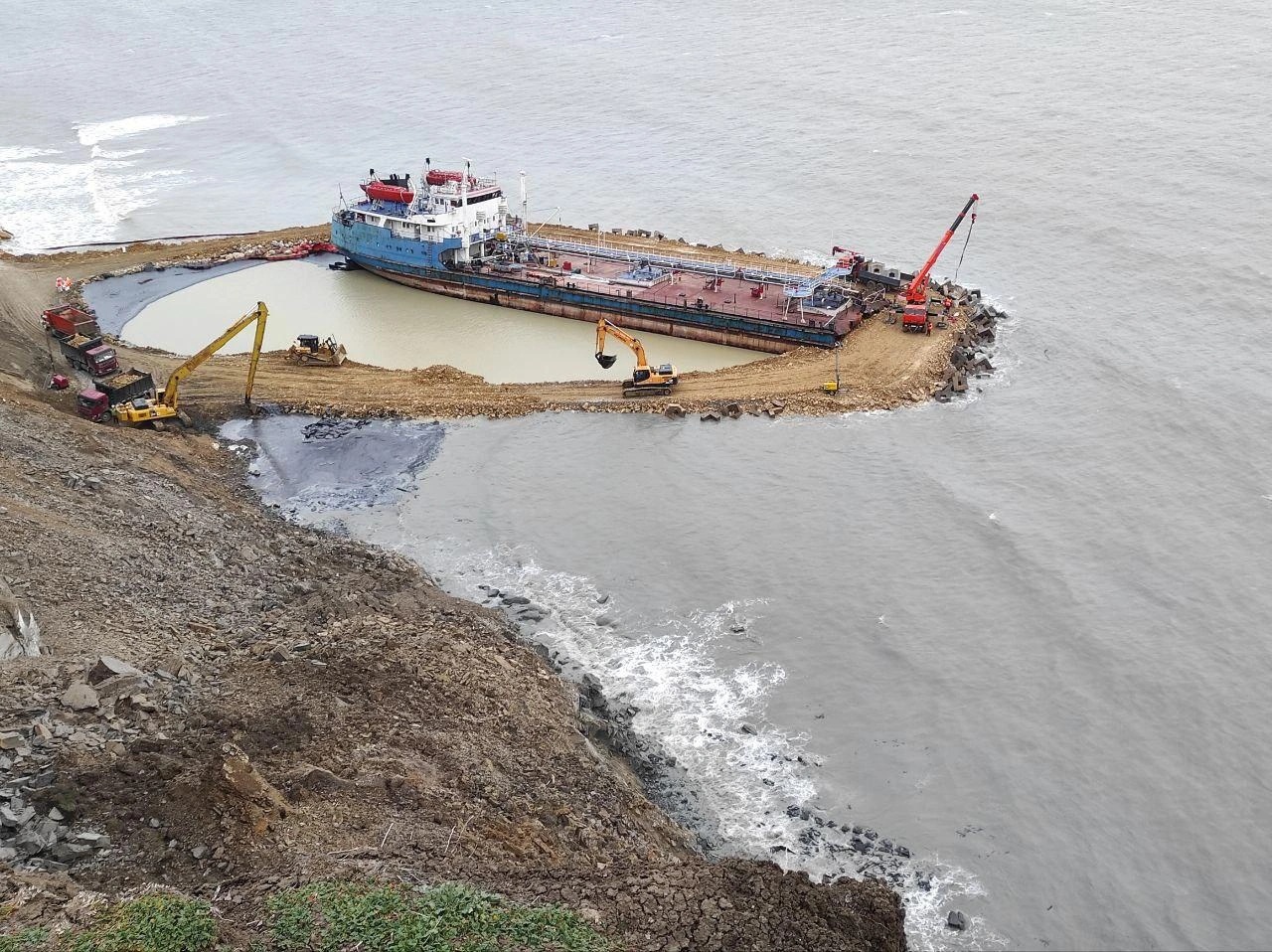
The remaining oil was removed by January 25. Between February 1 and March 9, the structure was dismantled and transported for processing.
In total, 3,279.7 tonnes of oil-contaminated sand-water mixture and 1,714.75 tonnes of oil and oil-water mixture were removed for disposal.
On December 15, 28 vessels were deployed to monitor and respond to the spill. However, only a thin surface film of lighter oil fractions was detected.
Because this film could not be effectively contained using booms and skimmers, it was treated with sorbents. Between the start of the incident and September 25, 2025, sorbents were applied over 184,433 square meters of water surface, and only 25 tonnes of oil-water mixture were recovered.
The heavier fuel oil did not rise to the surface. Due to low temperatures—around 7°C at the surface and 4°C at the seabed—it dispersed through the water column and settled on the bottom.
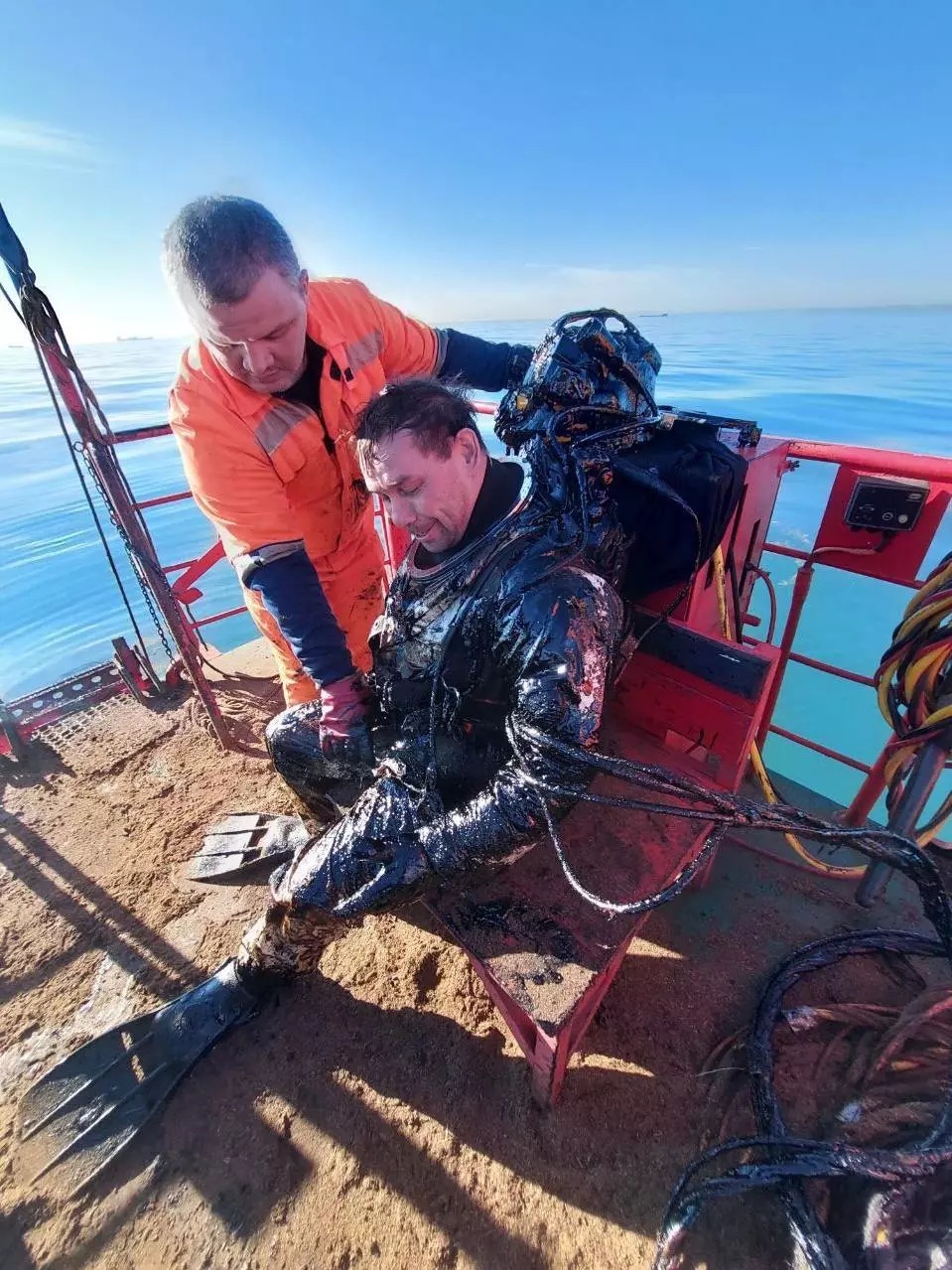
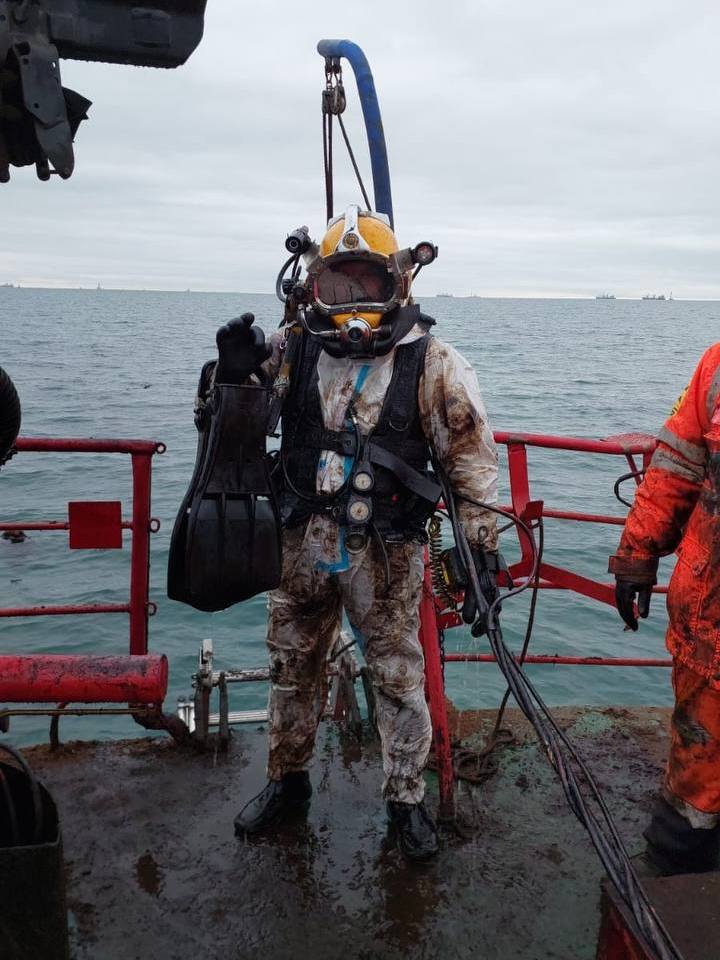
Cleanup of seabed oil deposits near Anapa and the Temryuk district began on February 12, 2025, with extensive use of divers. By September 25, approximately 1,960.9 tonnes of oil-contaminated material had been collected, much of it manually.
Following the shipwrecks, the bow sections of both tankers, the stern of Volgoneft-212, and individual fragments of the hulls came to rest on the seabed in the Kerch Strait. With the involvement of divers, their exact locations, condition, and the nature of the damage were established, including existing and potential leak points, which were subsequently sealed. Localized recovery of oil products was also carried out.
Scheduled monitoring and additional sealing of potential leak sites are still ongoing.
One of the main difficulties in carrying out this work, according to the report, was adverse weather conditions, particularly low temperatures. Diving operations began four days after the accident, on December 19. However, between December 19 and December 31, there were only five working days in total.
“Depths of up to 25 meters in the area where the fragments sank, combined with low water temperatures, reduced the time divers could remain on the seabed (when breathing air) in a no-decompression mode. Other challenges included underwater currents and low visibility (from 0.5 to 1.0 meters) caused by pollution in the accident area and ongoing storms,” the report states.
The next phase of work—preparing the hulls for lifting, including dismantling individual structural elements—was also carried out by a diving team. Beginning on May 22, monitoring operations were launched to detect and eliminate possible oil leaks. In addition to divers, three specialized vessels equipped with technical equipment and rescue personnel were involved. However, due to unfavorable weather conditions, monitoring was conducted on only 31 out of 67 calendar days. The operations themselves took place from June 6 to July 27, and no incidents or complications were reported during this period.
The next step, scheduled to be completed by October 30, involved installing protective domes—cofferdams—over the sunken bow sections and the stern of Volgoneft-212. This technology is being used in Russia for the first time in work involving shipwreck debris to extract oil products, and it carries certain risks. Indeed, the first cofferdam was installed on September 2, and, according to Kavkazsky Uzel, new heavy fuel oil discharges were recorded along approximately three kilometers of coastline on September 2 and 3. Their occurrence was also acknowledged by the official operational headquarters.
As of early February 2026, installation of the remaining structures had been completed, and all three cofferdams had been secured to the seabed with piles to withstand storm conditions.
The third stage—pumping heavy fuel oil out of the fragments of the sunken tankers—was still in the planning stage at the time the report was written. Since this phase requires favorable conditions, the work is tentatively scheduled to begin no earlier than April 2026.
The report offers limited information regarding coastal cleanup initiatives, concentrating specifically on the Temryuk district and the city of Anapa, where initial oil discharges were observed along the shoreline on December 17, 2024.
From the start of operations through August 2025, according to the report, a total of 983.465 kilometers of coastline had been cleaned (including repeat cleanups), and 180,556.384 tonnes of contaminated sand and soil had been collected. Their disposal is ongoing.
“During coastal monitoring, no new discharges of heavy fuel oil were detected,” the report states. The period during which this monitoring took place is not specified, but it can be assumed that it began in August 2025, as mentioned above, and ended on September 25—the date for which final work statistics are provided in the document.
However, as early as October, both the official operational headquarters and local volunteers repeatedly recorded new oil discharges. Additional discharges were also observed in November.
On December 12, 2025, the government commission overseeing the response to the maritime accidents reported that more than 90% of the spilled heavy fuel oil had been collected in the Kerch Strait—equivalent to 185,000 tonnes of contaminated sand and soil, of which 160,000 tonnes had already been disposed of. Shortly thereafter, however, volunteers from the “Delfiny” штаб reported on their Telegram channel that on the very next day—December 13—they collected 128 bags of oil-and-sand mixture.
In December, the Ministry of Emergency Situations (EMERCOM) reported that 29.6 kilometers of protective earth barriers had been constructed along the coastline to protect beaches. However, these defenses did not withstand winter storms; in January, volunteers reported that they had been partially destroyed and that new oil discharges had occurred.
The most recent reports from both media and volunteers documenting oil discharges date to the end of February 2026.
The report submitted to the IMO does not indicate what portion of the results achieved was due to independent volunteer efforts. At the same time, activists reported that as many as 4,000 volunteers were involved in the response within the first week alone. According to Meduza, around 60,000 people took part over the first year after the accident. Volunteers were engaged in cleaning the coastline, identifying new sites of oil contamination, and—significantly—rescuing birds affected by oil pollution.
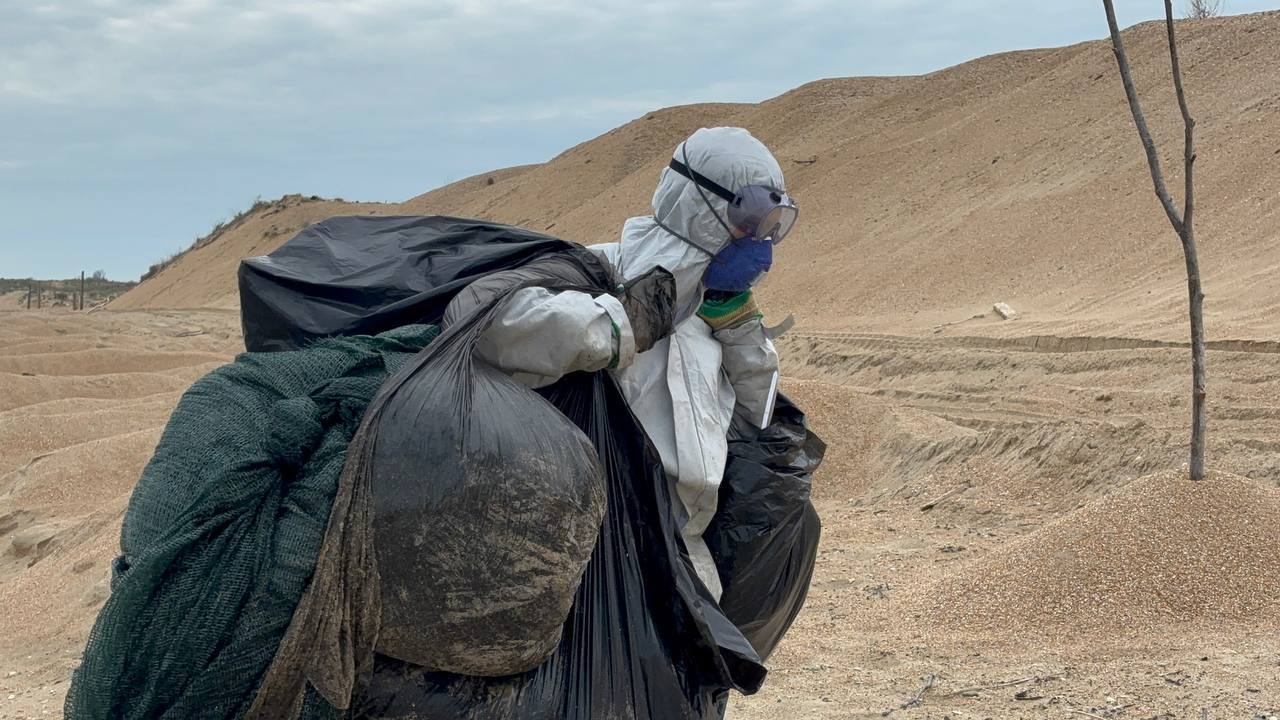
Many volunteers noted that in the first week after the accident, the burden of the response along the coastline fell largely on them, while regional and federal authorities played only a limited role. Indeed, a state of emergency at the regional level was declared only on December 25, and at the federal level on December 26.
It was also reported that, despite the large-scale involvement of volunteers, authorities were often slow to provide support. Facilities for receiving and rehabilitating rescued birds, as well as accommodation in apartments and hotels for volunteers arriving from across the country, frequently had to be arranged independently. Volunteers also often had to purchase cleanup equipment at their own expense.
One important issue not addressed in the report submitted to the IMO is how exactly the removal of collected waste was organized, and which specific facilities were responsible for its disposal.
Independent volunteers involved in the cleanup reported incidents in which, due to delays in waste removal, bags of collected material were washed back into the sea, or ended up buried under sand on the shoreline as a result of careless handling by drivers.
Local residents also criticized the placement of a temporary waste storage site in the industrial zone of the Voskresensky farmstead, which lies within a resort area.
Contaminated sand began to be transported there on December 27. Initially, authorities promised that it would be removed by April 1, 2025, but the deadline was postponed several times. On July 27, 2025, official Russian media reported that 5,000 tonnes of sand remained at the temporary site, down from a peak of 130,000 tonnes.
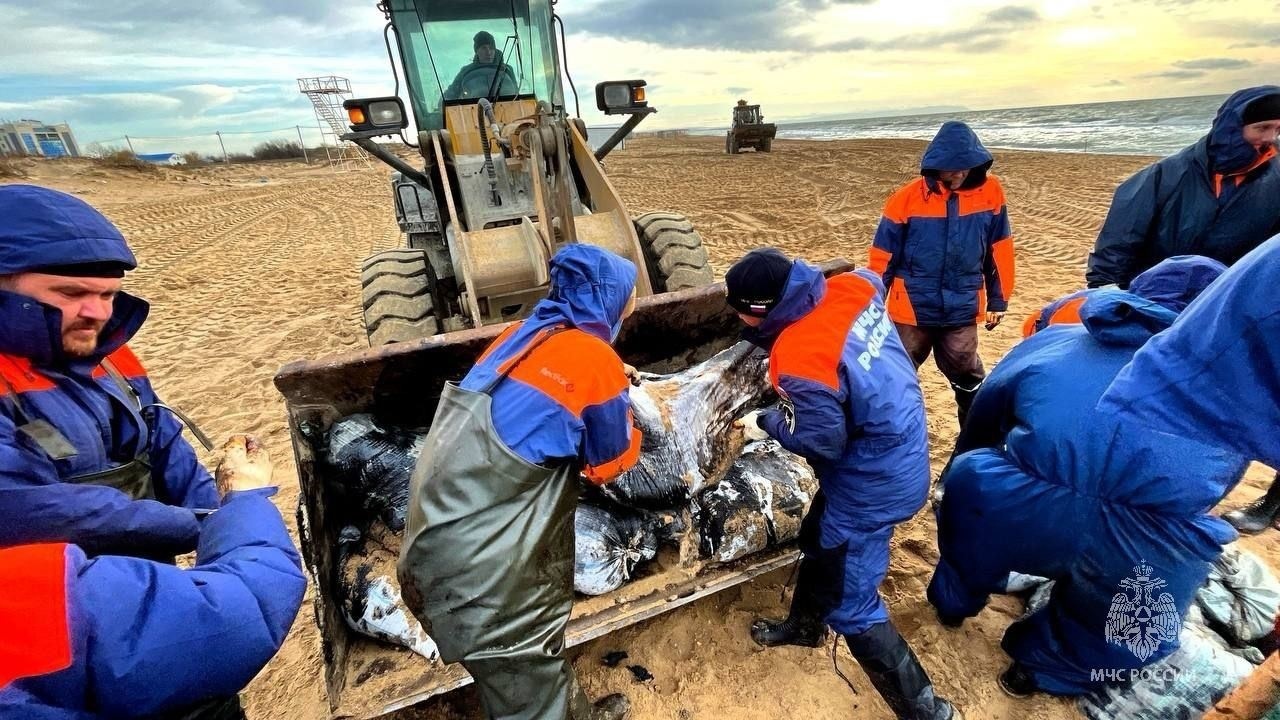
According to land registry records, the site is designated as a warehouse, where waste storage is prohibited. Nevertheless, the oil-contaminated sand was largely stored in the open air. As a result, residents reported strong petroleum odors and respiratory problems.
From Voskresensky, the sand was transported onward, primarily to disposal sites in smaller settlements across Krasnodar Krai and Rostov Region. By mid-summer 2025, the BBC had identified nine such sites.
Significant protests by local residents occurred in one of these locations—Semikarakorsk in Rostov Region—where people took to the streets to block trucks carrying contaminated sand.
The report states in its conclusions that “one of the key lessons” from the Kerch Strait accident is “the need to develop a strategy for responding to heavy fuel oil spills in cold conditions, where heavy fuel oil becomes negatively buoyant.”
This means that, as of today, no such strategy exists—and has not existed in the country. At the same time, heavy fuel oil is a regular cargo along the Northern Sea Route. In addition, heavy fuel oil continues to be used as fuel on most vessels operating along the NSR. The M-100 fuel carried by the Volgoneft tankers is itself one of the standard grades of heavy marine fuel.
The Kerch Strait accident clearly demonstrates that the responsible services were entirely unprepared for such a situation, despite the proximity of the accident to a port where rescue vessels, a Marine Rescue Service center, and EMERCOM facilities were located. As a result, oil discharges were detected not only in the area around Anapa and the nearby Temryuk district, but also—after bypassing occupied Crimea—reached the western coast of the peninsula, including Sevastopol and Yevpatoria, and further on to Odesa, more than 600 kilometers from the site of the shipwrecks. Oil contamination continued to be recorded onshore as late as the end of February 2026—more than a year after the accident. The total affected marine area is estimated at 30,000–40,000 square kilometers.
In the event of a similar accident along the Northern Sea Route, the number of rescue vessels, specialized equipment, and personnel would be significantly lower, and the effectiveness of any response operation correspondingly reduced.
In several places, the report identifies low water temperatures as one of the main obstacles to spill response.
For obvious reasons, this factor would play an even more significant role in Arctic conditions. Even in summer, water temperatures in the southern parts of the Kara Sea rarely exceed 6°C. At the same time, the Novoportovskoye oil field—located on the shores of this sea—accounts for a large share of the oil transported along the Northern Sea Route. In other sections of the route, such as the Laptev Sea or the East Siberian Sea, maximum surface water temperatures in summer typically reach only 10°C and 7°C respectively and drop below zero in winter.
Another major obstacle cited in the report is the depth of up to 25 meters at the wreck sites. On the continental shelf of the Kara Sea, depths can reach 100 meters, while in the Laptev Sea they can reach 50 meters.
It remains unclear how divers—who carried out a substantial portion of the work at sea, including the direct collection of contaminated material from the seabed—would operate under such temperatures and depths, or how effective untested technologies, such as the installation of cofferdams for extracting oil from sunken vessel fragments, would be. It should be recalled that cofferdams were used for this purpose in Russia for the first time during the Kerch Strait accident.
Another key difference between the Northern Sea Route and the Black Sea is the presence of extensive ice cover, which may make such operations impossible. If oil products become trapped in ice, their recovery becomes virtually unfeasible due to the enormous volume of contaminated ice and the logistical difficulty of transporting it.
While in the Kerch Strait the port and rescue infrastructure were located just a few kilometers from the accident site—yet still failed to prevent a fatality and widespread shoreline contamination—there are only 11 rescue centers along Russia’s entire Arctic coastline, seven of them located along the Northern Sea Route. The distance between two neighboring centers, in Pevek and Tiksi, is approximately 1,500 kilometers by air and around 2,000 kilometers by sea.
According to the report, even during shoreline cleanup, around 35,150 tonnes out of 180,556 tonnes of contaminated material were collected manually—in areas inaccessible to machinery. How such manual cleanup operations would be carried out in the Far North, where rescue infrastructure may be hundreds of kilometers away, and how many volunteers would be willing or able to travel there to assist, remains unclear.
The experience of the Volgoneft tankers themselves is also instructive. These vessels belonged to Russian companies, had undergone the required technical inspections—at least on paper—and their positions and routes were known and not concealed. Nevertheless, their age, negligence, and operation under unsuitable conditions led to a major accident.
At the same time, Russia is rapidly expanding its shadow fleet in the Arctic. While 13 such vessels were recorded on the Northern Sea Route in 2024, that number had risen to 100 in 2025.
Shadow fleet vessels often switch off their transponders to conceal their true location, and at least one case is known in which information about a vessel’s transit along the NSR in 2025 was deliberately hidden. In the event of an accident, such practices could prevent rescue services from locating the incident in time.

In addition, shadow fleet vessels frequently change flags and ownership, often lack adequate insurance, and many are more than 15 years old. At the same time, half of all tankers authorized to use the Northern Sea Route in 2025—including both shadow fleet and officially registered vessels—are over 25 years old, and three are more than 50 years old.
The tanker Nikolay Zhivotkevich, a single-hull vessel also authorized to transit the NSR in 2025, turns 49 this year. Single-hull tankers pose a significantly greater environmental risk than double-hull vessels, as they lack an external protective barrier. The Kerch Strait disaster—where both Volgoneft-212 and Volgoneft-239 broke apart in a storm—clearly illustrates how accidents involving such vessels can unfold and the consequences they can entail.
In 2025, at least 35 medium- and large-tonnage single-hull tankers were granted permission to operate along the Northern Sea Route.
Thus, the accident involving the Volgoneft tankers demonstrates that Russian emergency response services were completely unprepared to deal with a heavy fuel oil spill even from relatively small vessels, under comparatively favorable climatic conditions (compared to winter conditions in other Russian seas), in shallow waters, and despite the presence of a Marine Rescue Service emergency center within 100 kilometers of the wreck sites.
The report states that most failures and delays were primarily due to the specific behavior of heavy fuel oil in cold water. However, the delayed removal of oil from the grounded stern of Volgoneft-239, which led to additional environmental contamination that could have been avoided, along with problems in shoreline cleanup, waste disposal, and the use of the tankers themselves under unsuitable conditions, all point to a more systemic problem.
In the extreme climatic conditions of Arctic seas, combined with the limited emergency response infrastructure characteristic of the Northern Sea Route, even the consequences of a smaller spill would be far more difficult to address.
In this news digest, we monitor events that impact the environment in the Russian Arctic
Three Narratives Driving Russian Disinformation on the Northern Sea Route Benjamin Schulte, lead analyst at The American Sunlight Project, present...
In this news digest, we monitor events that impact the environment in the Russian Arctic
After Russia’s full-scale invasion of Ukraine in February 2022, Bellona ceased its activities in the aggressor country. On 18 April 2023, Russia’s Pr...