Bellona Nuclear Digest. December 2025
A monthly analytical review offering expert insight into key developments in nuclear policy, economics, safety, and technology related to the activities of Rosatom in Russia, Ukraine, and other countries
News
Publish date: 13/03/2026
News
After Russia’s full-scale invasion of Ukraine in February 2022, Bellona ceased its activities in the aggressor country. On 18 April 2023, Russia’s Prosecutor General’s Office declared Bellona an undesirable organization in the Russian Federation.
Nevertheless, we continue to systematically monitor and analyze developments related to Rosatom’s activities that we believe are of interest to an international audience. The aim of this review is to assess the scale of Russia’s international influence in the nuclear sector, as well as the associated political, economic, and environmental risks.
This digest covers events from January 2026.
You can follow the links to read the three most recent digests covering December, November and September-October 2025. Subscribe to our mailing list to stay informed about future issues. Download a PDF of this digest here.
NUCLEAR EVENTS IN UKRAINE AND THE WAR
1. The Zaporizhzhia NPP and other nuclear facilities in Ukraine. Events of January 2026
1.1. Nuclear diplomacy events
1.2. Military threats at the ZNPP and other nuclear facilities of Ukraine
1.3. Operational status of the ZNPP
2. Claims against Ukraine’s Energomashspetsstal over supplies for the Lider icebreaker
INTERNATIONAL NUCLEAR EVENTS AND THEIR CONNECTION WITH RUSSIA
3. US Department of Energy allocates $2.7 billion to expand uranium enrichment capacity
– The funding will support the expansion of low-enriched uranium (LEU) and HALEU production
– Centrus, General Matter, and Orano USA are among the companies receiving the funding
4. Germany Imported Nuclear-Grade Zirconium from Russia
5. China Purchased a Record Amount of Enriched Uranium from Russia in 2025
6. Kazakhstan’s New Uranium Mining Rules and Their Impact on Projects
– The contract of a joint venture involving Uranium One for the Akdala deposit expires in March 2026
– Canadian company Laramide has terminated its agreement on the Chu-Sarysu project following changes to Kazakhstan’s subsoil use legislation
EVENTS IN THE RUSSIAN NUCLEAR SECTOR AND IN ROSATOM PROJECTS ABROAD
7. Likhachev Summarized Rosatom’s Results for 2025
8. Rosatom Unit Begins Full-Service Maintenance of GE and Siemens Gas Turbines
9. Rosatom’s Projects Abroad in Brief
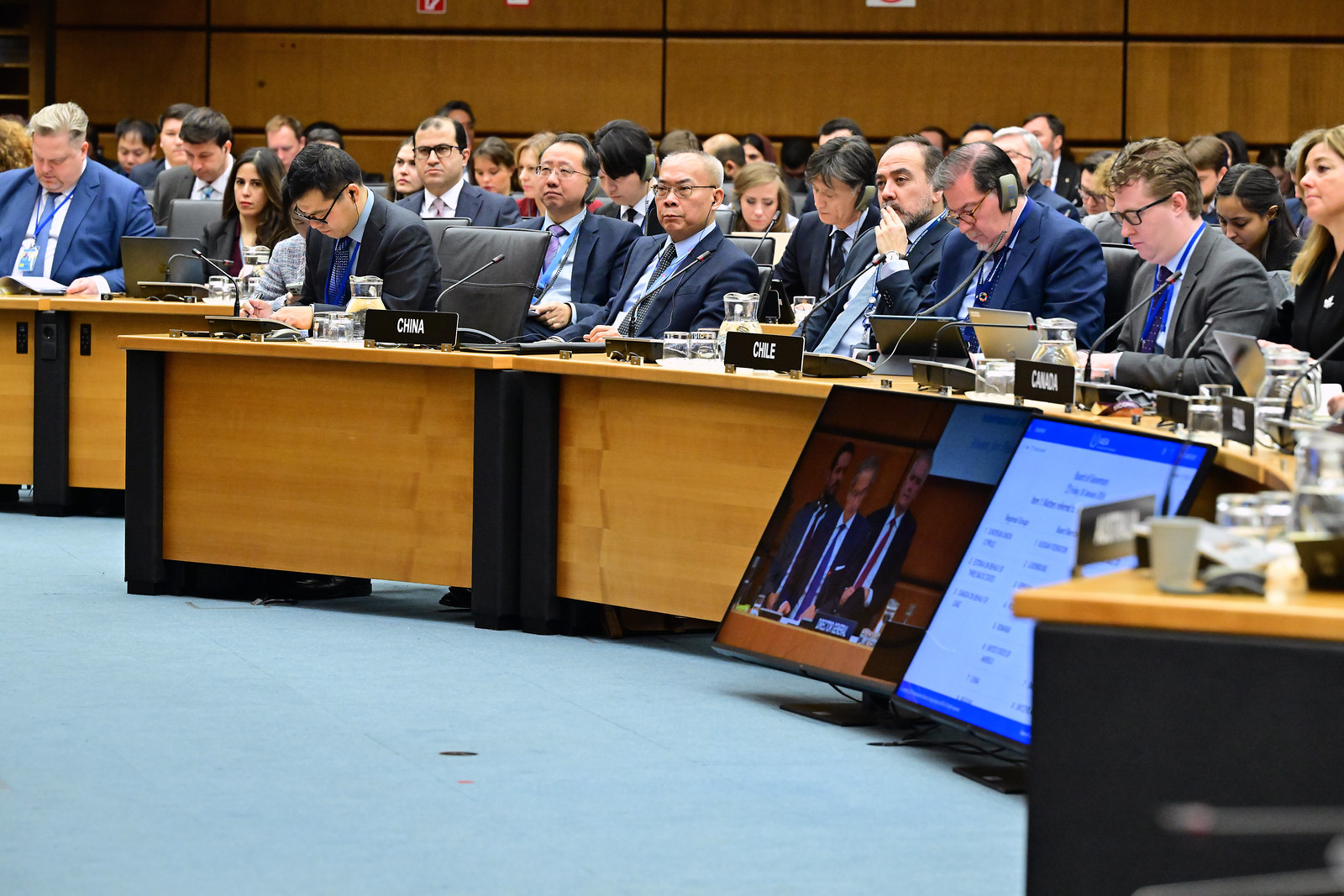
On January 30, the IAEA Board of Governors held a special meeting at the request of the Netherlands regarding the latest developments in Ukraine and their nuclear safety implications. The meeting took place amid continuing Russian attacks on Ukraine’s energy infrastructure, including electrical substations supplying external power to Ukrainian NPPs, including the ZNPP.
Ukraine raised the issue of suspending Russia’s membership in the IAEA Board of Governors and called for amendments to the IAEA Statute to limit the rights of a state deliberately undermining nuclear safety.
Russia’s Permanent Representative to the international organizations in Vienna, Mikhail Ulyanov, as usual stated that issues related to energy infrastructure do not fall within the competence of the Board of Governors.
«The IAEA’s approach to Russia’s war against Ukraine has remained unchanged throughout the conflict: the Agency relies on diplomatic statements while lacking the capacity for real action. At one of the Board of Governors meetings, IAEA Director General Rafael Mariano Grossi noted: “Diplomacy is hard, but it is never impossible. Nuclear diplomacy is even harder, but it is never impossible.”
However, developments in Ukraine show that in wartime the IAEA’s capabilities — and its diplomacy — are extremely limited. Ukraine not only understands this but also faces the consequences of such institutional weakness every day. Over four years of war, numerous appeals have been submitted to various IAEA bodies. These appeals did not even call for the liberation of the occupied Zaporizhzhia NPP, but at least for the prevention of nuclear-risk-creating actions — in particular, attacks on key energy nodes and non-nuclear infrastructure in Ukraine.
In practice, these appeals have produced no concrete results. The response has been limited to discussions and statements by the IAEA, along with provocative comments from Russian officials such as Russia’s Permanent Representative in Vienna, Mikhail Ulyanov, or Rosatom Director General Alexey Likhachev, who make them constantly. This is what the “nuclear diplomacy” that Rafael Mariano Grossi periodically refers to looks like today.»

Aleksander Nikitin
Special Nuclear Advisor
From January 2 to 19, the ZNPP was disconnected from its 330 kV Ferrosplavna-1 backup line due to military activity. During this period, the plant received external electricity through its only remaining power line — the 750 kV Dniprovska line (IAEA Updates 336, 337, 338).
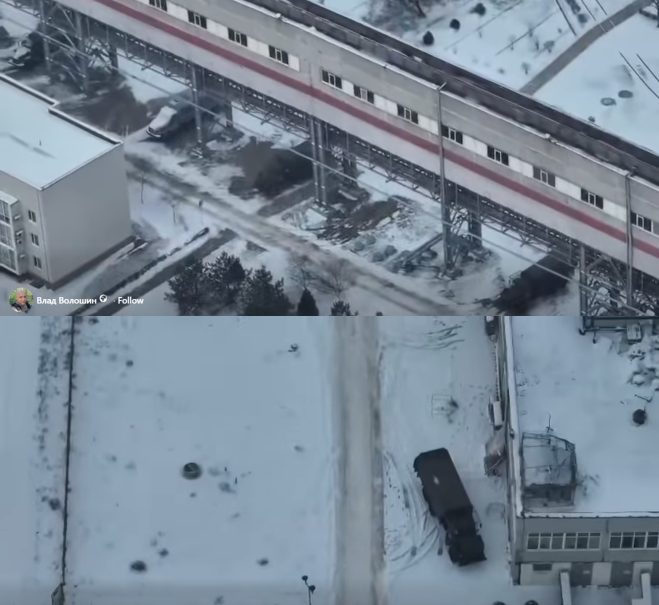
On January 15, Energoatom published reconnaissance UAV footage of the Zaporizhzhia NPP, citing Vladyslav Voloshyn, spokesperson for Ukraine’s Southern Defense Forces. The video shows military vehicles on the plant’s premises. The statement also noted that Russia is using the ZNPP site and facilities as a training ground for UAV operators. There is also information that multiple launch rocket systems have been used to strike the Zaporizhzhia region from the plant’s territory.
(Ukraine’s Defense Intelligence reported this already in April 2024. At the time, the IAEA stated that it had no evidence of drone launches or launch sites within the plant’s perimeter.)
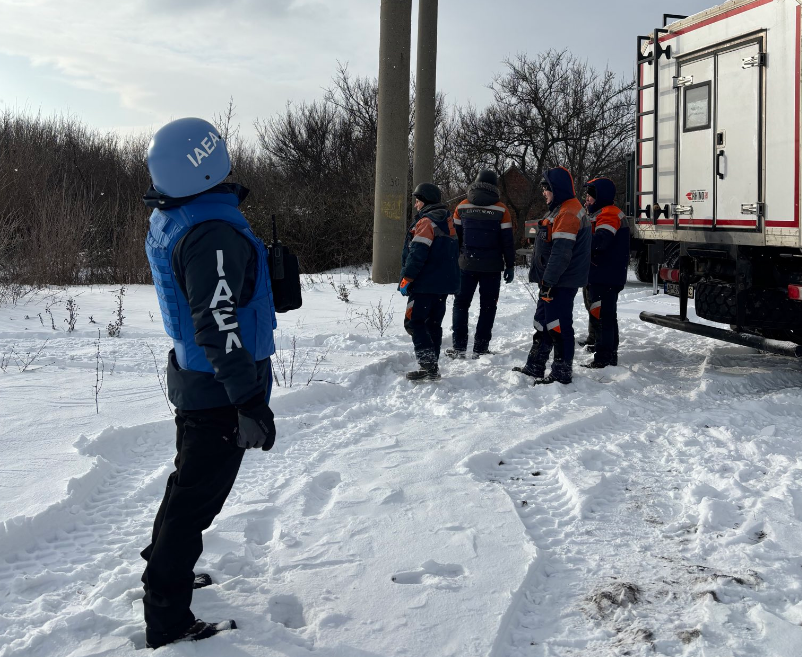
Throughout January, IAEA teams at Ukraine’s operating NPPs — Khmelnytskyi, Rivne, and South Ukraine — as well as at the Chernobyl NPP site reported that strikes on energy infrastructure continued to affect plant operations and nuclear safety due to power line outages and the need to reduce power output. They also reported sightings of drones near Ukrainian NPPs (IAEA Updates 336, 337, 338, 339).
On January 26, three IAEA teams again went to Ukraine to assess the condition of electrical substations critical to the stable operation of NPPs.
On January 29, representatives of the Russian administration of the ZNPP reported that the plant had begun its 2026 maintenance campaign. The plan includes major overhauls of the reactor units, including reactor pressure vessel metal inspections. The main work will be carried out by Atomenergoremont.
«Periodic disconnections of power lines supplying electricity to spent fuel cooling systems and other critical plant systems are unlikely in themselves to lead to a nuclear incident. The ZNPP reactor units remain in a cold shutdown mode, a condition in which the development of uncontrolled nuclear reactions capable of causing a nuclear accident is physically impossible.
Nevertheless, the recurring loss of external power — which has effectively become a constant factor in plant operations — increases the overall level of technological risk. In an adverse scenario, the emergence of radiologically hazardous conditions or emergency situations cannot be completely ruled out, primarily due to potential disruptions to the normal operation of cooling systems.
The presence of drones at the plant is also not unexpected. From the outset, it was clear that Russia’s seizure of the ZNPP was not driven by economic considerations related to electricity generation. Control of the plant is primarily viewed as an instrument of political and military pressure, including the use of the nuclear factor as a tool of coercion, as well as the creation of conditions for various military incidents or provocations.
In this context, the deployment of drones and other military equipment at the plant logically fits into the broader strategy of using the facility as a tool of pressure. At the same time, maintenance campaigns, technical activities, and the issuance of so-called “licenses,” which Rosatom representatives regularly refer to, appear largely demonstrative in nature. Without a political settlement between the parties to the conflict, such actions are unlikely to change the situation at the plant, and the prospects for reaching such agreements currently remain uncertain.»
Aleksander Nikitin
Special Nuclear Advisor
A court in St. Petersburg ordered Ukraine’s Energomashspetsstal to return advance payments under contracts for castings intended for the Project 10510 Lider nuclear icebreaker
In January, it was reported that the St. Petersburg Arbitration Court had issued a ruling on December 30, 2025, ordering PJSC Energomashspetsstal of Kramatorsk, Ukraine, to refund an advance payment to the St. Petersburg-based Central Design Bureau of Machine Building (CDBMB). The advance had been paid in April 2021 under a contract for the manufacture and supply of cast brackets for the outer propeller shafts of the Project 10510 Lider nuclear icebreaker Rossiya, currently under construction.
Under the court’s decision, Energomashspetsstal must return 185 million rubles (about $2.39 million at the exchange rate on the date of payment) in advance payments and pay an additional 1.4 million rubles (about $17,700) in state duty.
Earlier, in August 2025, a Russian court issued a similar ruling under another contract for the supply of cast brackets for the rudder stock and ice teeth for the Lider icebreaker. The ruling concerned the recovery from the Ukrainian plant of an advance payment of 93.7 million rubles (about $1.21 million at the exchange rate on the date of payment) as well as 0.9 million rubles (about $11,000) in state duty.
It was also reported that the Ukrainian side did not participate in the court proceedings.
Russian experts note that although the court ruling is effectively unenforceable, Russian companies still need to file such claims, as a court decision formally establishes the company’s legal position for the future.
It should be noted that the construction of the lead icebreaker of the Lider project was originally scheduled for completion in 2027, but the deadline has now been moved to 2030. Possible delays were already discussed in 2023, with the disruption of supplies of the large hull castings mentioned above cited as one of the reasons.
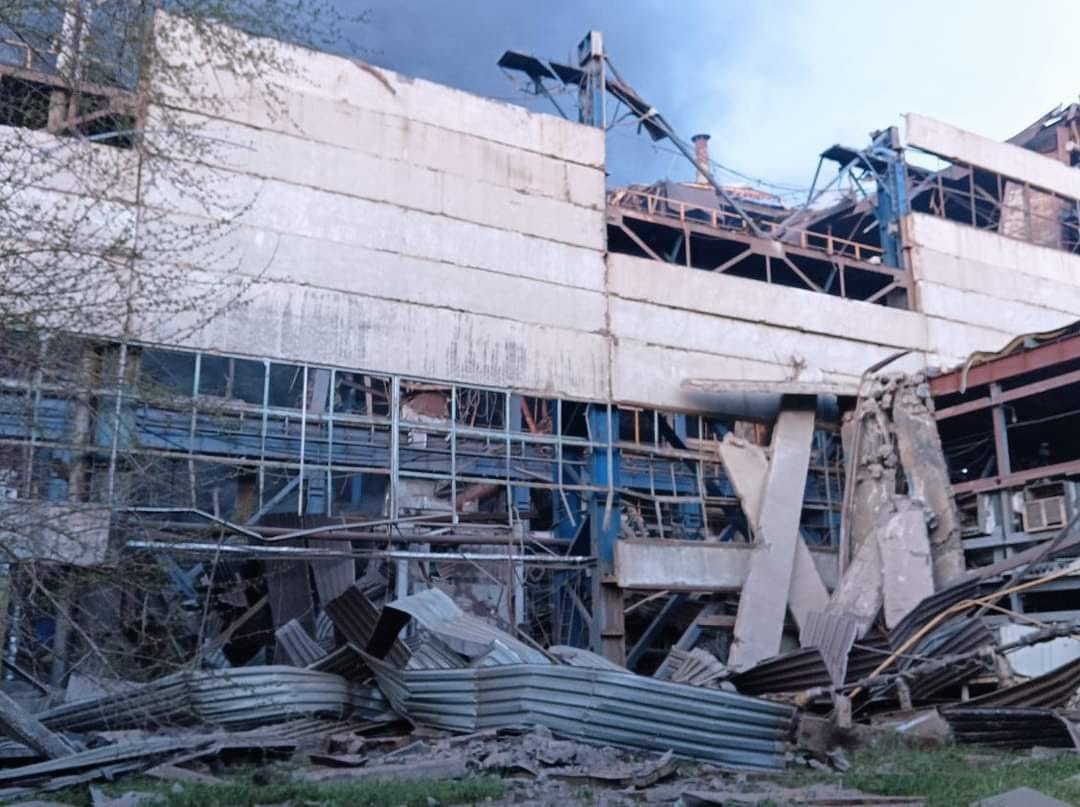
On May 5, 2022, the industrial facilities of the Energomashspetsstal plant were damaged by Russian missile strikes on Kramatorsk. The plant was the Ukrainian branch of Rosatom’s machine-building division, Atomenergomash, and produced, among other things, forgings for equipment for the nuclear island of reactor units under construction at the Kudankulam (India), Akkuyu (Turkey), Xudapu (China), and Tianwan (China) NPPs.
Bankruptcy proceedings against the enterprise are currently underway in Ukraine.
On January 5, the US Department of Energy announced $2.7 billion in funding over the next ten years to strengthen domestic uranium enrichment capacity. The funding will expand low-enriched uranium (LEU) production and support the development of supply chains and technologies for high-assay low-enriched uranium (HALEU), which is needed for advanced and next-generation reactors.
Two companies — American Centrifuge Operating (a subsidiary of Centrus Energy) and General Matter — will each receive $900 million to build capacity for HALEU production.
(It should be noted that in October 2024, the list of companies eligible to take part in the tender for HALEU enrichment and storage services also included Louisiana Energy Services — the operator of Urenco USA’s centrifuge enrichment plant — and Orano Federal Services, a subsidiary of Orano USA.)
Currently, Russia is the only producer of HALEU in commercial quantities. Funding for domestic production of this fuel in the United States was included in the US law mandating a complete ban on uranium imports from Russia by 2028.
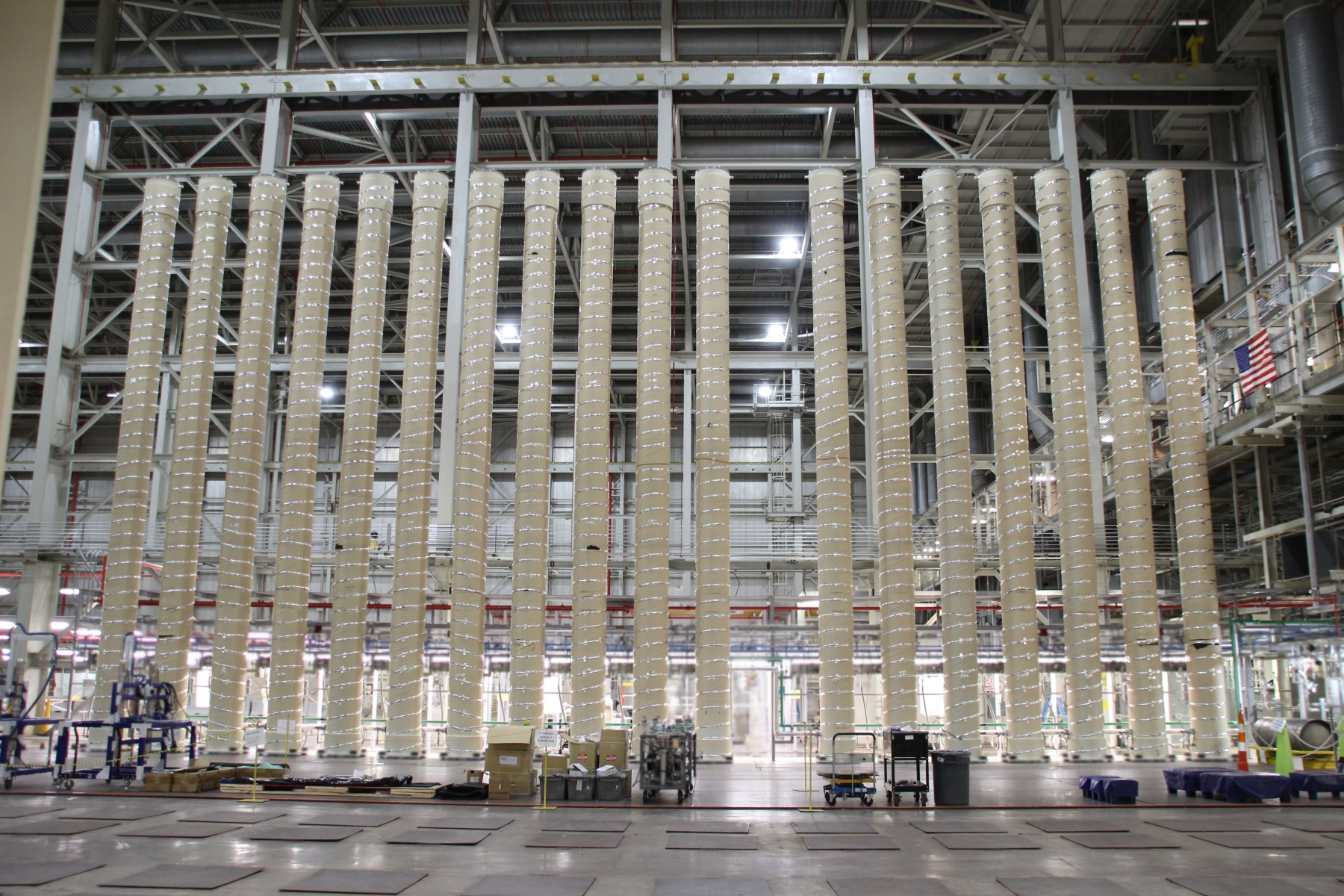
Centrus has been producing HALEU since 2023 at a demonstration cascade in Piketon, Ohio, under a contract with the US government. The company plans to expand this production to commercial scale. On January 19, it announced the start of centrifuge manufacturing for this purpose. The first new production capacity is expected to come online in 2029 and will be used to produce LEU as well as to increase HALEU output.
As for the US startup General Matter, the company signed a lease agreement with the US Department of Energy in August 2025 to build an enrichment facility at the site of the former gaseous diffusion plant in Paducah, Kentucky. Choosing this site will allow the company to use existing infrastructure and accelerate the process of obtaining commercial licenses. Construction of the facility is expected to begin in 2026, with operations planned by the end of the decade. Without disclosing details, the company says it will use a novel, scalable, and cost-competitive technology.
Another $900 million will be allocated by the US Department of Energy to Orano Federal Services to expand domestic LEU production capacity. Earlier, in 2024, Orano Federal Services was included in a list of six companies selected by the US Department of Energy as potential participants in tenders for LEU production services.
In 2024, Orano USA announced plans to build a uranium enrichment plant using centrifuge technology in Oak Ridge, Tennessee — the $5 billion IKE project. Production is scheduled to begin in 2031.
An additional $28 million has been allocated by the US government to Global Laser Enrichment, partly owned by the Canadian uranium company Cameco, to develop “next-generation uranium enrichment technologies.”
Global Laser Enrichment holds a license for patented laser uranium enrichment technology and is conducting a demonstration campaign at its test facility in Wilmington, North Carolina. The company plans to build a commercial facility for LEU production with a capacity of up to 6 million SWU per year on a plot of land acquired in 2024 adjacent to the former gaseous diffusion plant in Paducah mentioned above, and to begin re-enriching the depleted uranium stored there no later than 2030.
«The administration of Donald Trump continues the policy of its predecessor aimed at expanding domestic uranium enrichment capacity and reducing dependence on Russia. Federal funding for the expansion and construction of enrichment facilities in the United States, along with the existing legislative ban on purchases of Russian enriched uranium starting in 2028, is shaping the future US uranium industry.
Over the past two years (2024 and 2025), the United States has already purchased almost half as much enriched uranium from Russia as in 2022 and 2023. Russia has lost its position as the leading foreign supplier to the United States, with European companies, particularly Urenco, taking the lead.
However, it is still too early to say that this represents a firm trend indicating a steady reduction in dependence. As long as such purchases remain legal and permitted, their amount could increase in 2026 and 2027.
There is little doubt that European and US uranium enrichment capacity will grow in the coming years. However, it remains an open question whether Western producers will be able to fully replace Russian enrichment services for the United States by 2028.
This task could become more complicated if the EU introduces similar restrictions on Russian enriched uranium supplies within the next year as part of future sanctions packages against Russia. In such a scenario, ensuring sufficient enrichment services for Western countries may require not only limits on purchases from Russia but also support measures for European producers, similar to those being implemented in the United States.»

Dmitry Gorchakov
Nuclear advisor
In January, Russian media, citing Eurostat data, reported that in November 2025 Germany imported 8.5 metric tons of zirconium from Russia worth €3.2 million.
Eurostat statistics for 2025 now show, in addition to the November shipment mentioned above, another small batch in December. The data also indicate that in recent years this is the only instance in which Germany imported from Russia goods specified as “zirconium articles containing less than 1 part hafnium per 500 parts zirconium by weight,” i.e., nuclear-grade zirconium.
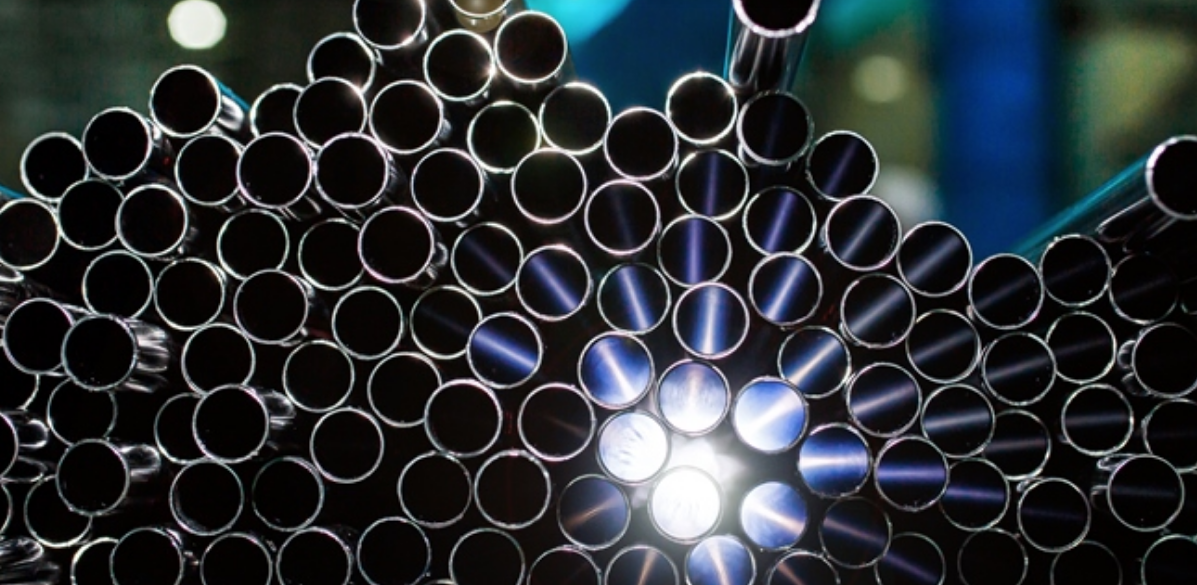
Such zirconium is used, for example, to manufacture fuel rod cladding. In this case, it can be assumed that the supplier was a Rosatom-affiliated entity, while the buyer was most likely Framatome’s fuel fabrication plant in Lingen.
Previously, aside from Germany, only France had purchased zirconium under the same customs code — 622 kg in November 2023 (worth about €238,000).
For comparison, among countries that host nuclear fuel fabrication plants, the following purchases of zirconium of this grade were recorded in 2025:
The nuclear fuel assembly plant in Lingen is owned by the French company Framatome. The company plans to launch production of hexagonal fuel assemblies under a Rosatom license as part of a joint venture for European VVER-1000 reactors of Soviet design. A decision on the license application to reconfigure the plant, which has been under review by the German government for many months, is expected in the coming weeks.
«Such shipments of nuclear-grade materials show that Europe’s dependence on Russia in the nuclear sector is not limited to uranium and nuclear fuel. However, according to customs data, since 2022 such a large shipment of zirconium from Russia has been recorded only once.
It is highly likely that the zirconium products imported from Russia to Germany were intended for Framatome’s plant in Lingen and may be linked to the planned launch of fuel fabrication under a Russian license. It is also possible that supplies of structural materials for fuel assemblies are included in the package of agreements between the Russian and French partners within their cooperation on licensed fuel assembly production.
According to our estimates, this amount of zirconium is sufficient to manufacture approximately 40–50 fuel assemblies for VVER-1000 reactors, which roughly corresponds to an annual supply for one reactor.»
Dmitry Gorchakov
Nuclear advisor
Journalists from RIA Novosti analyzed Chinese customs data and concluded that China increased its purchases of enriched uranium from Russia in 2025. Over the course of the year, the value of these shipments reached $1.19 billion. This is 40% higher than in 2024 and represents a record level for China’s imports of enriched uranium from Russia.
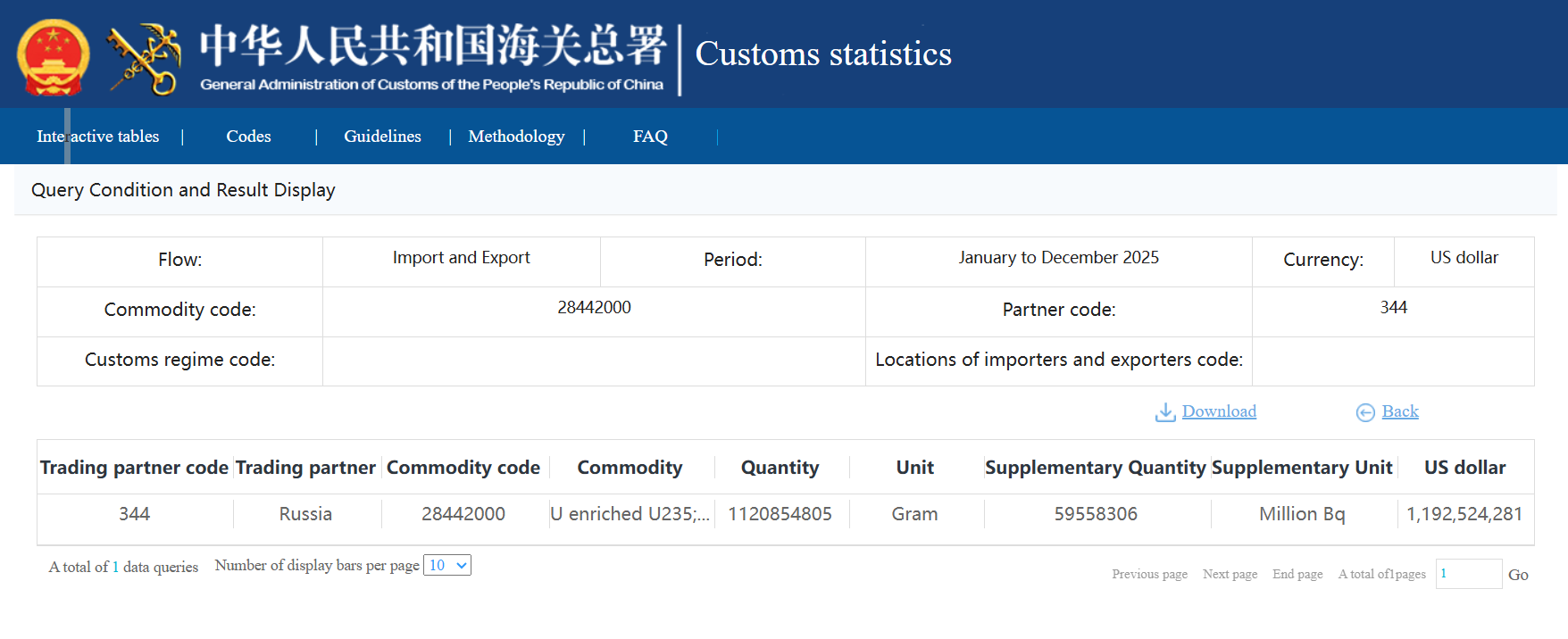
Indeed, Chinese customs data under code 28442000 show that in 2025 shipments from Russia to China amounted to 1,121 metric tons of enriched uranium at an average price of $1,060 per kg. In 2024, deliveries totaled 748 metric tons at an average price of $1,140 per kg, compared with 467 metric tons at $890 per kg in 2023.
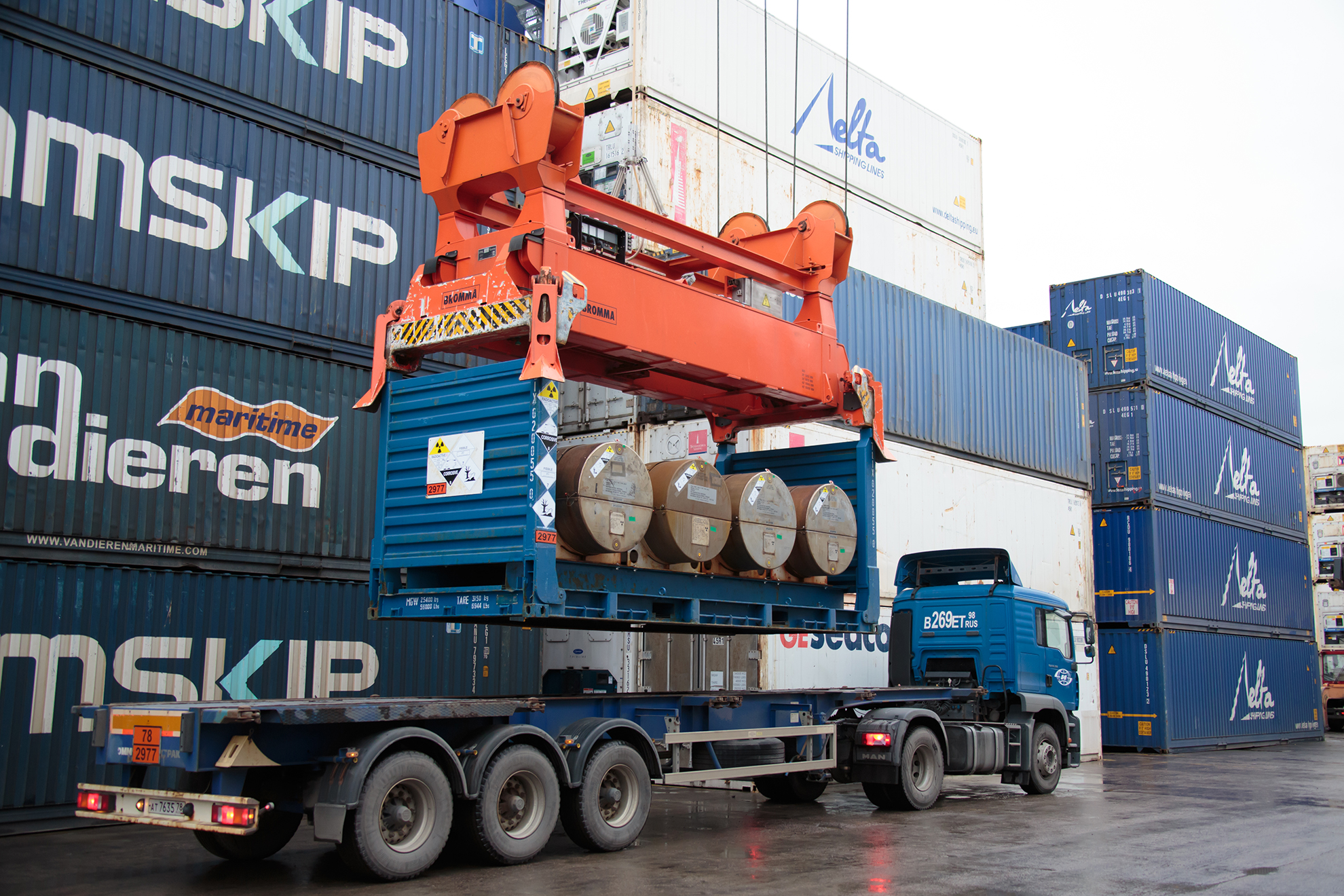
«China did indeed purchase a record amount of enriched uranium from Russia in 2025. Over the past four years, since 2022, China has significantly increased its purchases, becoming the main buyer of this Russian product, surpassing both the United States and the EU, which had previously been the primary customers. However, according to Comtrade data, Russia consistently sells enriched uranium to China at prices almost twice as low as those charged to Western countries (about $1 million per tonne compared with roughly $2 million per tonne).»
Dmitry Gorchakov
Nuclear advisor
On February 2, Kazatomprom announced that the contract for exploration and uranium production at the Akdala deposit will expire on March 28, 2026, after which the deposit will be transferred to Kazatomprom’s trust management.
The subsoil use rights under this contract are held by JV “Southern Mining and Chemical Company” LLP, 70% of which is owned by Uranium One, a Rosatom subsidiary. At the time the contract expires, the deposit is expected to contain about 1,500 metric tons of remaining uranium reserves that will require continued extraction until 2030, given the current production rate. Kazatomprom is therefore considering applying for a new subsoil use contract to ensure continued operations.
It should be recalled that at the end of 2025 Kazakhstan changed the conditions for granting subsoil use rights under new contracts, as well as for extending the uranium production period under previously concluded ones. Under the amendments, when signing contracts for the development of deposits, Kazatomprom must hold at least 70% of the legal entities granted mining rights, while in the case of extending an existing contract the share must be at least 90% (unless the foreign partner transfers uranium conversion and enrichment technologies to Kazakhstan).
The amendments also introduced a significant increase in the minimum ownership stake that the national company Kazatomprom must hold in any newly discovered uranium resources.
On January 20, the Canadian company Laramide, which specializes in uranium exploration and development, announced the termination of an option agreement with the Kazakhstan-registered company Aral Resources for the Chu-Sarysu project. The company said the decision was driven by changes in Kazakhstan’s subsoil use legislation, under which the country has “effectively nationalized future uranium exploration, making direct foreign investment in this sector economically unviable.”
Commenting on the statement, Kazatomprom said it has no and has never had joint ventures, contractual relations, or projects with Laramide Resources or Aral Resources. It also noted that Aral Resources’ exploration licenses covered solid mineral resources and did not grant exclusive rights to any potential uranium resources. Kazatomprom has historically held priority rights to uranium production in Kazakhstan, and therefore any subsoil user conducting exploration that might involve uranium would have been aware of the regulatory constraints regarding a potential transition to uranium mining.
«We continue to monitor developments in Kazakhstan’s uranium mining sector, where many global players — including Russia and China — have significant stakes. Following the recent legislative changes, as we noted earlier, there is a possibility that in the near future Russia may seek — or be compelled — to establish uranium enrichment and conversion facilities in Kazakhstan.
At the same time, since 2022 Russia has been increasing its supplies of enriched uranium to Kazakhstan (from about 30 metric tons in 2022 to more than 200 metric tons in 2024, according to Comtrade). In Kazakhstan, this uranium may be sent to the IAEA Low Enriched Uranium (LEU) Bank, used at the Ulba-FA fuel fabrication plant to produce nuclear fuel for China, or re-exported to third countries. For example, according to Comtrade, in 2024 Kazakhstan supplied China with more than 70 metric tons of low-enriched uranium.»
Dmitry Gorchakov
Nuclear advisor
On January 3, Rosatom Director General Alexey Likhachev gave his traditional interview summarizing the state corporation’s performance over the past year.
Likhachev noted that in 2025, despite what he described as an “extremely harsh economic war,” Rosatom, as always, fully met the state defense order — both nuclear and non-nuclear — exceeded its electricity generation targets, and continued work at overseas construction projects.
“Some projects have been caught in the sanctions meat grinder — notably the Paks project, where financing was virtually halted due to decisions by Western countries,” he said. “But our Turkish project faced the greatest pressure: Siemens refused to supply equipment, $2 billion in investments were frozen, and the payment system was disrupted. Nevertheless, we did not stop for a single minute and will do everything possible to keep moving forward… The government and the Central Bank did everything possible to ensure that work continued as planned.”
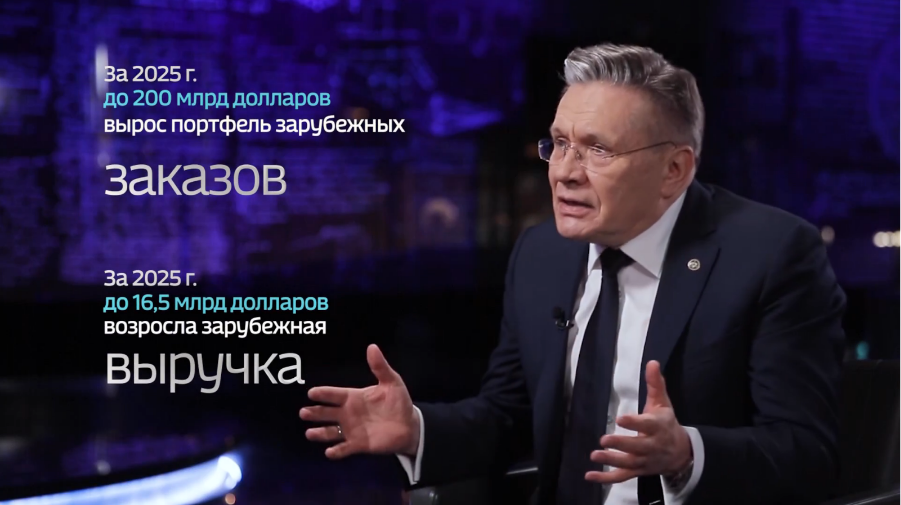
Speaking about the year’s financial results, Likhachev said that Rosatom’s revenue in the open segment exceeded 3 trillion rubles (about $35.8 billion at the average exchange rate for 2025). At the same time, an infographic shown on screen indicated that by the end of 2025 the company’s foreign order portfolio had grown to $200 billion, while foreign revenue reached $16.5 billion (figures Likhachev himself did not mention).
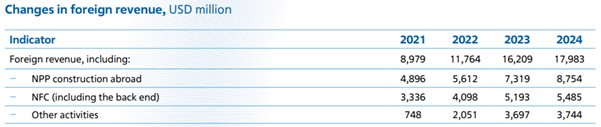
According to the state corporation’s report for 2024, revenue in the open segment amounted to 3.1 trillion rubles (about $33.7 billion at the average exchange rate for 2024), foreign revenue was estimated at nearly $18 billion, and the foreign order portfolio for the entire lifecycle stood at $200.4 billion.
On January 21, Likhachev presented the year’s results at a meeting with the Russian prime minister. According to him, despite external pressure, Rosatom will exceed its targets for both foreign revenue and its foreign order portfolio. He also said that over the past five years Rosatom’s foreign revenue from nuclear energy has increased 2.2-fold, while total revenue has grown by more than 2.6-fold.
«The most unexpected part of Likhachev’s remarks was the reported figures for Rosatom’s foreign revenue, which showed that it declined to $16.5 billion last year from nearly $18 billion the year before. This indicates a break in the trend of recent years, when foreign revenue had been growing by 10–20% annually.
On the one hand, these figures appeared only in as an infographic shown on screen during the televised interview and may simply be a mistake by the journalists. Since no official data have been released yet, they are difficult to verify. On the other hand, such interviews usually go through multiple rounds of approval, and any error could likely have been detected before publication. Moreover, if the figures are accurate, this way of presenting inconvenient facts would be quite typical for a Russian state corporation — the numbers are not stated directly by the top official, are represented without comparison with the previous year’s data, and the reference point is a reported overfulfillment of the plan (while the plan’s actual targets are not disclosed).
It is difficult to say with certainty what may have caused the decline in foreign revenue, if it indeed occurred. According to the preliminary data available to us, in 2025 the export value of Russian enriched uranium and nuclear fuel remained roughly at the same level as in 2024. However, this export segment usually accounts for no more than 30% of Rosatom’s foreign revenue, so changes in it cannot explain a decline of nearly $1.5 billion.
A much larger share of foreign revenue — up to 50% in recent years — comes from overseas nuclear power plant construction projects. Despite the “sanctions meat grinder” mentioned by Likhachev and the many problems affecting these projects, it is difficult to independently assess how much this has affected revenue figures. Moreover, sanctions pressure in previous years did not prevent this segment of foreign revenue from continuing to grow until 2025.
Finally, another possible factor could be changes in revenue from non-nuclear export segments (up to 20% of total foreign revenue) — logistics, renewable energy, new materials, and others. This segment of exports is also subject to sanctions pressure. For example, in October 2025 a major Rosatom logistics asset — the company FESCO — was placed under EU sanctions. The company came under Rosatom’s control only a few years ago as part of the state corporation’s expansion into logistics and had been showing steady growth in its operating indicators.
Overall, assessing the exact impact of sanctions on Rosatom’s revenue — as well as the structure of that revenue itself, which is not disclosed in detail even in corporate reporting — requires a separate, thorough analysis. However, despite the absence of significant direct sanctions on Russia’s nuclear sector and Rosatom’s strong position in the global nuclear technology market, we have repeatedly argued that sanctions pressure on Russia sanctions pressure on Russia cannot but affect nuclear projects and Rosatom’s overseas operations.»
Dmitry Gorchakov
Nuclear advisor
The service center RIR Energo JSC (formerly known as Quadra – Power Generation), a service center within Rosatom established in 2023 in response to the withdrawal of Western power equipment manufacturers from the Russian market, has fully mastered the repair and maintenance cycle for imported gas turbine units from GE — LM2500 and LM6000 — as well as from Siemens — SGT-800 and SGT-600. The company can now perform the full range of scheduled maintenance procedures that, until 2022, had been carried out by representatives of the original equipment manufacturers.
Rosatom first reported in February 2025 that its division would take over the repair of imported gas turbine equipment.
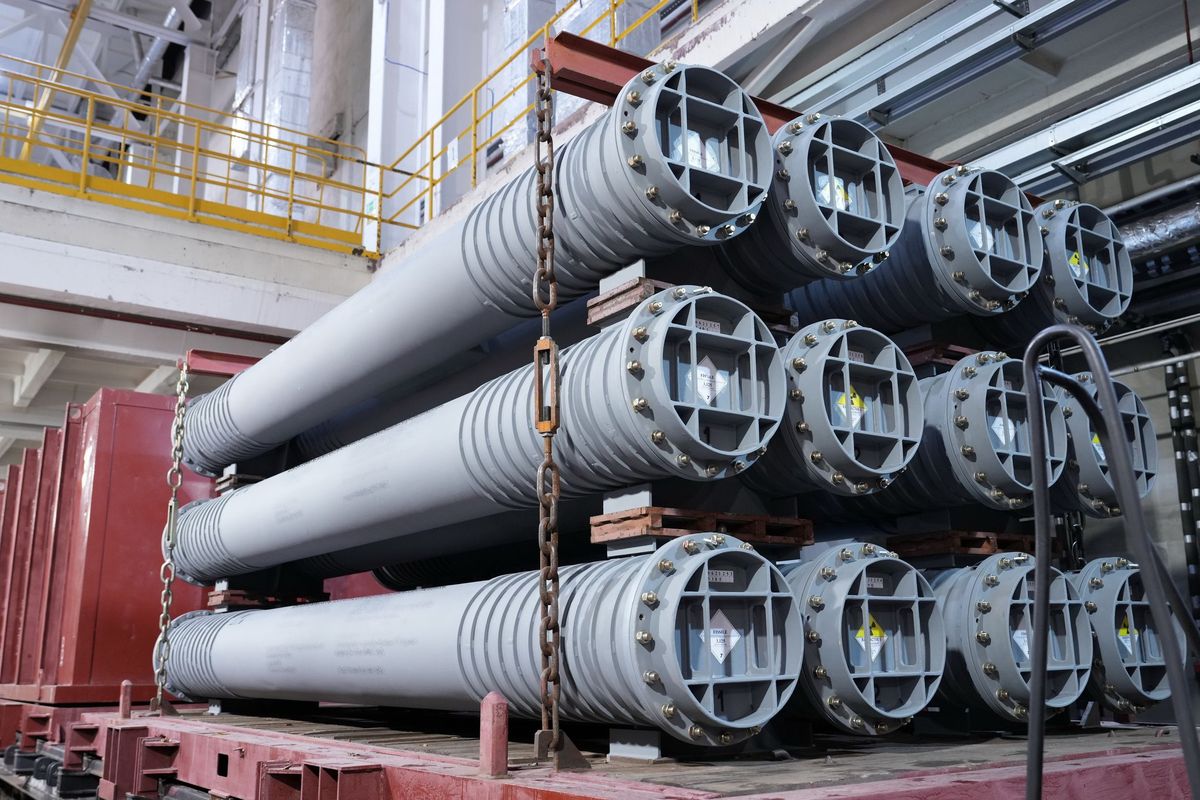
Bushehr NPP, Iran. On January 6, installation of the third tier of the reactor’s inner containment at Unit 2 was completed.
Akkuyu NPP, Turkey. On January 8, the turbine generator stator at Unit 2 was installed in its preliminary position.
Meanwhile, commissioning and integrated testing of all systems are underway at Unit 1. Cold and hot functional testing is planned in the near future.
China. On January 21, Rosatom delivered the initial nuclear fuel load for Unit 7 of the Tianwan NPP. In 2026, TVEL plans to deliver three more initial cores for the Tianwan and Xudapu NPPs, describing this as a record amount of nuclear fuel shipments within a single year.
Rooppur NPP, Bangladesh. On January 26, Bangladesh’s The Daily Star reported that a revised cost estimate for the Rooppur NPP project had been submitted for consideration by the Executive Committee of the National Economic Council. The revised estimate indicates a cost increase of about 23% and states that the project’s completion date has been postponed to 2028 instead of the originally planned end of 2025. The main reasons for the increase include the depreciation of the national currency, the addition of new project components, higher costs for services and consulting, as well as delays caused by the pandemic, the Russia–Ukraine war, and sanctions against Russian banks.
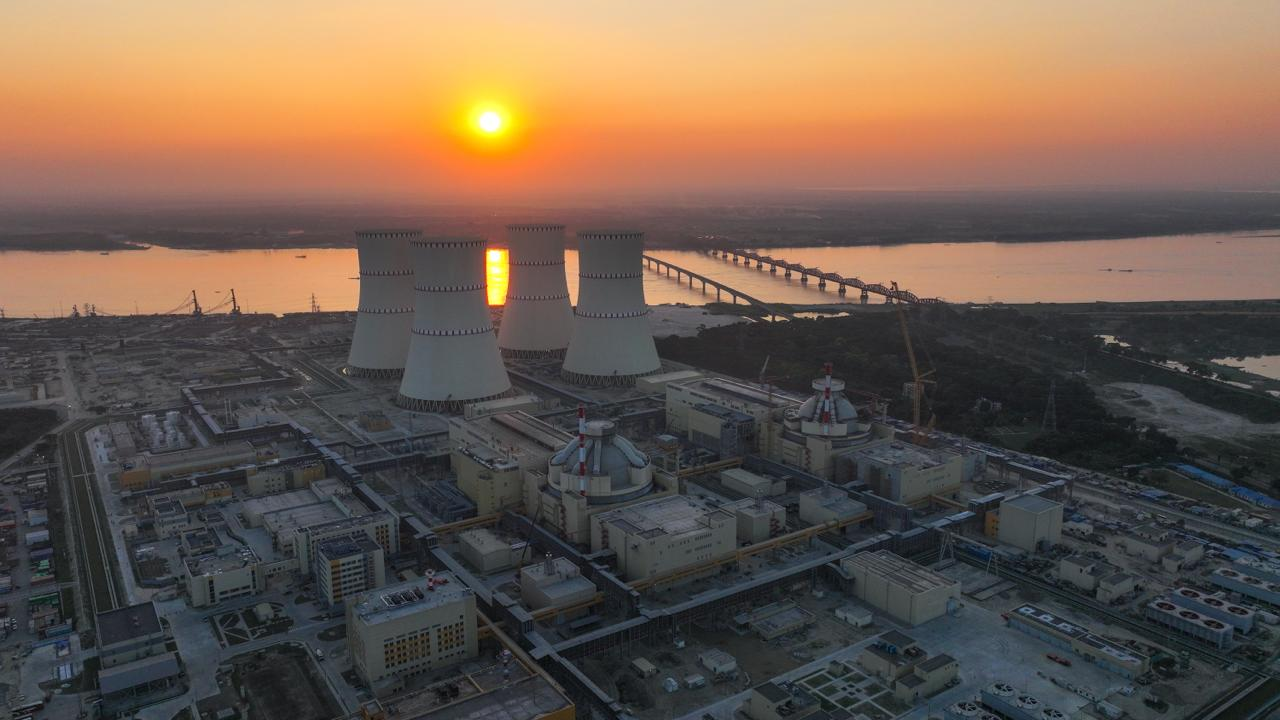
Construction work at Unit 1 was completed last year, but the technical tests preceding the first fuel loading into the reactor are still ongoing. The report notes that the Russian side had expected to begin fuel loading at the end of February.
Md Anwar Hossain, secretary of Bangladesh’s Ministry of Science and Technology, commented that completing all the tests is taking longer because numerous complications are being identified during the testing process, which must be resolved before moving to the next stage.
Uzbekistan. On January 29, Rosatom and the Agency for Atomic Energy under the Cabinet of Ministers of the Republic of Uzbekistan (Uzatom) signed a memorandum of understanding on cooperation in radioactive waste management and the decommissioning of nuclear facilities.
A monthly analytical review offering expert insight into key developments in nuclear policy, economics, safety, and technology related to the activities of Rosatom in Russia, Ukraine, and other countries

A monthly analytical review offering expert insight into key developments in nuclear policy, economics, safety, and technology related to the activities of Rosatom in Russia, Ukraine, and other countries

A survey of events in the field of nuclear and radiation safety relating to Russia and Ukraine

A survey of events in the field of nuclear and radiation safety relating to Russia and Ukraine