
Monthly Highlights from the Russian Arctic, November 2025
In this news digest, we monitor events that impact the environment in the Russian Arctic
News
Publish date: 18/02/2026
News
Our focus lies in identifying the factors that contribute to pollution and climate change.
Ensuring complete and reliable access to environmental information in Russia has never been fully guaranteed. Following the Russian invasion of Ukraine on February 24, 2022, it became even more difficult. Some information ceased to be published altogether, such as daily oil production data and annual reports from certain industrial companies. Independent environmental organizations have been banned or closed.
The Arctic region plays a crucial role in comprehending the process of global climate change. Russia owns approximately one-third of its territory, including the exclusive economic zone of the Arctic Ocean. To understand and examine trends, we monitor new legislation, the plans of industry, the Northern Sea Route, international economic sanctions, accidents, and emergencies in the Russian Arctic, as well as provide commentary on the news. Subscribe to our mailing list to make sure you don’t miss the next digest.
Our previous monthly highlights for November can be found here.
NORTHERN SEA ROUTE AND SHIPPING
1. Work on the creation of the Trans-Arctic Transport Corridor has intensified. The Northern Sea Route is expected to become part of it
2. Overview of shipping on the Northern Sea Route in December
3. The LNG tanker Alexey Kosygin was delivered to its customer, Sovcomflot PJSC, and departed on its first commercial voyage along the Northern Sea Route
4. The Marine Rescue Service expanded its fleet with two new vessels for operations along the Northern Sea Route
THE INTERNATIONAL SITUATION IN THE ARCTIC AND SANCTIONS ON RUSSIA’S ACTIVITIES IN THE ARCTIC REGION
5. A Russian court ordered the Dutch shipbuilding company Damen to return advance payments to Atomflot
6. Norway and Russia agreed on fishing quotas in the Barents Sea for 2026
7. The EU imposed sanctions on individuals and companies involved in the transportation of Russian oil
8. Ukraine has added another 656 vessels to the list of ships in Russia’s shadow fleet; 54 of them had received permission to navigate the Northern Sea Route
HEIGHTENED INDUSTRIAL ACTIVITY IN THE RUSSIAN ARCTIC
9. Nornickel reduced sulfur dioxide emissions at the Nadezhda Metallurgical Plant in Norilsk by only 70,000 tonnes in 2025 and resumed cobalt production in Monchegorsk
ENVIRONMENTAL AND CLIMATE ISSUES IN THE ARCTIC
10. The location of two vessels carrying radioactive waste on board has been established. They had not been located for nearly 20 years
11. The Pacific walrus is migrating further north due to Arctic warming and the reduction of sea ice cover
RECOMMENDED PUBLICATIONS
12. Bellona has published a review of shadow fleet vessels on the Northern Sea Route in 2025
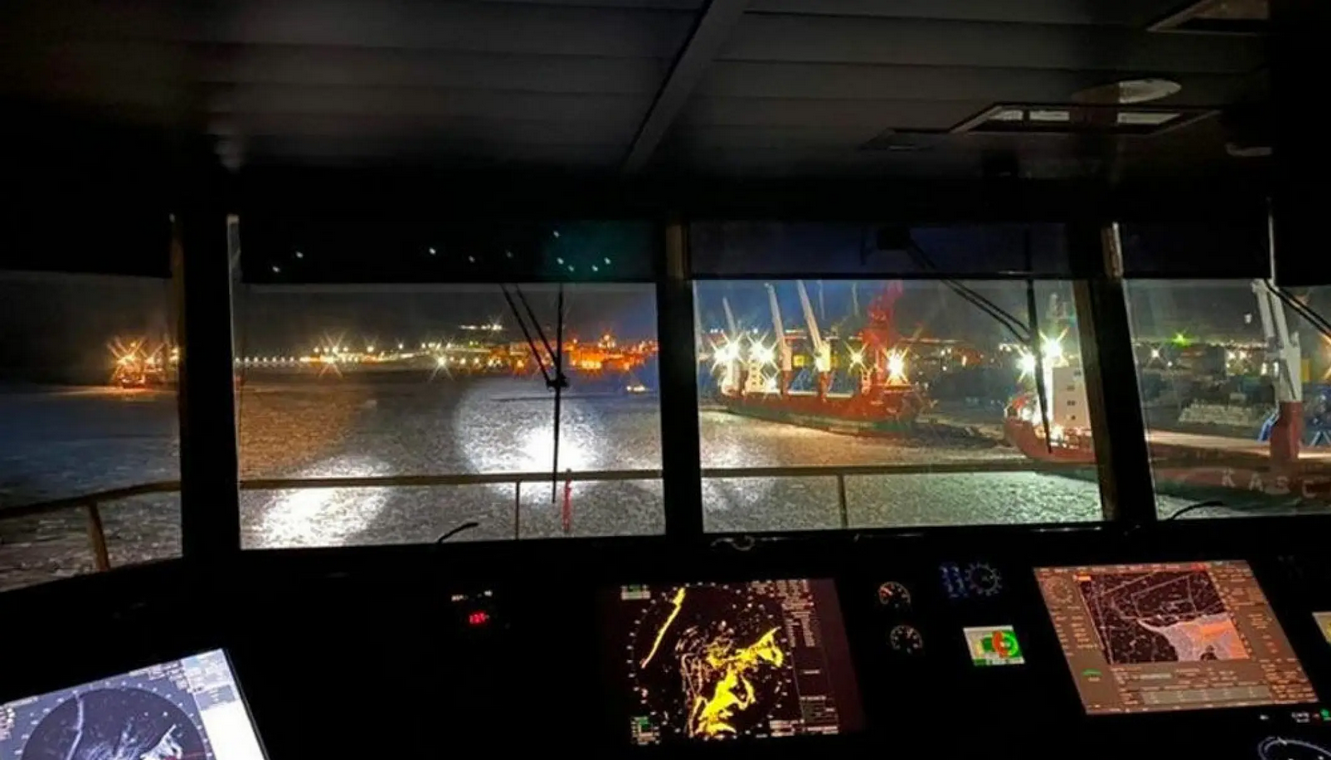
In December, media attention on the Trans-Arctic Transport Corridor (TATC) increased. Throughout 2025, there was a gradual shift from discussing the Northern Sea Route (NSR) as a separate route to a broader concept of the TATC, which integrates maritime, river, rail, and road transport from St. Petersburg to Vladivostok. In December, this topic was discussed at several events and was also reflected in regulatory decisions.
On December 8, Russian President Vladimir Putin signed a decree introducing amendments to the work of the Maritime Board of the Russian Federation. The document expands the powers of one of the Board’s councils — the Council for the Protection of the Russian Federation’s National Interests in the Arctic. It is now responsible for the development of national and international maritime transport routes. The Council’s main task will be the development of the Trans-Arctic Transport Corridor.
At the same time, the idea of linking different modes of transport to stimulate cargo shipments along the NSR is not new. Previously, there was the Northern Latitudinal Railway (NLR) project — a railway corridor in the Arctic more than 700 km long between Salekhard and Nadym, including a bridge across the Ob River. It was intended to connect the Northern and Sverdlovsk railways and to ensure the export of cargo through the port of Sabetta to the Northern Sea Route.
It was planned that the NLR would facilitate the export of oil, gas, and gas condensate from fields in the Yamalo-Nenets Autonomous Okrug (YNAO) and would be commissioned in 2015. The project’s timeline was postponed several times, and the Russian authorities are now discussing the possibility of suspending the concession agreement for the construction of the Northern Latitudinal Railway (NLR) for three years due to a lack of financing and an insufficient cargo base.
On December 24, at an expanded meeting of the Maritime Board of the Russian Federation, Head of Yakutia Aisen Nikolaev presented the Mohe–Naiba international transport corridor project, which is intended to link China with Russia’s Arctic coast and become part of the Trans-Arctic Transport Corridor. The project includes the construction of new railway lines, highways from China to Russia through the Amur Region, and the expansion of shipping infrastructure on the Lena River.
«The geographic expansion of the Northern Sea Route, on the one hand, is logical, since the NSR is not merely a shipping route but an entire complex of related industries for the extraction and export of natural resources produced in the Arctic, primarily gas and oil.
On the other hand, the desire to incorporate more ports (St. Petersburg, Kaliningrad, Vladivostok, etc.) and land transport infrastructure into the planned Trans-Arctic Transport Corridor may be driven by the interests of regional authorities and businesses seeking to obtain state funding for the construction, repair, or expansion of their infrastructure within the framework of a project that is so important for Putin. They are likely to have no other opportunities to secure the necessary funding amid the ongoing war, an unfavorable investment climate, and budget cuts.
Therefore, what we are now seeing is an expansion of the TATC project in the hope of requesting as much funding as possible for various construction needs, often with questionable economic justification, which is unlikely to be fully implemented. Some projects will inevitably be dropped, as has already happened with the Northern Latitudinal Railway project.»
In December, several ports along the Northern Sea Route switched to winter navigation mode. On December 1, navigation ended in Chukotka’s southernmost port, Beringovsky, and on December 23 navigation was closed at the Provideniya terminal.
In the western part of the Northern Sea Route, the ice escort season began on December 8 in the ports of Arkhangelsk and Kandalaksha. Icebreakers Dikson, Kapitan Evdokimov, and Kapitan Chadaev were deployed in the White Sea. In the eastern part of the Northern Sea Route, on December 29 the nuclear icebreaker Sibir completed the escort of the motor vessel Norilsk Nickel from Provideniya to the port of Pevek.
Difficulties with ice conditions were observed in the Kara Sea. In early December, the LNG carrier Buran was unable to reach the Utrenny terminal in the Gulf of Ob due to unexpectedly heavy ice and remained in the Kara Sea.
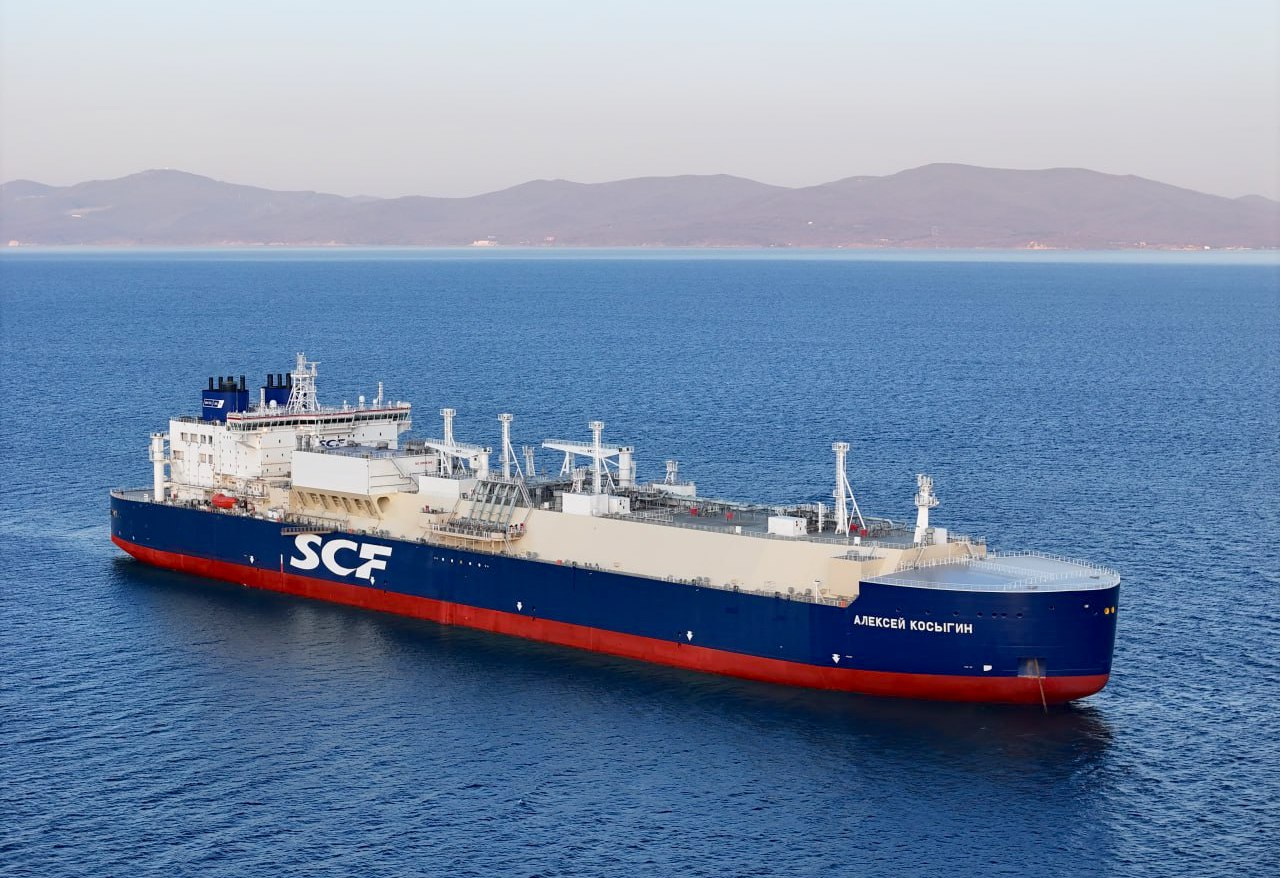
The official handover of the Arc7 ice-class LNG tanker Alexey Kosygin took place on December 24, 2025 at the Zvezda shipbuilding complex, operated by Rosneft PJSC. In December 2024, Alexey Kosygin was added to the U.S. sanctions list.
The tanker’s multi-stage trials were prolonged: sea trials began on December 27, 2024 and continued throughout 2025. Zvezda also conducted gas trials of the vessel for the first time. The tanker is intended for year-round operation in the Arctic and for transporting LNG under the Arctic LNG 2 project.
On December 28, Alexey Kosygin departed from Bolshoy Kamen Bay on its first commercial voyage along the Northern Sea Route and headed toward the terminal of the Arctic LNG 2 project. The vessel became the first large-capacity Arc7 ice-class LNG tanker fully built at a Russian shipyard. Previously, vessels of this class for Arctic LNG projects had been ordered abroad.
The Arc7 tanker series was initially planned to be built in cooperation with Samsung Heavy Industries of South Korea, but after sanctions were imposed, the Russian side completed construction independently. The most complex blocks of the vessel were built by Samsung Heavy Industries and delivered to the Zvezda shipyard in 2021, where the tanker was completed using technologies from the European companies Gaztransport & Technigaz (GTT), MAN, and Wärtsilä. In particular, Zvezda installed the French GTT gas membrane system, as well as elements of the propulsion system supplied by the European manufacturers MAN and Wärtsilä.
In 2024, the contract with Samsung Heavy Industries for 15 hulls was terminated due to sanctions; in practice, only five were delivered. These five hulls remained at various stages of completion for several years, raising doubts about how many vessels Russia would ultimately be able to complete and commission independently.
Construction of LNG carriers for the Arctic LNG 2 project at the Zvezda shipyard continues with significant delays. By the end of 2025, only Alexey Kosygin had been delivered to the customer, while four more tankers — Pyotr Stolypin, Sergei Witte, Konstantin Posyet, and Viktor Chernomyrdin — had been launched.
Pyotr Stolypin is expected to be the next vessel delivered. At the time Western companies withdrew, it was at a stage of completion comparable to that of Alexey Kosygin. Its commissioning is projected in the coming months. Both vessels, as well as the Zvezda shipyard itself, are under U.S. sanctions.
The fate of the remaining three hulls remains uncertain. The French company GTT completed work only on the first two vessels before ceasing its operations in Russia in 2023. Russian authorities have announced the development of a domestic LNG membrane containment technology, but its level of readiness and the feasibility of serial application have not yet been confirmed.
On December 14, the Arkhangelsk branch of the Marine Rescue Service accepted the Arctic rescue tug Favor, Project NE025, with Arc4 ice class. On December 28, the Primorsky branch received the multifunctional emergency rescue vessel MPSV06 Kerch Strait with reinforced Icebreaker6 ice class. Both vessels are intended for year-round operations along the Northern Sea Route.
In April 2025, the head of Rosmorrechflot, Andrei Tarasenko, stated that under the federal project “Greater Northern Sea Route,” part of the national project “Efficient Transport System,” the Marine Rescue Service was to receive 10 new emergency rescue vessels in 2025. However, only six vessels are mentioned on the Marine Rescue Service website for the entire year — Favor, Uzon, Timan, Tepsey, Pechak, and Kerch Strait. Their home ports are Murmansk, Arkhangelsk, and Petropavlovsk-Kamchatsky.
«Construction of emergency rescue vessels is proceeding with significant delays. According to the Northern Sea Route development plan, 46 such vessels are to operate along the route by 2035. At present, 13 vessels are in service and 11 have been ordered at shipyards. The main reason for the lag is insufficient funding. The opening of the EMERCOM rescue center in Sabetta, initially scheduled for 2025, has been postponed to 2026. As a result, the actual state of rescue infrastructure along the Northern Sea Route, particularly in its eastern section, has seen little change.»
On December 16, the Arbitration Court of the Murmansk Region upheld a claim by Atomflot against the Dutch shipbuilding group Damen Shipyards. The court ordered Damen to return approximately €13.4 million in advance payments under contracts for the construction of tugboats concluded before 2022. The Dutch company insisted that the dispute be considered in a court in the Netherlands, but the Arbitration Court of the Murmansk Region rejected this request.
As reported in previous digests, Atomflot sought to recover advance payments from Damen under five contracts for the construction of tugboats concluded in 2021. The vessels were intended for use by NOVATEK’s subsidiary Arctic Transshipment for LNG transshipment operations along the Northern Sea Route. After sanctions against Russia were introduced in March 2022, Damen suspended the performance of all contracts with Russian customers.
«Russian companies are filing claims in Russian courts against foreign partners that terminated contracts after the introduction of international sanctions, apparently in the hope of obtaining compensation or strengthening their position in potential negotiations if sanctions are lifted and foreign companies seek to return to the Russian market. Such court decisions may also be used to improve financial reporting indicators and in settlements with other companies.»
On December 18, the Norwegian government published the results of the meeting of the Russian-Norwegian Fisheries Commission. Quota negotiations are usually held in October, but this year the organization of the commission’s meeting was delayed due to disagreements between the parties.
As reported in the August digest, in July Norway added the Russian fishing companies Norebo JSC and Murman Seafood to its sanctions list. In response, Russia stated that it could terminate the fisheries agreement and close its exclusive economic zone to Norwegian vessels. In August, the head of Rosrybolovstvo, Ilya Shestakov, also warned that Russia might restrict Norwegian fishermen’s access to its waters if Norway’s position was not revised.
Sanctions against the Murmansk-based companies Norebo JSC and Murman Seafood remain in force.
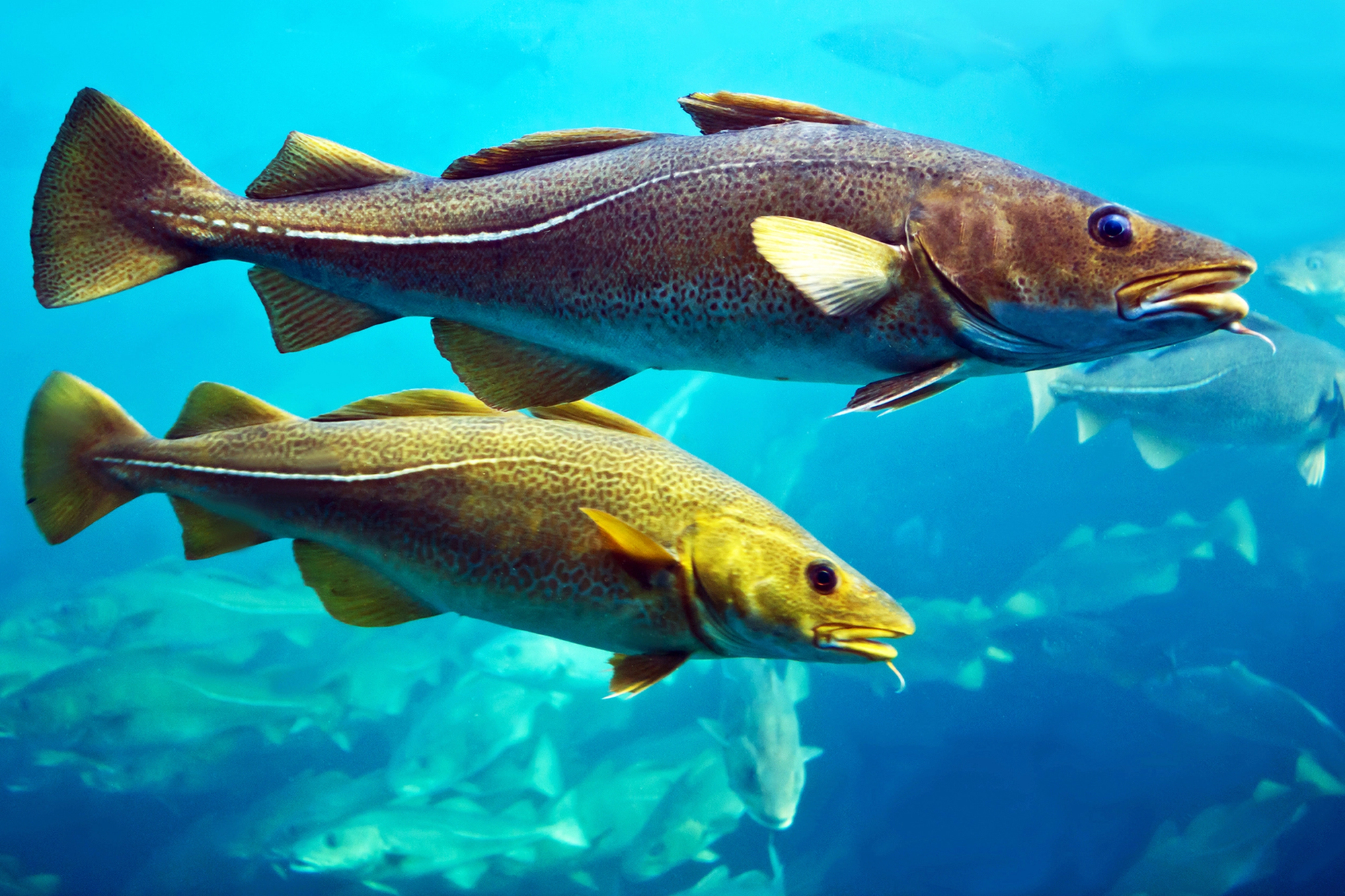
The total quota for cod catches in the Northeast Arctic for 2026 has been set at 285,000 tonnes, which is 16% lower than the level established for 2025. Norway’s Minister of Fisheries and Oceans, Marianne Sivertsen Næss, stated that this is the lowest figure since 1991, but that the reduction is necessary to restore fish stocks.
On December 15, the Council of the European Union imposed sanctions on five individuals and four shipping companies linked to Russia’s shadow fleet. These companies were involved in circumventing sanctions on Russian oil exports, revenues from which are used to finance Russia’s war against Ukraine.
The sanctions targeted legal entities from third countries and businessmen affiliated with the Russian oil companies Rosneft and Lukoil, as well as those involved in transporting Russian oil and concealing its true origin. Some of them are linked to Russian projects in the Arctic:
In addition, on December 19 the EU extended all 19 previously adopted sanctions packages against Russia for six months, until July 31, 2026.
On December 13, President of Ukraine Volodymyr Zelensky signed a decree imposing sanctions on 656 maritime vessels that are part of Russia’s shadow fleet. A significant number of these vessels are already under sanctions imposed by other countries. Ukraine intends to work with international partners to synchronize sanctions within their jurisdictions and coordinate efforts to fully ban maritime services for vessels involved in the export of Russian energy resources.
As a result of monitoring in the Black, Red, and Baltic Seas, it was established that these vessels were used to export oil, petroleum products, and liquefied gas in circumvention of EU, G7, and other sanctions. The crews and owners disabled automatic identification systems and concealed ownership and the origin of cargoes. The sanctioned vessels operated under the flags of more than 50 states, most frequently Gambia, Sierra Leone, Panama, and Cameroon. Ukraine intends to transmit the relevant information to these countries and seek the suspension of licenses issued to sanctioned vessels.
Some of these vessels received permission to transit the Northern Sea Route in 2024 and 2025. Among them are 23 crude oil tankers, three oil product tankers, nine chemical and oil product tankers, 18 LNG tankers, and one container ship.

At the 15th International Forum “Arctic: Present and Future” held in St. Petersburg on December 9, Stanislav Seleznev, Vice President for Ecology and Industrial Safety at Nornickel, stated that in 2024 the company reduced sulfur dioxide emissions by 400,000 tonnes, and by a further 70,000 tonnes in 2025. According to him, in 2026 the reduction is expected to reach 900,000 tonnes compared to the 2017 baseline year, that is, an additional 430,000 tonnes.
The company has not yet published a new environmental impact report for 2025, and the data on a 470,000-tonne reduction in atmospheric SO₂ emissions cited by Seleznev in his remarks is, in effect, the first mention of Nornickel’s emission reduction results for the past year.
The company’s previous report states that in 2024 it reduced sulfur dioxide (SO₂) emissions into the atmosphere by 23.5% — from 1,671 thousand tonnes to 1,268 thousand tonnes, or by 403 thousand tonnes.
In addition, on December 8, 2025, Nornickel resumed cobalt production at the Kola Mining and Metallurgical Company (KMMC), which had been suspended in September 2022 following a fire. Nornickel invested more than RUB 5.3 billion in its reconstruction and restart. The facility produces high-purity electrolytic cobalt (99.9%). After reconstruction, the plant’s capacity was increased by 20% to 3,000 tonnes per year (about one-third of Russia’s total production). It is the only facility of this type in Russia.
«According to Nornickel’s plans as of the end of 2024, the company was expected to reduce sulfur dioxide emissions at the Nadezhda plant by 331,000 tonnes in 2025. The actual reduction — 70,000 tonnes— proved to be modest. Whether Nornickel will be able to reach the target of a 900,000-tonne reduction by the end of 2026 remains uncertain.
Throughout the year, residents of Norilsk continued to complain about poor air quality in the city, while industrial facilities, including the Nadezhda plant, introduced production restrictions due to exceedances of sulfur dioxide concentration limits in the air. It should also be noted that in the absence of independent and objective oversight by the public, NGOs, and regulatory authorities, even the figures published in Nornickel’s official report cannot be verified.»
During the 70th expedition of the research vessel Akademik Ioffe to the Kara and Barents Seas, the precise location of two sunken vessels carrying solid radioactive waste (SRW) on board was established for the first time in nearly 20 years of searches.
One of them is the barge Likhter-4, scuttled in 1988 in Techeniya Bay near the northern tip of Severny Island (Novaya Zemlya archipelago). On board, in lead shielding, are two reactor compartments from the nuclear submarine K-22 with unloaded fuel.
The second vessel is the barge Nickel, scuttled near Kolguyev Island in the Barents Sea with approximately 580 tonnes of solid radioactive waste on board.
In addition, a previously unknown complex radioactive waste burial site has been discovered in Techeniya Bay.
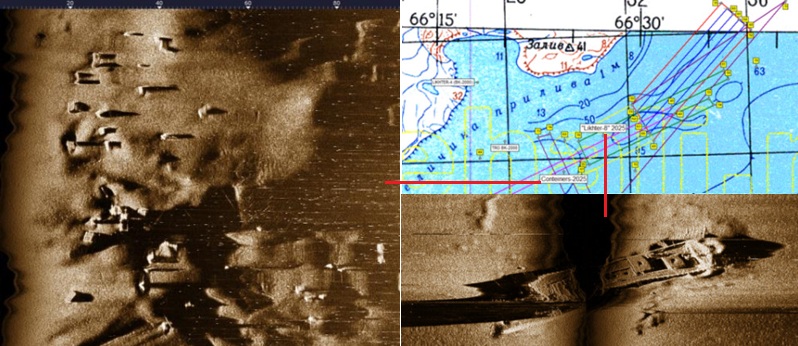
Scientists also carried out a scheduled radiation survey of the nuclear submarine K-27 with nuclear fuel on board and confirmed the integrity of its protective barriers preventing the release of radioactivity into the surrounding marine environment. An optimal site was selected for the placement of the coastal unit of the radiation monitoring station (PSPRM) to ensure continuous monitoring of the condition of the two reactors of the K-27 submarine.
«The results of the Akademik Ioffe expedition essentially confirmed the information already available, clarifying only that some containers and small vessels filled with solid radioactive waste are located in slightly different places than indicated in archival sources.
For Bellona, this information does not come as a surprise. As early as 1996, while working on the report “The Russian Northern Fleet: Sources of Radioactive contamination,” discussions with one of the Northern Fleet’s senior officers, who oversaw the dumping of nuclear and radiation-hazardous objects in the 1970s–1980s, gave the impression that the locations of their disposal were at times recorded rather formally and approximately. Therefore, expeditions continue to identify discrepancies between the actual dumping sites and the archival documents that were created and stored within the Soviet Navy.
The full comment by Alexander Nikitin, expert of Bellona’s Nuclear Project, on this topic can be read in the Nuclear Digest.»
Specialists from the Pacific branch of the Russian Federal Research Institute of Fisheries and Oceanography reported on the results of their 2025 observations of the Serdtse-Kamen walrus rookery in the northeast of the Chukotka Peninsula. It is one of the largest coastal rookeries of the Pacific walrus. The study was conducted from September 23 to October 26, covering the entire period during which the rookery was active.
Scientists collected data on migration timing, the sex and age composition of the rookery, natural mortality, and disturbance factors affecting the walruses.
While in recent decades the number of animals gathering there had been around 100,000 individuals, in 2024 and 2025 it was significantly lower. In 2025, the peak number of walruses on shore and in the water reached only 32,000 individuals. Apart from the last two years, the number of walruses at the rookery did not exceed 40,000 individuals in 2012 and 2016.
The population of the Pacific walrus has repeatedly declined and increased throughout the known historical period (since the mid-17th century) due to qualitative changes in its habitat and under the impact of hunting.
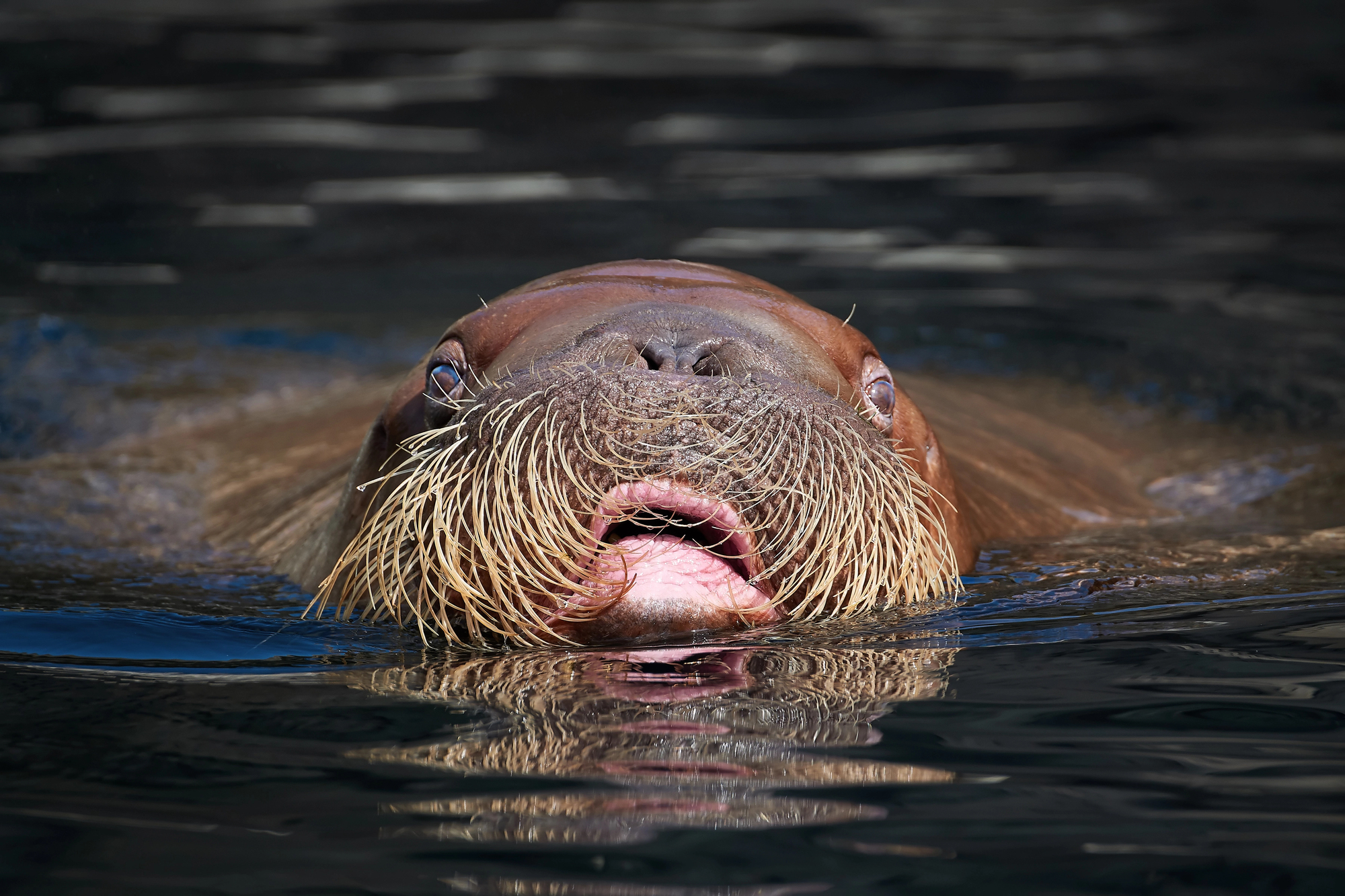
However, over the past 30 years, significant changes have occurred in the quantitative and qualitative structure of the population and in the spatial distribution of the walrus. Researchers largely associate these changes with Arctic warming as well as the reduction of sea ice cover.
Thus, the number of coastal rookeries on the eastern coast of Kamchatka and southern Chukotka has significantly decreased. A redistribution of animals along the coastline is underway, with the formation of new haul-outs (in new locations or in areas of previously existing rookeries) on the eastern coast of Chukotka. Previously inactive rookeries on the Arctic coast of Chukotka have also been re-established — at Cape Kozhevnikov near Cape Schmidt (Ryrkaypiy village) and at Cape Vankarem.
An analysis of data from recent years indicates a trend toward a shift of the Pacific walrus population to the northern part of its range.
Bellona has published a review of the situation with Russia’s shadow fleet on the Northern Sea Route in 2025. While 13 shadow fleet vessels were recorded on the NSR in 2024, their number had reached 100 in 2025, including oil and LNG tankers, bulk carriers, and research vessels. Many of them have low or no ice class, change flags and owners, switch off transponders, and do not always obtain permits for passage along the route, significantly increasing the risk of accidents in the Arctic.

In this news digest, we monitor events that impact the environment in the Russian Arctic

In this news digest, we monitor events that impact the environment in the Russian Arctic

In this news digest, we monitor events that impact the environment in the Russian Arctic. Our focus lies in identifying the factors that contribute to pollution and climate change

In this news digest, we monitor events that impact the environment in the Russian Arctic. Our focus lies in identifying the factors that contribute to pollution and climate change.